

• Home
  • Agric
  • Sci & Tech
  • Health
  • Environment
  • Hausa News
  • More
    • Business/Banking & Finance
    • POLITICS
    • Entertainments & Sports
    • International
    • Investigation
    • Law & Human Rights
    • Africa
    • ACCOUNTABILITY/CORRUPTION
    • Hassan Gimba
    • Column
    • Prof. Jibrin Ibrahim
    • Prof. M.K. Othman
    • Defense/Security
    • Education
    • Energy/Electricity
    • Entertainment/Arts & Sports
    • Society and Lifestyle
    • Food & Agriculture
    • Health & Healthy Living
    • International News
    • Interviews
    • Investigation/Fact-Check
    • LAW & HUMAN RIGHTS
    • Oil & Gas/Mineral Resources
    • PRESS FREEDOM/JOURNALISM/PR
    • General News
    • Presidency
  • About Us
    • Contact Us
    • Board Of Advisory
    • Privacy Policy
    • Ethics Policy
    • Teamwork And Collaboration Policy
    • Fact-Checking Policy
    • Advertising
  • Media OutReach Newswire
    • Wire News
  • The Stories
Facebook Twitter Instagram
Trending
  • Beyond the dance: Lessons from Osun 2026 for Nigeria 2027, by Prof. M.K. Othman
  • Bwari riders decry motorcycle theft, seizures
  • SDNON felicitates with member over appointment as head of media directorate for Delta NDC guber campaign
  • States spend N35bn on flood, erosion control
  • Of caps, marabouts and politics of envy, by Hassan Gimba
  • FG scraps data charges for students on approved educational platforms
  • BRICON urges cancer survivors to embrace life
  • CBN survey: Low-income Nigerians bear brunt of inflation
Facebook Twitter Instagram YouTube
AsheNewsAsheNews
  • Home
  • Agric

    Who is policing the poison in Nigeria’s food chain?

    September 12, 2026

    NASC, PIND sign seed partnership

    September 12, 2026

    Women farmers call for investment in value-added agriculture

    September 11, 2026

    Women farmers laud SAA rice program in Jigawa

    September 11, 2026

    Poultry industry key to food security, jobs – PAN official

    September 10, 2026
  • Sci & Tech

    Nigeria urged to mainstream election tech

    September 11, 2026

    Biotech key to Nigeria’s food security, experts say

    September 10, 2026

    Australia to let users switch off social media algorithms

    September 9, 2026

    Africa contributes less than 1% of dementia research despite projected 348% rise in West Africa – Maina

    September 9, 2026

    Nigeria must stop consuming foreign neuroscience knowledge, NSN president says

    September 9, 2026
  • Health

    BRICON urges cancer survivors to embrace life

    September 13, 2026

    Doctor urges Nigerians to prevent illness

    September 12, 2026

    Kaduna begins diphtheria vaccination

    September 12, 2026

    JDPCI calls for disability inclusion

    September 12, 2026

    Doctor warns against oral salbutamol for asthma

    September 11, 2026
  • Environment

    Bwari riders decry motorcycle theft, seizures

    September 13, 2026

    States spend N35bn on flood, erosion control

    September 13, 2026

    Lagos moves beyond dumpsites

    September 12, 2026

    LASCOPA, NDLEA partner on drug abuse

    September 12, 2026

    RDI urges action to save Okun Alfa

    September 12, 2026
  • Hausa News

    UNA signs MoU to launch air Bissau in Guinea-Bissau

    June 15, 2026

    Otti plans 250-room 5-star hotel in Umuahia

    April 11, 2026

    Anti-quackery task force seals 4 fake hospitals in Rivers

    August 29, 2025

    [BIDIYO] Yadda na lashe gasa ta duniya a fannin Ingilishi – Rukayya ‘yar shekara 17

    August 6, 2025

    A Saka Baki, A Sasanta Saɓani Tsakanin ‘Yanjarida Da Liman, Daga Muhammad Sajo

    May 21, 2025
  • More
    1. Business/Banking & Finance
    2. POLITICS
    3. Entertainments & Sports
    4. International
    5. Investigation
    6. Law & Human Rights
    7. Africa
    8. ACCOUNTABILITY/CORRUPTION
    9. Hassan Gimba
    10. Column
    11. Prof. Jibrin Ibrahim
    12. Prof. M.K. Othman
    13. Defense/Security
    14. Education
    15. Energy/Electricity
    16. Entertainment/Arts & Sports
    17. Society and Lifestyle
    18. Food & Agriculture
    19. Health & Healthy Living
    20. International News
    21. Interviews
    22. Investigation/Fact-Check
    23. LAW & HUMAN RIGHTS
    24. Oil & Gas/Mineral Resources
    25. PRESS FREEDOM/JOURNALISM/PR
    26. General News
    27. Presidency
    Featured
    Recent

    Beyond the dance: Lessons from Osun 2026 for Nigeria 2027, by Prof. M.K. Othman

    September 13, 2026

    Bwari riders decry motorcycle theft, seizures

    September 13, 2026

    SDNON felicitates with member over appointment as head of media directorate for Delta NDC guber campaign

    September 13, 2026
  • About Us
    1. Contact Us
    2. Board Of Advisory
    3. Privacy Policy
    4. Ethics Policy
    5. Teamwork And Collaboration Policy
    6. Fact-Checking Policy
    7. Advertising
    Featured
    Recent

    Beyond the dance: Lessons from Osun 2026 for Nigeria 2027, by Prof. M.K. Othman

    September 13, 2026

    Bwari riders decry motorcycle theft, seizures

    September 13, 2026

    SDNON felicitates with member over appointment as head of media directorate for Delta NDC guber campaign

    September 13, 2026
  • Media OutReach Newswire
    • Wire News
  • The Stories
AsheNewsAsheNews
Home»Environment/Climate Change»Ethiopia inaugurates Africa’s largest hydroelectric dam
Environment/Climate Change

Ethiopia inaugurates Africa’s largest hydroelectric dam

...The $5,150-megawatt Grand Ethiopian Renaissance Dam promises power and prosperity at home, but sparks tensions with Egypt and Sudan over Nile waters.
Abdallah el-KurebeBy Abdallah el-KurebeSeptember 9, 2025Updated:September 9, 2025No Comments3 Mins Read
Share
Facebook Twitter LinkedIn Pinterest Email

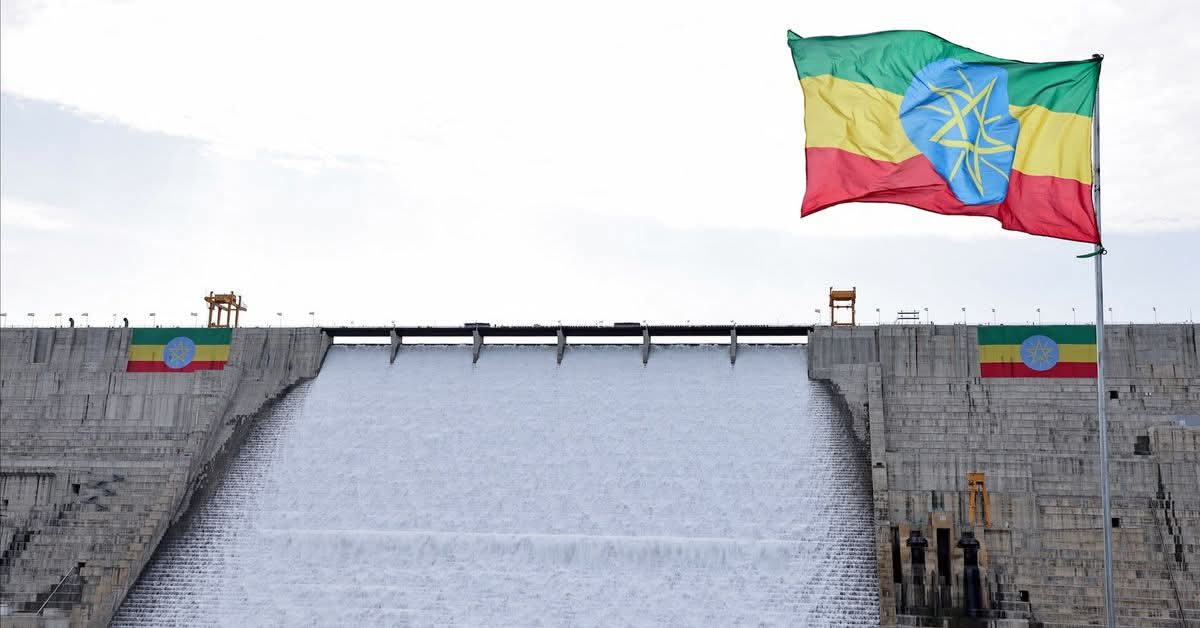
Ethiopia on Tuesday officially inaugurated the Grand Ethiopian Renaissance Dam (GERD), marking the launch of Africa’s largest hydroelectric project. The ceremony took place in Guba, Benishangul-Gumuz region, along the Blue Nile.

The event was highlighted by a dramatic flyover of an Ethiopian fighter jet as torrents of water cascaded down a 170-meter drop from the dam’s outlet—symbolizing both national pride and Ethiopia’s growing ambition in energy development.

A regional energy powerhouse

The GERD has an installed capacity of 5,150 megawatts, placing it among the 20 largest hydroelectric dams worldwide, although still far smaller than China’s Three Gorges Dam. Ethiopian authorities say the facility will transform the country’s economy by expanding domestic electricity access and generating surplus power for export to neighboring countries.

Prime Minister Abiy Ahmed said the dam represents “a project of peace and prosperity” rather than a threat to others, stressing that Ethiopia’s goal is electrification and development.

Benefits and disputes

The dam’s massive reservoir, which covers an area larger than Greater London, is expected to stabilize irrigation, reduce drought risks, and help prevent flooding.

However, the GERD has stirred deep tensions with Egypt, which depends on the Nile for about 90 percent of its freshwater. Egyptian authorities fear the project could reduce water flow downstream, undermining agriculture and national water security. Cairo insists that Ethiopia’s actions violate historic water-sharing agreements and has vowed to “take all appropriate measures” to defend its interests.

Sudan, by contrast, stands to benefit from cheaper electricity and better flood control, though it continues to call for a legally binding deal on how the dam is operated and filled.

A symbol of unity and self-reliance

Construction of the GERD began in 2011 and has been closely followed across Africa. Ethiopia filled the reservoir gradually, in line with rainfall patterns, to avoid sharp disruptions to downstream flows.

Despite Ethiopia’s history of internal ethnic conflict, the dam has become a unifying national project. According to experts, it serves as a powerful symbol of the country’s determination to overcome challenges through collective effort.

The financing of the GERD is equally symbolic—91 percent was provided by Ethiopia’s central bank, with the remaining 9 percent raised through bonds and contributions from Ethiopians both at home and abroad. This self-funded approach meant the project relied little on foreign aid or loans.

Transforming daily life

For communities near the dam, the benefits are already visible. Villages once without electricity now have power, changing routines and boosting livelihoods. Still, much of Ethiopia remains without reliable access: by 2022, about 94 percent of urban residents had electricity, but only 55 percent of the total population was connected, largely due to weak rural transmission networks.

The new supply of power is expected not only to light homes and drive industries but also to fuel emerging sectors such as Ethiopia’s growing bitcoin mining industry.

A new era

With the launch of the Grand Ethiopian Renaissance Dam, Ethiopia has taken a historic step toward reshaping its energy future. For Addis Ababa, the GERD is more than a dam—it is a statement of sovereignty, resilience, and ambition.

Yet, as the turbines begin to turn, the project continues to cast ripples beyond Ethiopia’s borders—raising hopes of regional energy integration, while also fueling disputes over one of the world’s most vital rivers.

Africa’s largest hydroelectric Dam Benishangul-Gumuz region Ethiopia Grand Ethiopian Renaissance Dam (GERD) Guba
Share. Facebook Twitter Pinterest LinkedIn WhatsApp Reddit Tumblr Email
Abdallah el-Kurebe
  • Website
  • Facebook
  • Twitter
  • LinkedIn

Related Posts

Bwari riders decry motorcycle theft, seizures

September 13, 2026

States spend N35bn on flood, erosion control

September 13, 2026

Lagos moves beyond dumpsites

September 12, 2026

Leave A Reply Cancel Reply

Beyond the dance: Lessons from Osun 2026 for Nigeria 2027, by Prof. M.K. Othman

September 13, 2026

Bwari riders decry motorcycle theft, seizures

September 13, 2026

SDNON felicitates with member over appointment as head of media directorate for Delta NDC guber campaign

September 13, 2026

States spend N35bn on flood, erosion control

September 13, 2026
About Us
About Us

ASHENEWS (AsheNewsDaily.com), published by PenPlus Online Media Publishers, is an independent online newspaper. We report development news, especially on Agriculture, Science, Health and Environment as they affect the under-reported rural and urban poor.

We also conduct investigations, especially in the areas of ASHE, as well as other general interests, including corruption, human rights, illicit financial flows, and politics.

Contact Info:
  • 1st floor, Dogon Daji House, No. 5, Maiduguri Road, Sokoto
  • +234(0)7031140009
  • ashenewsdaily@gmail.com
Facebook Twitter Instagram Pinterest
© 2026 All Rights Reserved. ASHENEWS Daily Designed & Managed By DeedsTech

Type above and press Enter to search. Press Esc to cancel.