

• Home
  • Agric
  • Sci & Tech
  • Health
  • Environment
  • Hausa News
  • More
    • Business/Banking & Finance
    • Politics/Elections
    • Entertainments & Sports
    • International
    • Investigation
    • Law & Human Rights
    • Africa
    • ACCOUNTABILITY/CORRUPTION
    • Hassan Gimba
    • Column
    • Prof. Jibrin Ibrahim
    • Prof. M.K. Othman
    • Defense/Security
    • Education
    • Energy/Electricity
    • Entertainment/Arts & Sports
    • Society and Lifestyle
    • Food & Agriculture
    • Health & Healthy Living
    • International News
    • Interviews
    • Investigation/Fact-Check
    • Judiciary/Legislature/Law & Human Rights
    • Oil & Gas/Mineral Resources
    • Press Freedom/Media/PR/Journalism
    • General News
    • Presidency
  • About Us
    • Contact Us
    • Board Of Advisory
    • Privacy Policy
    • Ethics Policy
    • Teamwork And Collaboration Policy
    • Fact-Checking Policy
    • Advertising
  • Media OutReach Newswire
    • Wire News
  • The Stories
Facebook Twitter Instagram
Trending
  • FG pledges support for IOM climate migration investment initiative
  • Lagos onboards 19 accelerators for N10bn LASMECO micro enterprise scheme
  • Lagos pushes mandatory health insurance, PPPs to close N100bn healthcare gap
  • The Muslim 500 ranks Sultan Abubakar 17th World’s Most Influential for 2026
  • Ododo charges NYSC members on discipline, unity
  • Only 30% of Nigerian farmers use mechanisation – AFAN
  • Trump says Iran ceasefire on life support
  • WHO: Countries must not strand people at sea
Facebook Twitter Instagram YouTube
AsheNewsAsheNews
  • Home
  • Agric

    Only 30% of Nigerian farmers use mechanisation – AFAN

    May 12, 2026

    Ebonyi lecturer calls for massive palm tree plantations

    May 12, 2026

    How strategic partnerships will sustain blue economy in West Africa, by Abdallah el-Kurebe

    May 11, 2026

    Association trains maize, soybean farmers on financial, digital literacy

    May 10, 2026

    Uganda’s new anti-tick vaccine a revolution for African agriculture — Scientists

    May 9, 2026
  • Sci & Tech

    Moniepoint deepens investment in women’s tech talent development

    May 11, 2026

    Bauchi intensifies science school enrolment to boost health workforce

    May 11, 2026

    Association calls for stronger penalties to protect telecom infrastructure

    May 8, 2026

    Hemingway’s Safaris Africa, LCCI host AI robotics bootcamp

    May 8, 2026

    Nigeria ranks among top AI-adopting nations

    May 7, 2026
  • Health

    Lagos pushes mandatory health insurance, PPPs to close N100bn healthcare gap

    May 12, 2026

    WHO: Countries must not strand people at sea

    May 12, 2026

    WHO releases names of 6 countries with 8 cases of hantavirus [FULL LIST]

    May 12, 2026

    Malaria prevalence in Lagos drops to 2% from 15%

    May 12, 2026

    Japa syndrome worsens Nigeria’s healthcare crisis

    May 11, 2026
  • Environment

    FG pledges support for IOM climate migration investment initiative

    May 12, 2026

    NEMA receives 170 stranded Nigerians repatriated from Libya

    May 11, 2026

    NIESV Lagos urges infrastructure upgrade to curb rising rents

    May 11, 2026

    Oborevwori pledges more jobs through infrastructure projects

    May 11, 2026

    EU-backed WASOP launches new blue economy initiatives at Africa forward summit

    May 11, 2026
  • Hausa News

    Otti plans 250-room 5-star hotel in Umuahia

    April 11, 2026

    Anti-quackery task force seals 4 fake hospitals in Rivers

    August 29, 2025

    [BIDIYO] Yadda na lashe gasa ta duniya a fannin Ingilishi – Rukayya ‘yar shekara 17

    August 6, 2025

    A Saka Baki, A Sasanta Saɓani Tsakanin ‘Yanjarida Da Liman, Daga Muhammad Sajo

    May 21, 2025

    Dan majalisa ya raba kayan miliyoyi a Funtuwa da Dandume

    March 18, 2025
  • More
    1. Business/Banking & Finance
    2. Politics/Elections
    3. Entertainments & Sports
    4. International
    5. Investigation
    6. Law & Human Rights
    7. Africa
    8. ACCOUNTABILITY/CORRUPTION
    9. Hassan Gimba
    10. Column
    11. Prof. Jibrin Ibrahim
    12. Prof. M.K. Othman
    13. Defense/Security
    14. Education
    15. Energy/Electricity
    16. Entertainment/Arts & Sports
    17. Society and Lifestyle
    18. Food & Agriculture
    19. Health & Healthy Living
    20. International News
    21. Interviews
    22. Investigation/Fact-Check
    23. Judiciary/Legislature/Law & Human Rights
    24. Oil & Gas/Mineral Resources
    25. Press Freedom/Media/PR/Journalism
    26. General News
    27. Presidency
    Featured
    Recent

    FG pledges support for IOM climate migration investment initiative

    May 12, 2026

    Lagos onboards 19 accelerators for N10bn LASMECO micro enterprise scheme

    May 12, 2026

    Lagos pushes mandatory health insurance, PPPs to close N100bn healthcare gap

    May 12, 2026
  • About Us
    1. Contact Us
    2. Board Of Advisory
    3. Privacy Policy
    4. Ethics Policy
    5. Teamwork And Collaboration Policy
    6. Fact-Checking Policy
    7. Advertising
    Featured
    Recent

    FG pledges support for IOM climate migration investment initiative

    May 12, 2026

    Lagos onboards 19 accelerators for N10bn LASMECO micro enterprise scheme

    May 12, 2026

    Lagos pushes mandatory health insurance, PPPs to close N100bn healthcare gap

    May 12, 2026
  • Media OutReach Newswire
    • Wire News
  • The Stories
AsheNewsAsheNews
Home»Column»AREMU FAKUNLE (PhD)»Why loan repayment matters and how it affects every Nigerian, By Aremu Fakunle (PhD)
AREMU FAKUNLE (PhD)

Why loan repayment matters and how it affects every Nigerian, By Aremu Fakunle (PhD)

EditorBy EditorFebruary 10, 2026Updated:February 10, 2026No Comments4 Mins Read
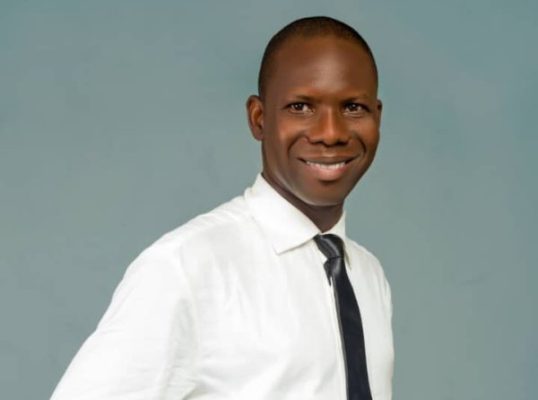
Dr. Aremu Fakunle
Dr. Aremu Fakunle
Share
Facebook Twitter LinkedIn Pinterest Email

Many people ask why bank loans in Nigeria are expensive, difficult to access or short-term. One of the major reasons is loan repayment. When loans are not repaid, banks become more cautious, interest rates rise, and fewer people get access to credit. This is not just a banking issue. It affects traders, workers, small business owners and the wider economy.

What does loan repayment mean?

Loan repayment simply means paying back borrowed money as agreed, usually in monthly installments. When borrowers repay on time, banks are able to lend again to other people.

When many borrowers do not repay, banks lose money. To protect themselves, they increase interest rates, tighten loan conditions or stop lending altogether.

ALSO READ Inside Nigeria’s loan recovery problem and pathways to reform, By Aremu Fakunle (PhD)

Why is loan repayment a big problem in Nigeria?

Loan repayment is difficult in Nigeria mainly because of how the system works.

First, consequences for non-payment are often weak. Loan disputes can take years in court. In many cases, nothing happens for a long time when someone stops paying. When people see this, some conclude that repayment is optional.

Second, some loans are poorly designed. People are sometimes given loans that do not match their income or business reality. When repayment becomes impossible, default follows.

Third, collateral does not always work. Although banks ask for land, buildings or other assets, selling these assets after default is often slow and complicated. This reduces their usefulness.

Finally, repeated loan rescheduling has created expectations. Many borrowers believe that if they stop paying, the bank will simply renegotiate rather than enforce repayment.

All these factors weaken repayment culture.

How does this affect ordinary Nigerians?

Even if you have never taken a loan, poor loan repayment affects you as:

  • Interest rates become higher than they should be
  • Small businesses struggle to access credit
  • Loan tenors are short, and this makes growth difficult
  • Banks prefer lending to a few large clients instead of many small ones

In simple terms, when repayment is weak, credit becomes scarce and expensive.

What do other countries do differently?

In many countries, not repaying a loan has clear and lasting consequences.

A person’s credit history follows them everywhere. If they default, getting another loan, renting a house, or even signing some service contracts becomes difficult. Because the consequences are clear and predictable, most people try hard to repay.

The focus is not punishment. It is making repayment the easiest option.

What is Nigeria doing to improve repayment?

Nigeria has introduced tools to strengthen repayment.

One is the Global Standing Instruction, which allows banks to recover unpaid loans from a borrower’s bank accounts. Another is the collateral registry, which records assets used to secure loans.

These tools help, but they work best when people earn a regular income through banks and when loans are well designed from the start.

How can technology help?

Technology can help banks act early instead of waiting for default.

Banks can use data to check whether someone can realistically repay before giving a loan. They can also monitor repayment patterns and reach out early when problems start.

Early action is better for both the borrower and the bank.

What needs to change for everyone to benefit?

Three simple changes can make a big difference.

First, loan repayment must have clear consequences that apply to everyone equally.

Second, loans should be designed around real income, not hope or connections.

Third, people who repay on time should be rewarded with lower interest rates and easier access to future loans.

When good behavior is rewarded and bad behavior has consequences, trust improves.

The bottom line

Loan repayment is not just a bank problem. It affects interest rates, business growth and job creation.

A system that rewards repayment and discourages default will make loans cheaper, more available and more useful for ordinary Nigerians.

When repayment improves, everyone benefits.

Dr. Aremu Fakunle John is a Senior Agricultural Economist, Management consultant and Public Policy Expert whose work spans climate-smart agriculture, nutrition, sustainable business and development economics. He is based in Abuja and can be reached via fakunle2014@gmail.com +2348063284833 

Loan repayments
Share. Facebook Twitter Pinterest LinkedIn WhatsApp Reddit Tumblr Email
Editor
  • Website

Related Posts

Africa’s workforce crisis: Why jobs and talent don’t match, By Fakunle Aremu Ph.D

May 8, 2026

South Africa’s anti-migrant crisis: A growing threat to Africa’s economic future, By Dr. Fakunle Aremu

May 6, 2026

Aliyu: 4 new motor parks near completion in Sokoto

April 10, 2026

Leave A Reply Cancel Reply

FG pledges support for IOM climate migration investment initiative

May 12, 2026

Lagos onboards 19 accelerators for N10bn LASMECO micro enterprise scheme

May 12, 2026

Lagos pushes mandatory health insurance, PPPs to close N100bn healthcare gap

May 12, 2026

The Muslim 500 ranks Sultan Abubakar 17th World’s Most Influential for 2026

May 12, 2026
About Us
About Us

ASHENEWS (AsheNewsDaily.com), published by PenPlus Online Media Publishers, is an independent online newspaper. We report development news, especially on Agriculture, Science, Health and Environment as they affect the under-reported rural and urban poor.

We also conduct investigations, especially in the areas of ASHE, as well as other general interests, including corruption, human rights, illicit financial flows, and politics.

Contact Info:
  • 1st floor, Dogon Daji House, No. 5, Maiduguri Road, Sokoto
  • +234(0)7031140009
  • ashenewsdaily@gmail.com
Facebook Twitter Instagram Pinterest
© 2026 All Rights Reserved. ASHENEWS Daily Designed & Managed By DeedsTech

Type above and press Enter to search. Press Esc to cancel.