


The Lagos State Government says malaria prevalence in the state has declined significantly over the past 15 years, dropping from 15 per cent in 2010 to 2 per cent in 2025.
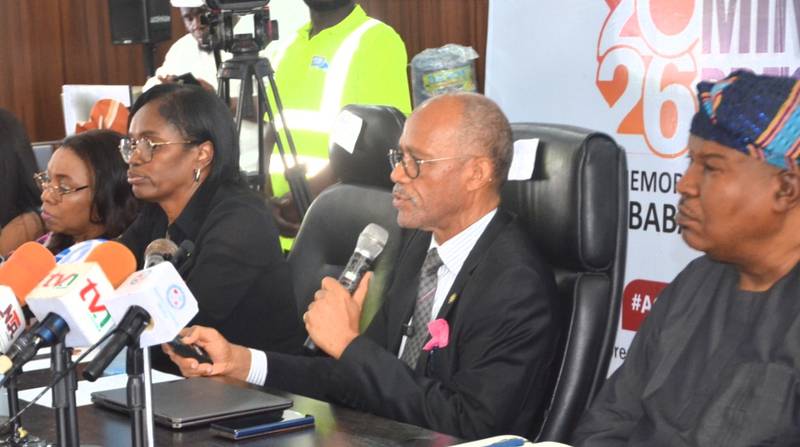
The State Commissioner for Health, Prof. Akin Abayomi, disclosed this on Tuesday at the 2026 Lagos State Ministerial Press Briefing in Ikeja. The briefing was held to commemorate the third year of Governor Babajide Sanwo-Olu’s second term in office.
Abayomi, however, noted that the state is facing a major shortage of healthcare workers. He said Lagos requires an additional 30,000 doctors and 40,000 nurses to meet its growing healthcare demands.
He attributed the reduction in malaria prevalence to sustained reforms and improved healthcare interventions.
“Although malaria prevalence has reduced drastically, it remains a major public health concern because of the large population of Lagos State,” he said.
The commissioner said the state had implemented reforms in diagnostic systems and introduced policies discouraging the indiscriminate use of antimalarial drugs. According to him, the government has promoted evidence-based treatment to reduce excessive medication and improve accurate diagnosis and patient outcomes.
“These reforms are helping us to reduce unnecessary use of antimalarial medicines and curb what we describe as sledgehammer polypharmacy,” he said.
Abayomi added that the state is also working to reduce antimicrobial resistance linked to medicines used for parasites, bacterial infections, and tuberculosis.
He disclosed that Lagos State currently has about 7,000 doctors, warning that the inadequate number of health workers could lead to burnout among existing staff.
Abayomi said the ministry had begun the expansion of the Lagos State University College of Medicine across Ikeja, Yaba, and Gbagada to boost manpower development. He noted that the expansion would increase the college’s training capacity.
“We are increasing lecture capacity from 300 seats to about 1,600 seats, while laboratories and academic office spaces are also being expanded significantly,” he said.
The commissioner added that the state government had completed a 72-room complex for house officers at the Lagos State University Teaching Hospital. He said staff quarters in Odan, Gbagada, and Ojo were nearing completion as part of efforts to improve welfare and working conditions for health workers.
“All future medical facilities in Lagos will include staff accommodation close to hospitals to improve convenience and productivity for healthcare personnel,” he said.
Abayomi also revealed that the Massey Children’s Hospital on Lagos Island was nearing completion, while some general hospitals were undergoing reconstruction or renovation, including the 280-bed Iba-Ojo General Hospital.
He said the 1,500-bed Mental Health Institute at Ketu-Ejinrin, Epe, had reached 65 per cent completion.
On primary healthcare, Abayomi disclosed that 47 primary health centres were undergoing renovation across the state, while others had been completed.
He reaffirmed the state government’s commitment to strengthening healthcare infrastructure, disease control, manpower development, and access to quality healthcare services
