


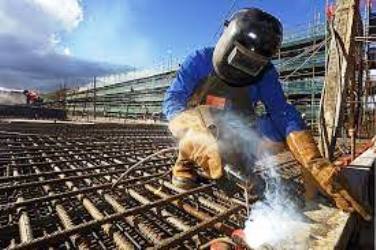
The National Institute of Welding (NIW) has urged the Federal Government to continue investing in welding technology and skills development to strengthen industrial capacity and boost economic growth.
NIW President, Mr Solomon Edebiri, made the appeal in an interview with reporters in Lagos on Monday.
He said government attention is needed in the profession, as welding remains a critical driver of Nigeria’s infrastructural development and industrial growth.
Edebiri noted that welding plays a central role in virtually all sectors of national development.
He added that the institute continues to work with stakeholders to align welding standards in Nigeria with global best practices.
“I recall that Nigeria developed a National Welding Policy, approved by the National Energy Council in October 2002, as part of efforts to standardize welding practice in the country.
“The importance of welding cannot be overemphasized. Industries such as construction, transportation, oil and gas, agriculture, communication, and education rely heavily on welding processes for assembling equipment and facilities,” he said.
Explaining welding’s importance, Edebiri highlighted its application in telecommunications (fabrication and installation of masts), agriculture (production of tractors and equipment), and storage facilities (steel silos and warehouses).
He also noted its role in transport infrastructure (ports, ferries, pipelines), refineries, and petrochemical facilities, where networks of tanks and pipelines depend on various welding techniques.
Edebiri stressed that welding is not only essential for assembling industrial structures but also crucial for ensuring safety and durability.
According to him, as a member of the International Institute of Welding, NIW is authorized to deliver training and certification in line with international guidelines.
He emphasized that the institute ensures welding practices are guided by quality assurance standards—from design and material selection through welding execution to integrity testing.
