


Stakeholders across government, development organizations, civil society groups, and local communities have renewed their commitment to promoting menstrual health education and safeguarding the dignity of girls and women in Sokoto State.
The commitment comes as they commemorated World Menstrual Hygiene Day 2026.
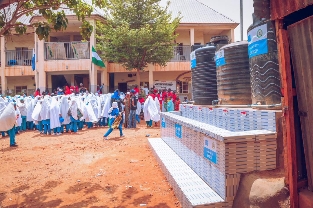
The event, held on June 4 at Unguwar Talakawa Community and Government Girls’ Day Secondary School, Kofar Marke, was themed “Together for a Period-Friendly World.” It served as a platform to raise awareness on menstrual hygiene management and encourage open discussions on issues affecting adolescent girls.
Participants emphasized the need for accurate menstrual health education, proper use of sanitary and reusable pads, and good hygiene practices to prevent infections and improve the wellbeing of girls. They also called for greater efforts to challenge harmful myths, misconceptions, and cultural taboos surrounding menstruation, noting that such beliefs often contribute to school absenteeism, stigma, and discrimination.
The programme featured health talks, practical demonstrations on the use and maintenance of reusable sanitary pads, and interactive sessions that allowed participants to engage health educators and resource persons on menstrual health concerns.
Youth advocates, including U-Reporters, actively participated in the outreach, supporting awareness campaigns and helping to deepen community understanding of menstrual hygiene management.
At Unguwar Talakawa Community, Pear and Wellbeing distributed disposable sanitary pads, while the Adolescent Girls Initiative for Learning and Empowerment (AGILE) and Life Helpers Initiative (LHI) provided reusable sanitary pads. Action Against Hunger also contributed cartons of soap to support hygiene promotion efforts.
At Government Girls’ Day Secondary School, Kofar Marke, UNICEF supported the renovation of Water, Sanitation and Hygiene (WASH) facilities and the improvement of safe spaces within the school. The organization also facilitated the distribution of sanitary materials. AGILE further provided reusable sanitary pads, school bags, and notebooks, while other partners donated additional hygiene supplies.
Organizers said the outreach reached a total of 183 people in Unguwar Talakawa Community and 433 participants at the school, including students, teachers, and representatives of government ministries, international non-governmental organizations (INGOs), and civil society organizations (CSOs).
The commemoration highlighted the collective resolve of stakeholders to tackle menstrual poverty, improve access to menstrual hygiene products and information, and ensure that girls can manage their periods safely, confidently, and with dignity.
The event also underscored the importance of creating supportive environments that enable girls to stay in school, participate fully in daily activities, and achieve their potential without barriers linked to menstruation.
