


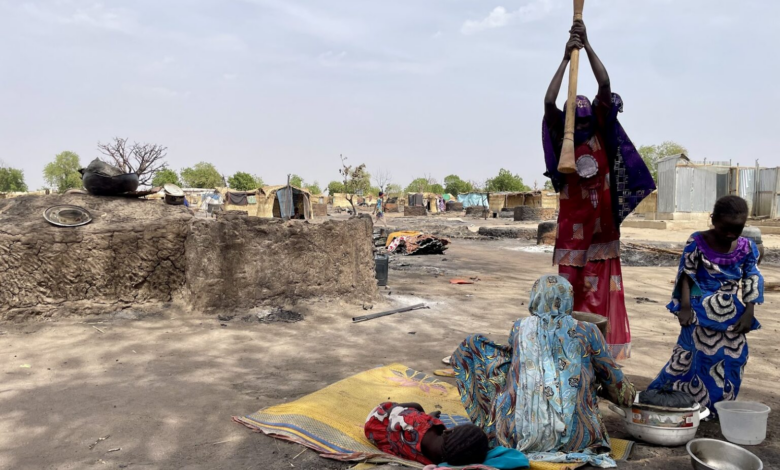
Nigeria’s northern region is experiencing continuous armed violence and a decline in rainfall as a result of climate change, both of which are hurting the region’s mainly artisanal farming population and worsening food insecurity.
By Ahmad Sakida
The country’s six geopolitical zones are beset by various crises, including insecurity, poverty, hunger, and climate change, as governments struggle to find solutions.
The Nigerian Meteorological Agency (NiMet) foresaw this climatic anomaly and issued reports about the late onset and early cessation of rains in some northern states. Despite these warning notes, there is nothing anyone, including local authorities, could do under the current climate of terror.
According to experts, this lack of action stems from two major factors: a disconnect between rural farmers and government agriculture-related institutions that are either not on the ground or obsolete, and more critically, the ongoing inflation and cost-of-living crisis of unprecedented scale.
“We can’t pay for alternative water supplies, fertilisers, and improved seeds,” said a farmer in Jigawa State.
Armed groups in northwest Nigeria and neighbouring Benin and Niger Republics continue to wreak havoc on vulnerable communities. In the Lake Chad basin, Boko Haram and the Islamic State West Africa Province (ISWAP) persist in their campaign of terror. Their activities include mass killings, abductions, village raids, and the seizure of goods along major roads and highways.
There has been some quiet in the northeast, followed by mass defections of terrorists in recent years, thanks to military campaigns and internal feuds within terrorist groups in the region. This has resulted in the elimination of several terror leaders and a decrease in violence. However, there has been a spike in suicide bombings, attacks on military facilities and convoys, abductions, and village raids lately.
According to Kyari Mustapha, a Maiduguri resident who has closely monitored the evolution of Boko Haram, “the increase in violence in the northeast and Lake Chad region can be attributed to Boko Haram and ISWAP resolving their leadership issues and gradually finding their feet.”
Terrorist organisations are also taking advantage of the difficulties experienced by the governments of Cameroon, Chad, Niger, and Nigeria. These governments face numerous internal conflicts, significantly impacting their investments in the Multinational Joint Task Force. In addition to the existing challenges, there is a lack of funds from donor countries to support the prosecution of the war adequately.
HumAngle has observed a growing pattern, in the northeast and northwest, of non-state actors imposing taxes on crops, livestock, and fish farming activities.
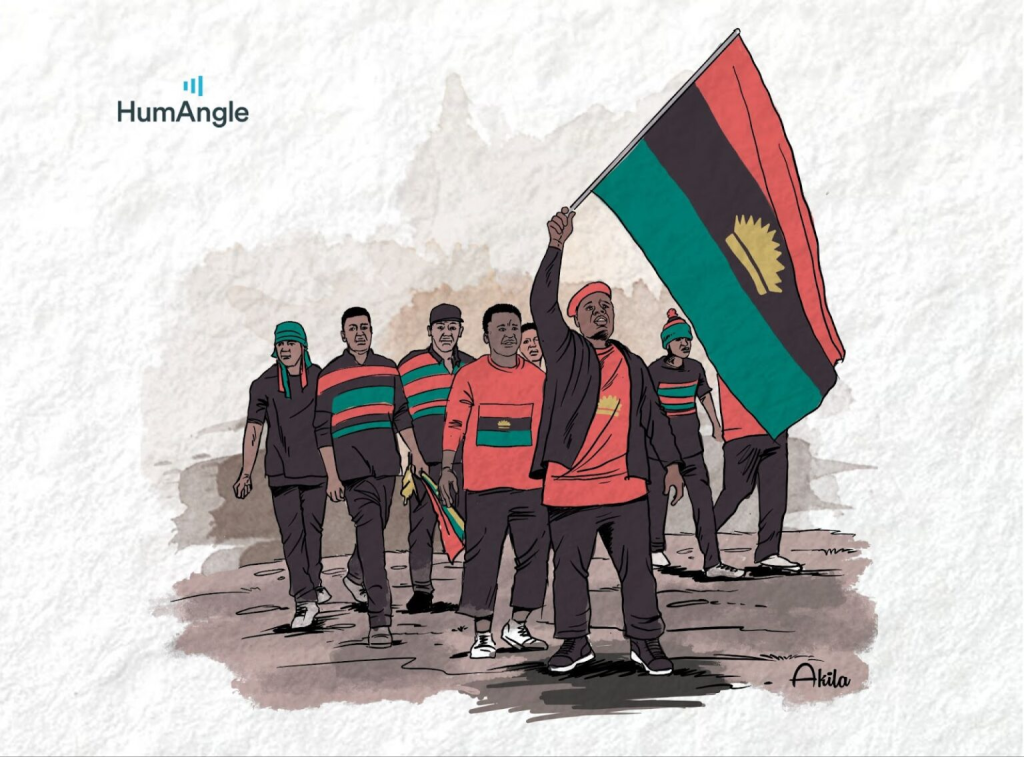
Trading in far-away southeast Nigeria is also dire. Residents occasionally find themselves confined to their homes due to the activities of armed groups like IPOB. On the days they can work without the stay-at-home order imposed by pro-Biafran armed groups, individuals are confronted with the dilemma of either paying taxes and levies to state officials or falling victim to violent groups fighting to secede from Nigeria.
Across all six geopolitical zones in Nigeria, kidnapping for ransom has unfortunately become a prevalent issue in many communities. Shockingly, around 90 per cent of these kidnappings result in ransom payments, provided the victims manage to survive. According to various sources and conversations with victims, it appears that the number of captives that were either rescued or escaped is relatively low, accounting for less than 10 per cent of cases, making kidnapping a highly profitable industry.
ALSO READ [COLUMN] Nigeria at the Cross-Road, Prof. Jibrin Ibrahim
According to socio-political risk consulting firm SBM Intelligence, between July 2022 and June 2023, “3,620 people were abducted in 582 kidnapping cases with about 5 billion naira ($3,878,390) paid in ransoms.” Many analysts put the figure higher.
Shockingly, there have been reports of police and military personnel allegedly paying ransoms across the country. The state’s capacity to develop robust institutions to guard against this lawlessness across the country is either weakened or altogether compromised.
HumAngle has extensively documented the resettlement of thousands of internally displaced persons in Borno, where the state government has relocated IDPs to rural communities with no semblance of state authority or essential amenities, such as schools, hospitals, police stations, and local courts, to settle disputes. As a result, these resettled communities are more susceptible to relying on terror groups for some sort of governance.
A farmer in the local government of Bama in Borno expressed concerns about the potential dangers of working on the farm. He emphasised the problems surrounding the safety assurances from terrorists and the uncertainties associated with paying a levy for cultivating their lands.
On the other hand, a farmer in Tsafe local government in Zamfara in the northwest said they have been engaged in agreements with terrorists for more than two years and understand the required measures to be taken. These are the dilemmas citizens face when living in ungoverned spaces or areas without effective governance.
Amid the overwhelming news coverage that often centres around terrorism and other large-scale violent conflicts, there are frequent instances of communal crises that are underreported. These conflicts primarily involve herders and crop farmers in various communities, with the most severe cases occurring in north-central Nigeria. Tragically, these clashes have led to widespread loss of life and displacement of entire communities.
For those affected, any situation that leads to loss of life, sexual violence, and the destruction of their way of life is heartbreaking. This includes conflicts of various natures, such as war, terrorism, or even local disputes that could escalate into violent confrontations.
The intensifying chaos across the country has already led to a significant movement of people from rural to urban areas and migration to safer West African countries. Some individuals may be unable to contemplate moving to more developed countries due to financial constraints and a lack of education.
Young people are growing frustrated with political elites and their perceived foreign allies, threatening law and order in the region. The upheaval in Mali, Burkina Faso, Guinea, and Niger Republic has given military officers the confidence to remove their ‘democratic’ leaders with public support.
Several Francophone countries have experienced incidents of mass looting and arson directed towards government buildings and properties belonging to politicians, similar to what occurred during Nigeria’s latest round of protests. As the situation escalated, protesters began waving Russian flags and calling for military intervention, mirroring the actions of Mali, Niger, and other Francophone West African nations.
However, unlike in other countries, the Nigerian government quelled the protests, at least for now. President Bola Ahmed Tinubu addressed the nation twice amidst ongoing protests, and according to top officials, the government has noted that it is no longer business as usual.
In July, the President signed the Act establishing the Northwest Development Commission. The Southeast also got a commission, joining the Northeast. These commissions may not address all the issues, but according to security experts, they are signs of political steps needed to facilitate the reconstruction of infrastructure destroyed by the multidimensional crisis and address poverty, illiteracy, ecological problems, and other development-related challenges in these regions.
The Northwest is currently one of Nigeria’s poorest and most violent regions, according to the nation’s national security adviser. In March 2024, MSF recorded approximately 500,000 severe acute malnutrition cases in the northwest. In 2023, 854 children admitted to MSF hospitals in the region died within 48 hours, underscoring the dire situation.
Terrorism and self-help militias have uprooted many communities. The IOM Displacement Tracking Matrix reports around 662,000 internal displacements since April 2024.
The World Food Programme estimated that in 2021, over 1.6 million people in just three states—Katsina, Sokoto, and Zamfara—were food insecure. These figures will likely be doubled by July 2024.
Away from northern Nigeria, between January 2023 and the middle of July this year, the southeast region has recorded nearly 900 incidents of political violence, which have led to at least 784 deaths. By comparison, the South recorded 652 fatalities and the Southwest 402 fatalities in the same period. This means the Southeast, which used to be the safest part of the country about a decade ago, has now become the least safe region in the South. The hotspots of this violence are Anambra and Imo states.
Nigeria is on edge and requires all the support it can muster to address the escalating transnational crimes that pose a threat to its existence. Recent developments suggest that the country is experiencing strained pan-African relations with several African countries, including its closest neighbour, the Niger Republic, as well as other Francophone nations.
Amid the widespread anger that led to regime change in Niger, the citizens are expressing deep concerns about the apparent lack of solidarity from Nigeria, adding to the already complex web of accusations that the country exports crimes and terrorism to its neighbours.
Critics have raised concerns about Nigeria’s alliances with unpopular political leaders and colonial powers in its dealings with some of its neighbours, warning that this could potentially impede the country’s ability to secure future support in tackling transnational violent crimes and terrorism.
