


As a deliberate intellectual choice, I often refrain from discussing the Middle Eastern crisis in the “open market” of social media commentary. From my vantage point as a trained political scientist, with sustained engagement in the dynamics of global power politics and the generational oscillations of the region’s conflicts, I am acutely aware of how easily complex geopolitical realities are reduced to emotive, sectarian, and ideologically rigid exchanges masquerading as discourse. Serious engagement on this subject demands historical literacy, conceptual discipline, and analytical sobriety. Where I intervene, it is usually within informed academic circles, spaces where arguments may be intense but rarely descend into ad hominem hostility, where perspectives clash but are not anchored in ignorance of historical foundations.
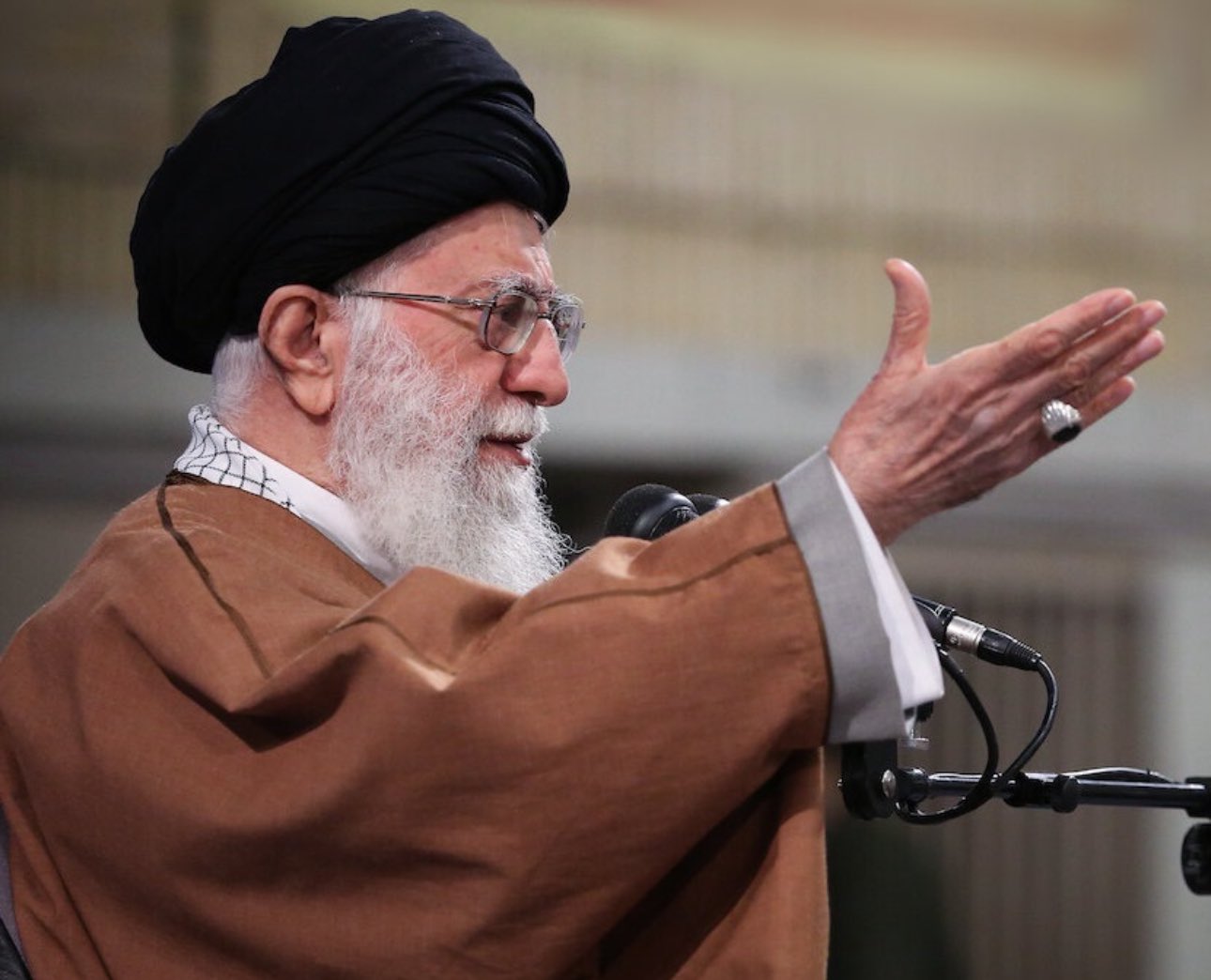
The assassination of Ali Khamenei, within the context of escalating aggression against the Iranian state by Donald Trump and Benjamin Netanyahu, compels reflection rather than reaction. Whether one agrees with or opposes Iran’s ideological orientation, the elimination of a theocratic head of state in such a volatile geopolitical theatre cannot be treated as a mere tactical episode. It carries theological, psychological, and strategic implications that extend far beyond the immediate event. The jubilation visible in some quarters is particularly instructive. In deeply ideological systems, death does not always signal defeat. In certain contexts, it signals consecration.
More than two decades ago, in a lecture on the Palestinian question within the broader Arab–Israeli conflict, my lecturer, then Dr. and now Professor Suleiman Olarewaju Abubakar, made a remark that has remained analytically durable in my mind.
1He described it as “a conflict between those who do not fear death and those who love life”. With time, that statement reveals itself not as rhetoric but as a concise description of conflict psychology in protracted ideological struggles. In asymmetrical contests infused with theology, nationalism, and civilizational memory, deterrence theory behaves differently. Martyrdom narratives can override material loss calculations. Elimination can produce elevation.
ALSO READ US, Israeli forces strike Iran; Tehran responds with missile barrage toward Israel
There is a strategic assumption embedded in leadership decapitation doctrines that if the head is removed, the body collapses. Certainly, regimes can be weakened by sustained military pressure, and the decapitation of the Iranian leadership structure might be pursued or even achieved through superior force projection. Yet history raises a sobering question. Are ideological systems uprooted by eliminating their protagonists?
The historical record suggests otherwise. Ideological states, particularly those forged in revolution, are rarely sustained by personality alone. They are embedded in institutions, clerical hierarchies, security architectures, and a cultivated narrative of resistance. Removing Ali Khamenei, now conclusively established, may mark the end of a chapter, but it does not automatically dissolve the ideological manuscript.
For the coalition aligned around Benjamin Netanyahu and Donald Trump, the objective may well be regime destabilization or strategic recalibration via regime change.
However, geopolitical history consistently demonstrates that coercive elimination often consolidates internal resolve rather than extinguishes it. Within Persian political culture and Shi’a revolutionary theology, a leader felled in confrontation, particularly within sacred timeframes such as Ramadan, can be mythologized. Mythologized leaders do not disappear from the political imagination; they multiply symbolically, reinforcing the very narrative they were meant to suppress.
The rivalry between Israel and Iran is not merely a contemporary diplomatic disagreement. It is a long-drawn contest for regional supremacy, strategic depth, and ideological projection. Even if the present Iranian leadership structure were to fall, the structural drivers of the conflict would remain intact. Competing security doctrines, proxy theatres across the region, nuclear deterrence calculations, and deeply entrenched civilizational narratives would continue to shape behavior.
The elimination of one protagonist does not dissolve these variables. It simply alters their configuration. What some interpret as closure may in fact be transition. The end of one leadership era could become the dawn of another, potentially more hardened, more security-conscious, and more entrenched in its worldview.
Beyond personalities and alliances lies a broader systemic concern about the normalization of might as right, selective moral outrage, and geopolitical double standards. When force is justified for some and condemned for others, when aggression is reframed as preemption while retaliation is labelled provocation, when victims are blamed and aggressors omitted from narrative framing, credibility within the international system erodes. The Middle Eastern theatre does not suffer from a shortage of commentary. It suffers from a deficit of principled consistency.
This reflection is not an endorsement of any state actor. It is an analytical caution. Power can remove individuals, but it seldom extinguishes ideologies rooted in history, theology, and collective memory. If this moment marks the end of a chapter, it may simultaneously inaugurate another in the enduring geopolitical contest between Israel and Iran.
One can only hope that the international community moves beyond cycles of strategic elimination and selective morality toward a peace anchored not in dominance, but in justice and mutual security. Such a peace cannot be constructed on the fragile foundation of temporary tactical victories or the illusion that military superiority alone can engineer political submission. Durable stability emerges not from humiliation of adversaries, but from frameworks that address core grievances, security dilemmas, and historical narratives that sustain hostility.
If the global order is to retain legitimacy, its custodians must demonstrate consistency in the application of norms. International law cannot be invoked selectively, nor sovereignty defended only when geopolitically convenient. Where standards fluctuate according to alliance structures, resentment deepens, and revisionist impulses strengthen.
In a region as historically burdened and strategically sensitive as the Middle East, credibility is currency.
Ultimately, peace in the Iran–Israel rivalry, and in the wider regional theatre, will demand statesmanship that transcends electoral cycles and populist applause. It will require leaders prepared to privilege long-term equilibrium over short-term spectacle, and institutions willing to mediate rather than inflame.
Until then, the region risks remaining trapped in a recurring pattern where each act intended to end a conflict merely reshapes it. True resolution will not come from who can strike harder, but from who can imagine a security architecture in which neither side perceives its survival as contingent upon the other’s destruction.
