


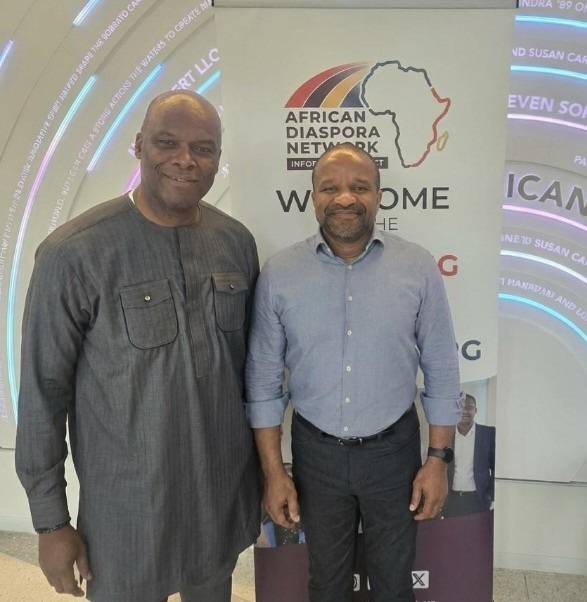
InnoPower Africa and Luma Learn AI are collaborating to expand access to artificial intelligence (AI) tools and education across Africa, targeting one million learners.
Mr. Chris Folayan, Co-Founder and Board Chairman of Luma Learn AI, announced this in a statement delivered by Remy Chukwunyere, Director for Africa at InnoPower Africa Foundation, on Friday in Abuja.
Folayan said the Nigeria-led initiative aims to deepen AI literacy and promote digital inclusion across the continent. He noted that the collaboration responds to the urgency of ensuring Africa benefits from the rapidly evolving global AI ecosystem.
Africa’s AI market is projected to reach $16–18 billion by 2030, he added. However, nearly 40% of Africans still lack reliable broadband access, highlighting gaps in digital infrastructure. Folayan warned that delayed adoption of transformative technologies could widen development gaps and limit Africa’s global competitiveness.
“The platform delivers free, personalized AI tutoring to underserved learners. It has already supported over 160,000 students and provided more than 4.8 million learning sessions across 11 languages via WhatsApp.
“Our goal is to reach one million children with accessible, inclusive AI-powered learning tools. Luma was built for learners overlooked by every other system. Partnering with InnoPower allows us to reach them faster and further than either of us could alone,” he said.
Mr. Emil Ekiyor, Founder and CEO of InnoPower Africa, said the initiative will focus on structured access to AI tools and training.
“Africa is not waiting for technology to arrive; Africans are already among the most active AI users globally. What we need is structured access, training, and infrastructure—exactly what this partnership provides,” he said.
The programme will adopt a train-the-trainer model to equip professionals supporting micro, small, and medium enterprises (MSMEs). It will also integrate AI tools into training for educators and entrepreneurs across West Africa.
Currently, InnoPower Africa partners with the ECOWAS Small Business Coalition to train 250 master trainers reaching 12,500 small businesses. It also collaborates with the Lagos State Employment Trust Fund to train 100 master trainers supporting 5,000 entrepreneurs.
“The collaboration will leverage networks in the U.S. and West Africa to expand access and adoption. Efforts include funding mobilization, professional engagement, and integrating AI tools into training programs.
“We aim to raise an initial $250,000 to scale AI learning tools across the ECOWAS subregion, targeting students, teachers, families, and MSMEs, with an emphasis on practical AI applications,” Ekiyor said.
He emphasized that timely investment in AI education and infrastructure will determine Africa’s position in the global digital economy.
