


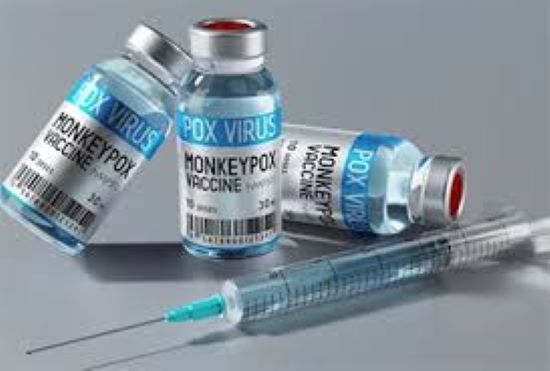
Vaccines represent one of the greatest feats of modern medicine, with their evolution traceable to Edward Jenner’s 18th-century smallpox inoculation, evolving to today’s complex molecular platforms. These biological preparations safely prime the immune system to recognise and fight pathogens, preventing over 30 infectious diseases globally.
For decades, widespread vaccination led to the elimination or dramatic reduction of scourges like polio and measles. However, while vaccines remain one of humanity’s greatest achievements, Nigeria continues to face hurdles in realising their full potential, experts say. The country continues to battle outbreaks of preventable diseases, including diphtheria, recurring measles, mpox, and others, often due to low immunisation coverage and logistical challenges.
This low rate fuels the spread, demonstrating that while the power of vaccines remains constant, their effectiveness relies entirely on access and public uptake.
At a webinar on “Mpox Resurgence in Nigeria” held by Preventing Health Nigeria Advocacy and Operations Ltd., its CEO, Adekola Wujola, emphasised the power of vaccination. The webinar had the theme: “Mpox Resurgence in Nigeria: The Efforts, Challenges, and Recommendations”.
Wujola decried Nigeria’s low vaccine coverage rate, currently pegged at 62.5 per cent, which falls significantly short of the 80 per cent target required to achieve sufficient herd immunity and protect the population from preventable diseases. The concern comes amid a global resurgence of vaccine-preventable illnesses, such as measles in countries that had previously eliminated them, driven by declining immunisation rates.
Reiterating the significant impact of vaccines on public health, he cited the 1980 eradication of smallpox as undeniable proof of their effectiveness against diseases. “Smallpox—that’s the only disease that’s been eradicated by mankind, in 1980, and that was due to vaccination,” Wujola stressed.
He drove home the power of vaccination using an emotive historical photo. “This is a clear example of the power of vaccines, that a child who does not have smallpox can sit down side by side—simply because one has been vaccinated and the other has not. There are indeed a lot of advantages—undeniable advantages—children, adults, and everyone stands to benefit from vaccination.”
On some of the challenges affecting the country’s vaccine uptake, he highlighted that low coverage, exacerbated by pervasive misinformation and ill-informed healthcare practitioners (HCPs), are preventing Nigeria from realising the full positive effects of the diseases vaccines are designed to prevent. He also noted that the emigration of healthcare professionals hampers sustained campaigns and public confidence.
“Several factors undermine high vaccine uptake. There’s a lot of misinformation. As we all know, social media has its own contributions to this,” he warned. “The majority of vaccination campaigns fail because of the non-participation of healthcare professionals; once the healthcare professional opposes the campaign, it is going to fail.”
On the implications, Wujola described the economic cost as steep. “There’s a huge economic impact of sickness. The burden of disease falls on our healthcare systems.”
In response to this challenge, he said that organisations like Preventing Health Nigeria were focusing advocacy efforts first on HCPs through capacity building and public-focused vaccine campaigns, aiming to correct misinformation and drive coverage rates above the critical 70 per cent threshold. According to him, advocacy, accurate information, and the stewardship of healthcare professionals remain essential. “Once the professionals don’t have the right attitude and perceptions concerning vaccination because they are misinformed or ill-informed, it’s not going to work,” Wujola concluded.
Prof. Isaac Adewole, former Minister of Health, spoke on the country’s approach to mpox control and prevention in Nigeria, calling for urgent concerted action to curb the spread. According to him, new cases of mpox, previously known as monkeypox, continue to emerge across Nigeria and globally.
He described mpox as a viral disease previously confined to Central and West Africa, but now recognised as a worldwide health threat. He explained that transmission occurred mainly through close personal contact, exposure to contaminated objects, or animal-to-human spread, with recent studies confirming the risk of transmission even from individuals without visible rashes.
“A high index of suspicion among health workers and the general public is vital due to the diverse presentation of symptoms that may resemble chickenpox or scabies,” he said.
Adewole noted that Nigeria recorded over 400 confirmed cases and more than 1,600 suspected cases as of Oct. 31, 2025, with six reported deaths. He commended the Nigerian Centre for Disease Control and Prevention (NCDC) for its swift response, including a national vaccination campaign targeting health workers and updates to patient care guidelines, allowing home-based management of mild cases.
However, he warned of major challenges hindering progress, including persistent resource constraints, limited vaccine supplies, public stigma, and widespread misinformation. “Access to vaccines for high-risk groups must be accelerated, and community awareness scaled up to dispel misconceptions and under-reporting,” he urged.
Adewole also called for partnership among local, state, and federal authorities, emphasising that no state is immune and mobilisation at all levels is crucial to ending the outbreak.
Dr Sebastine Oiwoh, Consultant Dermatologist and Venereologist, ISTH Irrua & Edo State Incident Manager for Mpox, identified stigma and mental health issues as challenges associated with diseases like mpox. Oiwoh recommended strategies to increase vaccine coverage and combat stigma associated with skin conditions arising from some of the diseases.
He underscored the crucial role of patient and community education, effective management of patient expectations, and the fight against stigma in boosting vaccine acceptance, particularly in the context of emerging infectious diseases.
Oiwoh highlighted that stigma surrounding certain health conditions could drastically affect community perception and uptake of vaccines. “Stigma is just at the end of the spectrum, because there is a perception in the eyes of the person who sees a patient with a disease. If it is not addressed at that level, then the action that follows the perception is where stigma comes into place.”
To counter this, he advised the need for public health awareness and communication tailored to local communities. “The NCDC’s Risk Communication and Community Engagement pillar has ensured that awareness is done in ready-to-understand languages in communities, with translations of various advocacies,” he said.
Oiwoh also spoke on managing expectations for those affected, noting, “Taking care of patient expectations is also another thing, encouraging the relations who will follow the patient, particularly the husband or wife. The stigma starts from the patient, then the immediate environment, then the community.”
In addition to traditional education methods, Oiwoh underscored the effectiveness of digital platforms. “We found that digital health technology, using tailored messages, was better in Nigeria,” he said, referencing a systematic review conducted with colleagues from the Harvard Programme in Implementation Science.
He advocated strategies such as community-based dramas, folklore, and digital campaigns using local dialects. “Can we engage the community using folklore, dramas, using community-based strategy that will make them accept vaccines? These are things that we need to domesticate within our environment, and that definitely would work,” he added.
In review, the experts recommended a multi-pronged approach, addressing stigma, managing patient expectations, and embracing both technological and traditional education as essential to improving vaccination rates across Nigeria. They emphasised that vaccine hesitancy can be overcome when communities are equipped with accurate information in accessible formats and when digital tools are leveraged alongside on-the-ground engagement.
Continuous advocacy and capacity-building efforts, particularly for healthcare professionals, alongside sustained public-focused vaccine campaigns, are crucial and should be maintained without interruption.
NANFeatures
