


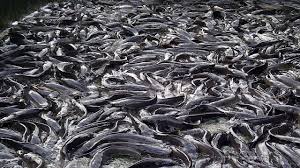
Some aquaculture experts have urged fish farmers to adopt better marketing strategies and reduce their dependence on middlemen to gain greater control over the pricing of their produce.
The experts made the call in separate interviews with reporters on Thursday in Lagos.
Mr. Femi Dario, an aquaculture expert and Chief Executive Officer of Rid Agri Ltd., identified limited market access and the dominance of middlemen in price determination as major challenges facing fish farmers.
“The major challenge currently affecting fish farmers is market access and the monopoly of price determination. Fish farmers have not been able to set the right price for their produce because they rely entirely on middlemen to sell their fish. When farmers are not in control of the market, they cannot determine their profit margins effectively,” he said.
Dario urged governments at all levels to support farmers with market access initiatives and better distribution channels. He advocated the creation of open markets and neighbourhood fish markets to enable farmers to connect directly with consumers and improve profitability.
READ ALSO: LIFE-ND trains Abia farmers on standards, packaging
“Relying entirely on middlemen will not take farmers far. There are consumers for the fish, but only middlemen seem to understand how the system works. If the government wants to assist, it should create open markets or encourage neighbourhood fish markets,” he said.
Also speaking, Mr. Bashir Amin, an aquaculture expert and fish monger, advised farmers to focus less on blaming middlemen and more on improving their own marketing systems.
“We sometimes oversimplify the causes and effects of marketing in the aquaculture sector. Middlemen are in business to make money, just as farmers are. Farmers do not need to beg anyone to buy their produce at a particular price,” he said.
Amin stressed the need for farmers to organise themselves to negotiate better prices, noting that increased production costs naturally lead to higher market prices.
He cited the example of some fish farm estates that aggregate members’ produce and collectively set prices before inviting buyers.
“With this arrangement, buyers and middlemen have little choice but to purchase at prices determined by the farmers,” he said.
Amin also encouraged farmers to add value to their produce by smoking or drying fish, noting that processed fish attracts premium prices and has a longer shelf life.
He urged fish farming associations to engage professional marketers and adopt successful sales models from other agricultural sectors.
“Farmers should not concentrate only on production without planning how to sell. Business is not charity, and the aquaculture business is no exception,” he said.
