


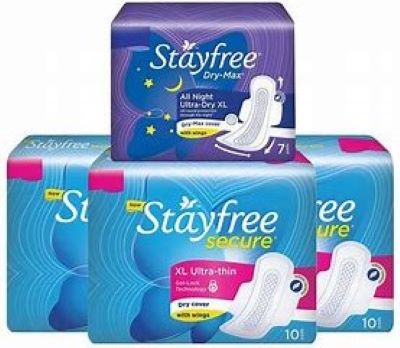
The Wife of the President, Senator Oluremi Tinubu, on Tuesday distributed 10,000 packs of sanitary pads to schoolgirls in rural communities of Abia State to promote menstrual health and dignity.
The distribution took place during the launch of the Renewed Hope Initiative (RHI) “Flow with Confidence” programme in the state, themed “Empowering School Girls Through Menstrual Health.”
Represented by the Wife of the Abia State Governor, Mrs. Priscilla Otti, Senator Tinubu stated that the initiative aims to enhance the dignity and confidence of schoolgirls, particularly those from undeserved communities.
“No girl should miss school because of her inability to afford sanitary products. Menstrual poverty is unacceptable in modern society,” she said.
“It is unacceptable that our girls, especially those in rural communities, continue to face challenges during their menstrual cycle, with some missing school days every month because they cannot afford sanitary pads.”
The programme will provide a one-year supply of disposable sanitary pads to 370,000 schoolgirls in rural communities across Nigeria. Each state and the Federal Capital Territory will receive 10,000 packs through their respective first ladies and RHI coordinators.
Senator Tinubu disclosed that the RHI invested over N2.5 billion to procure customized disposable sanitary pads from a local manufacturer in Lagos.
She urged local government chairmen to take ownership of the intervention, ensure direct distribution to deserving girls in rural areas, and warned that the pads must not be sold under any circumstances.
The First Lady also called on corporate organizations, parastatals, agencies, traditional rulers, and religious leaders to support the programme and monitor distribution in their communities.
She advised beneficiaries to “stay in school, study hard, and never allow shame or stigma to take away your confidence.”
The Commissioner for Women Affairs in Abia State, Dr. Maureen Aghaukwa, described the initiative as “more than just an event” — a movement confronting silence, stigma, and cultural taboos surrounding menstruation.
“Menstruation is a natural biological process that should not limit the confidence or participation of girls and women in society,” she said.
“In many communities, young girls miss school and women experience discomfort and shame because of myths and misinformation about menstruation. Through this initiative, we are saying clearly that there is no shame in womanhood. There is strength, pride, and confidence.”
Dr. Aghaukwa reaffirmed the state government’s commitment to ensuring no girl in Abia is left behind due to lack of access to menstrual hygiene products or proper reproductive health education.
The Commissioner for Health, Prof. Enoch Uche, described the programme as an investment in human capital, education, and economic growth.
“Today’s distribution is not just about providing products; it is about empowering our girls, fostering gender equality, and ensuring that no girl is left behind because of menstruation,” he said.
Resource person Dr. Joy Okechukwu explained that menstrual hygiene management involves using clean sanitary materials, access to water and soap, and safe disposal facilities.
She noted that poor menstrual health and hygiene affect Sustainable Development Goals 3 (Good Health and Well-being), 4 (Quality Education), 5 (Gender Equality), 6 (Clean Water and Sanitation), and 8 (Decent Work and Economic Growth).
“When girls miss school because of menstruation, it affects their academic performance and long-term opportunities. Poor hygiene practices can also lead to infections and other reproductive health challenges,” she said.
Dr. Okechukwu urged parents, teachers, and community leaders to dispel myths and harmful cultural beliefs, stressing that accurate information is key to empowering young girls.
Another resource person, Dr. Theodora Igboruka, described menstrual health as a developmental and economic concern.
She cited national data showing that millions of Nigerian girls menstruate monthly, yet a significant percentage miss classes due to lack of sanitary products.
“If a girl misses about four days of school every month because of menstruation, that amounts to nearly a month of lost learning in a year. This creates learning gaps, affects examination performance, and ultimately reduces human capital development,” she said.
Dr. Igboruka highlighted how rising costs of sanitary products have worsened access for low-income families, forcing some girls to use unhygienic alternatives.
She called for sustained collaboration among government, private sector, civil society, and traditional institutions to address cultural taboos and improve water, sanitation, and hygiene facilities in schools.
She also urged the state government to develop a dedicated menstrual hygiene policy to sustain the campaign.
The Permanent Secretary, Ministry of Women Affairs, Mrs. Becky Oguama, affirmed the state government’s commitment to tackling menstrual poverty, including lack of affordable products, inadequate facilities, and cultural taboos.
She expressed readiness to evolve a policy supporting optimal menstrual health for women and girls.
Two beneficiaries, Chiamaka Friday and Nmesoma Chigozie, in interviews with reporters, thanked the First Lady for the one-year supply of pads and the valuable hygiene tips they received.
They pledged to share the knowledge with friends and family to help combat myths and misinformation about menstruation.
The event drew government officials, traditional rulers, religious leaders, and students from various schools across Abia State, underscoring broad support for addressing menstrual health challenges and empowering girls through education and access to essential hygiene products.
