


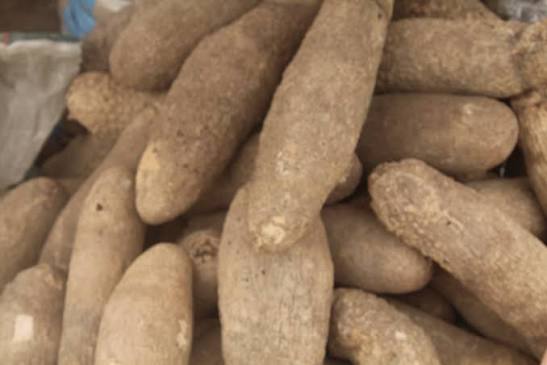
Yam prices continue to fluctuate across Lagos markets, with traders attributing the increase to transportation costs, seasonal supply patterns, and sourcing challenges.
Both traders and consumers are increasingly considering transport fares and convenience when buying the staple food.
Yam remains one of Nigeria’s most consumed staples, widely used in homes, restaurants, and food businesses. It is eaten boiled, fried, roasted, or pounded, making it a regular feature in many households.
In Lagos, yam is sold in neighborhood markets as well as major wholesale hubs such as Oyingbo Market and Mile 12 Market, where traders attract bulk buyers seeking lower prices. However, while prices at larger markets may be cheaper, transportation costs and convenience often influence where consumers shop.
Traders and consumers who spoke with reporters on Sunday said yam prices have risen significantly compared to previous years, citing seasonal supply shortages and rising sourcing costs.
Tubers that sold for between N1,200 and N2,000 during the same period in 2025 now cost between N2,500 and N3,500, depending on size and origin.
Traders explained that larger and better-quality tubers command higher prices, while smaller varieties remain more affordable for low-income buyers.
A yam trader at Oyingbo Market, Mr. Ibrahim Hassan, said fresh harvests were still limited because the new planting season had just begun.
“They are planting yams now, and by August, the yams we are buying for N2,500 to N3,000 could sell for nearly double,” Hassan said.
Another Oyingbo Market trader, Mrs. Jumoke Fakunle, said yam prices are largely determined by tuber size.
“The cheapest yam you can get here ranges from N2,500 to N3,500. Prices are generally lower in major markets compared to neighborhood markets,” she said.
A trader at Mile 12 Market, Mrs. Abiodun Ariyo, also noted that yam prices have increased compared to the same period in 2025. Tubers currently sold for between N2,500 and N3,000 were priced between N1,200 and N2,000 last year.
Mrs. Kehinde Adebayo, another Oyingbo Market trader, said bulk purchases and direct access to suppliers contribute to relatively cheaper prices.
“We receive trailers from the North, so customers buying here enjoy better prices than in smaller roadside markets. Retailers in smaller markets usually buy from wholesale hubs and add transportation and other expenses before reselling,” she explained.
Consumers’ preferences vary. Mrs. Amaka Njoku prefers buying yam from nearby markets for smaller household purchases.
“If we compare it to when yam prices were very high and a tuber sold for almost N10,000, I think N2,500 to N3,500 is fair now. Once you add transport fare, traveling to major markets may not always be worth it,” she said.
Another consumer, Mrs. Titilope Adekeye, prefers larger markets where prices are often lower.
“I recently bought yam for between N1,500 and N2,500 per tuber. I don’t see why I should pay more elsewhere when I can get cheaper options,” she said.
Mrs. Funmilayo Ajayi, a resident of Surulere, now buys yam from Oyingbo because prices in nearby markets have become too expensive.
“In my area, one yam can cost N4,000, but at Oyingbo, I get better sizes for less. Even after transport costs, I still save money,” she said.
The varying prices underscore how transportation costs, market location, and seasonal supply continue to shape food purchasing decisions among Lagos residents.
