

• Home
  • Agric
  • Sci & Tech
  • Health
  • Environment
  • Hausa News
  • More
    • Business/Banking & Finance
    • Politics/Elections
    • Entertainments & Sports
    • International
    • Investigation
    • Law & Human Rights
    • Africa
    • ACCOUNTABILITY/CORRUPTION
    • Hassan Gimba
    • Column
    • Prof. Jibrin Ibrahim
    • Prof. M.K. Othman
    • Defense/Security
    • Education
    • Energy/Electricity
    • Entertainment/Arts & Sports
    • Society and Lifestyle
    • Food & Agriculture
    • Health & Healthy Living
    • International News
    • Interviews
    • Investigation/Fact-Check
    • Judiciary/Legislature/Law & Human Rights
    • Oil & Gas/Mineral Resources
    • Press Freedom/Media/PR/Journalism
    • General News
    • Presidency
  • About Us
    • Contact Us
    • Board Of Advisory
    • Privacy Policy
    • Ethics Policy
    • Teamwork And Collaboration Policy
    • Fact-Checking Policy
    • Advertising
  • Media OutReach Newswire
    • Wire News
  • The Stories
Facebook Twitter Instagram
Trending
  • Nigerian freelancers face rising financial pressure
  • Airtime borrowing myths debunked by FCCPC
  • CBN introduces Nigeria’s new overnight rate
  • NALPGAM, LASTMA team up for safer LPG transport in Lagos
  • NSIB introduces new conditions of service
  • NDPC probes alleged CAC data breach
  • Customs seize N93m goods in Adamawa
  • Nasarawa speaker awards N60m scholarships
Facebook Twitter Instagram YouTube
AsheNewsAsheNews
  • Home
  • Agric

    Association urges members to boost catfish value

    April 17, 2026

    WFP spends $5M on shock response in Nigeria

    April 17, 2026

    Stakeholders push investment in Nigeria’s agribusiness

    April 16, 2026

    Nigeria faces 1m tonne palm oil deficit

    April 16, 2026

    WFP spends $5m on social protection in Nigeria

    April 16, 2026
  • Sci & Tech

    Nigerian freelancers face rising financial pressure

    April 17, 2026

    NDPC probes alleged CAC data breach

    April 17, 2026

    Airtel temporarily suspends credit services

    April 17, 2026

    First lady to launch ECoN initiative in Kano

    April 17, 2026

    NBTE declares AI core to technical education

    April 17, 2026
  • Health

    Family planning lowers maternal mortality by 30%

    April 17, 2026

    PCN seals 598 drug outlets in Kaduna

    April 17, 2026

    Foundation deploys health officers in Abia

    April 17, 2026

    UNILAG medicine faculty targets clinical innovation

    April 16, 2026

    Parasite free world unrealistic – FUTA professor

    April 16, 2026
  • Environment

    NSIB introduces new conditions of service

    April 17, 2026

    LAWMA cracks down on environmental violations in Alimosho

    April 17, 2026

    FG hands over 132 housing units to Kwara

    April 17, 2026

    SON hosts workshop on motor energy standards

    April 16, 2026

    Nigeria pushes for better water, sanitation

    April 15, 2026
  • Hausa News

    Otti plans 250-room 5-star hotel in Umuahia

    April 11, 2026

    Anti-quackery task force seals 4 fake hospitals in Rivers

    August 29, 2025

    [BIDIYO] Yadda na lashe gasa ta duniya a fannin Ingilishi – Rukayya ‘yar shekara 17

    August 6, 2025

    A Saka Baki, A Sasanta Saɓani Tsakanin ‘Yanjarida Da Liman, Daga Muhammad Sajo

    May 21, 2025

    Dan majalisa ya raba kayan miliyoyi a Funtuwa da Dandume

    March 18, 2025
  • More
    1. Business/Banking & Finance
    2. Politics/Elections
    3. Entertainments & Sports
    4. International
    5. Investigation
    6. Law & Human Rights
    7. Africa
    8. ACCOUNTABILITY/CORRUPTION
    9. Hassan Gimba
    10. Column
    11. Prof. Jibrin Ibrahim
    12. Prof. M.K. Othman
    13. Defense/Security
    14. Education
    15. Energy/Electricity
    16. Entertainment/Arts & Sports
    17. Society and Lifestyle
    18. Food & Agriculture
    19. Health & Healthy Living
    20. International News
    21. Interviews
    22. Investigation/Fact-Check
    23. Judiciary/Legislature/Law & Human Rights
    24. Oil & Gas/Mineral Resources
    25. Press Freedom/Media/PR/Journalism
    26. General News
    27. Presidency
    Featured
    Recent

    Nigerian freelancers face rising financial pressure

    April 17, 2026

    Airtime borrowing myths debunked by FCCPC

    April 17, 2026

    CBN introduces Nigeria’s new overnight rate

    April 17, 2026
  • About Us
    1. Contact Us
    2. Board Of Advisory
    3. Privacy Policy
    4. Ethics Policy
    5. Teamwork And Collaboration Policy
    6. Fact-Checking Policy
    7. Advertising
    Featured
    Recent

    Nigerian freelancers face rising financial pressure

    April 17, 2026

    Airtime borrowing myths debunked by FCCPC

    April 17, 2026

    CBN introduces Nigeria’s new overnight rate

    April 17, 2026
  • Media OutReach Newswire
    • Wire News
  • The Stories
AsheNewsAsheNews
Home»Food & Agriculture»VIEWPOINT: Food system reform is key for climate
Food & Agriculture

VIEWPOINT: Food system reform is key for climate

EditorBy EditorJune 26, 2022Updated:June 26, 2022No Comments5 Mins Read
Share
Facebook Twitter LinkedIn Pinterest Email

In March, the Global Alliance for the Future of Food published an analysis of the national climate plans for 14 countries, including Bangladesh, China, Senegal, the United States, and the United Kingdom. We were looking to see how well the potential for transformation of food systems to help drive down emissions had been taken into account. Overall, we found that countries were not doing enough to systematically recognize and capitalize on the significant potential gains from changing the way we grow, transport, and consume food.

This seems counterintuitive, given that agriculture and food production account for around a third of global greenhouse gas emissions, and that the contribution rises when you take into account deforestation and other land use change, which are often associated with food systems.

Our report highlights that food systems reform presents the opportunity to realize at least 20% of the emissions reductions needed by 2050 to keep global warming below 1.5 degrees Celsius.

And yet there were gaps across all the plans we looked at. For example, none of the nationally determined contributions, or NDCs, fully account for emissions from food imports, particularly those linked to deforestation and the destruction of nature and ecosystems. Germany is the only country that commits to move away from harmful subsidies that prop up intensive agricultural practices and contribute to higher emissions — such as chemical-intensive agriculture, intensive livestock production, and the production of ultra-processed foods.

None of the plans assessed include specific measures to promote healthy and sustainable diets, although this has the potential to significantly reduce emissions by nearly a billion metric tons a year. Food waste is also a big blind spot.

More reading:

One-third of all food produced in the world — approximately 1.3 billion metric tons — is lost or wasted every year but France is the only country we looked at whose NDC includes comprehensive measures to reduce food loss and waste. China passed an anti-food waste law last April, but this is not reflected in its NDC.

The countries banking on food systems transformation

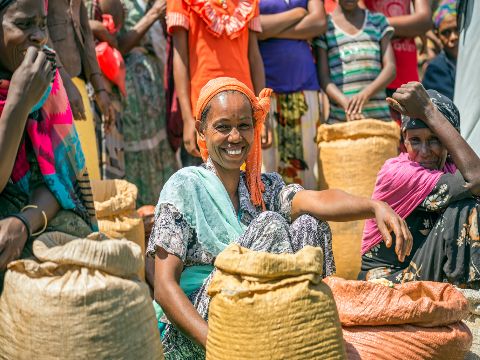
It was low- and middle-income countries that stood out from others as having NDCs that best took into account the potential for food systems reform to drive down emissions, and deliver a range of other benefits.

Colombia, Kenya, and Senegal have the most ambitious measures in place to promote more agro-ecological and regenerative locally led agriculture, which is less emissions intensive and good for sustainable livelihoods and equality.

Colombia’s plan includes measures to reduce emissions from cocoa, coffee, and sugar production, as well as from livestock, including through sustainable management, restoration of degraded grazing areas, and energy generation from waste.

In addition, the Colombian NDC includes measures to strengthen local agricultural capacities through training and workshops. The NDC acknowledges the importance of engaging with smallholders and local communities, and the central role of Indigenous and Afro-Colombian communities in preserving the country’s forests.

Kenya’s NDC identifies agriculture as one of the sectors most vulnerable to climate change, and also as a key to meeting ambitious adaptation and mitigation targets. It promotes “climate smart” agriculture that sustainably increases productivity and resilience, reduces or removes greenhouse gases, and enhances the achievement of national food security and development goals. The strategy unites agriculture, development, and climate change and emphasizes the need for good coordination.

Our report highlights that food systems reform presents the opportunity to realize at least 20% of the emissions reductions needed by 2050.

Kenya’s NDC also aims to build the resilience of the agricultural system through the sustainable management of land, soil, water, and other natural resources, as well as insurance and other safety nets; and to strengthen communication systems on climate-smart agriculture extension services and agro-weather issues. The plan includes measures to build climate resilience for marginalized communities by developing social safety net structures for women, youth, and other vulnerable groups. It promotes access for these groups to enterprise funds, climate finance, and credit lines.

Colombia’s NDC sets out measures to protect, conserve, and recover natural resources and ecosystems as well as strengthen its protected areas. Specifically, the NDC includes commitments to restore, rehabilitate, or recover 18,000 hectares (44,479 acres) of degraded land in protected areas; conserve páramos, watersheds, mangroves, and seagrass fields; and promote the conservation and restoration of natural ecosystems that have been used for cattle.

There are ways in which all these countries can improve their plans, for example, by strengthening commitments on diets. They, along with all the other signatories to the Paris Agreement on climate change, have the opportunity to do this ahead of the next big United Nations Climate Change Conference — also known as COP 27 — in Egypt later this year.

The toolkit we have developed gives governments the guidance they need to improve the process, content, and implementation of their NDCs to realize the huge benefits of food systems reform for the environment, society, and the economy. With food prices rocketing and climate change already hitting people hard, there is no time to lose.

The views in this opinion piece do not necessarily reflect Devex’s editorial views.

Devex.com

climate change Food system reform
Share. Facebook Twitter Pinterest LinkedIn WhatsApp Reddit Tumblr Email
Editor
  • Website

Related Posts

Association urges members to boost catfish value

April 17, 2026

WFP spends $5M on shock response in Nigeria

April 17, 2026

Stakeholders push investment in Nigeria’s agribusiness

April 16, 2026

Leave A Reply Cancel Reply

Nigerian freelancers face rising financial pressure

April 17, 2026

Airtime borrowing myths debunked by FCCPC

April 17, 2026

CBN introduces Nigeria’s new overnight rate

April 17, 2026

NALPGAM, LASTMA team up for safer LPG transport in Lagos

April 17, 2026
About Us
About Us

ASHENEWS (AsheNewsDaily.com), published by PenPlus Online Media Publishers, is an independent online newspaper. We report development news, especially on Agriculture, Science, Health and Environment as they affect the under-reported rural and urban poor.

We also conduct investigations, especially in the areas of ASHE, as well as other general interests, including corruption, human rights, illicit financial flows, and politics.

Contact Info:
  • 1st floor, Dogon Daji House, No. 5, Maiduguri Road, Sokoto
  • +234(0)7031140009
  • ashenewsdaily@gmail.com
Facebook Twitter Instagram Pinterest
© 2026 All Rights Reserved. ASHENEWS Daily Designed & Managed By DeedsTech

Type above and press Enter to search. Press Esc to cancel.