

• Home
  • Agric
  • Sci & Tech
  • Health
  • Environment
  • Hausa News
  • More
    • Business/Banking & Finance
    • Politics/Elections
    • Entertainments & Sports
    • International
    • Investigation
    • Law & Human Rights
    • Africa
    • ACCOUNTABILITY/CORRUPTION
    • Hassan Gimba
    • Column
    • Prof. Jibrin Ibrahim
    • Prof. M.K. Othman
    • Defense/Security
    • Education
    • Energy/Electricity
    • Entertainment/Arts & Sports
    • Society and Lifestyle
    • Food & Agriculture
    • Health & Healthy Living
    • International News
    • Interviews
    • Investigation/Fact-Check
    • Judiciary/Legislature/Law & Human Rights
    • Oil & Gas/Mineral Resources
    • Press Freedom/Media/PR/Journalism
    • General News
    • Presidency
  • About Us
    • Contact Us
    • Board Of Advisory
    • Privacy Policy
    • Ethics Policy
    • Teamwork And Collaboration Policy
    • Fact-Checking Policy
    • Advertising
  • Media OutReach Newswire
    • Wire News
  • The Stories
Facebook Twitter Instagram
Trending
  • NEMA launches 2026 national disaster preparedness campaign
  • Lagos to establish cybersecurity operations centre
  • Nigeria becomes China’s largest engineering contracting market
  • Kano pilgrims board warns against taking kolanut to Saudi Arabia
  • L-PRES to scale NVRI vaccine production from 150m to 850m doses
  • Adamawa warns against farming, building on waterways ahead of 2026 rains
  • Philanthropist pledges solar power system to Anambra teaching hospital
  • Nigerian army apprehends 5 railway vandals in Kaduna
Facebook Twitter Instagram YouTube
AsheNewsAsheNews
  • Home
  • Agric

    L-PRES to scale NVRI vaccine production from 150m to 850m doses

    May 13, 2026

    Kano tomato farmers seek processing plants

    May 13, 2026

    Only 30% of Nigerian farmers use mechanisation – AFAN

    May 12, 2026

    Ebonyi lecturer calls for massive palm tree plantations

    May 12, 2026

    How strategic partnerships will sustain blue economy in West Africa, by Abdallah el-Kurebe

    May 11, 2026
  • Sci & Tech

    Lagos to establish cybersecurity operations centre

    May 13, 2026

    ECOWAS pushes information integrity

    May 13, 2026

    NSE urges engineers to join politics

    May 13, 2026

    Moniepoint deepens investment in women’s tech talent development

    May 11, 2026

    Bauchi intensifies science school enrolment to boost health workforce

    May 11, 2026
  • Health

    Philanthropist pledges solar power system to Anambra teaching hospital

    May 13, 2026

    Health stakeholders demand rehabilitation overhaul

    May 13, 2026

    Kano partners push child healthcare

    May 13, 2026

    Nurses seek action on migration

    May 13, 2026

    Lagos targets N100bn healthcare gap with mandatory insurance, PPPs

    May 12, 2026
  • Environment

    NEMA launches 2026 national disaster preparedness campaign

    May 13, 2026

    Adamawa warns against farming, building on waterways ahead of 2026 rains

    May 13, 2026

    West Africa’s blue economy must balance growth, security and climate resilience — BOAD Director

    May 13, 2026

    FG backs national tourism compendium

    May 13, 2026

    Katsina inaugurates rail committee

    May 13, 2026
  • Hausa News

    Otti plans 250-room 5-star hotel in Umuahia

    April 11, 2026

    Anti-quackery task force seals 4 fake hospitals in Rivers

    August 29, 2025

    [BIDIYO] Yadda na lashe gasa ta duniya a fannin Ingilishi – Rukayya ‘yar shekara 17

    August 6, 2025

    A Saka Baki, A Sasanta Saɓani Tsakanin ‘Yanjarida Da Liman, Daga Muhammad Sajo

    May 21, 2025

    Dan majalisa ya raba kayan miliyoyi a Funtuwa da Dandume

    March 18, 2025
  • More
    1. Business/Banking & Finance
    2. Politics/Elections
    3. Entertainments & Sports
    4. International
    5. Investigation
    6. Law & Human Rights
    7. Africa
    8. ACCOUNTABILITY/CORRUPTION
    9. Hassan Gimba
    10. Column
    11. Prof. Jibrin Ibrahim
    12. Prof. M.K. Othman
    13. Defense/Security
    14. Education
    15. Energy/Electricity
    16. Entertainment/Arts & Sports
    17. Society and Lifestyle
    18. Food & Agriculture
    19. Health & Healthy Living
    20. International News
    21. Interviews
    22. Investigation/Fact-Check
    23. Judiciary/Legislature/Law & Human Rights
    24. Oil & Gas/Mineral Resources
    25. Press Freedom/Media/PR/Journalism
    26. General News
    27. Presidency
    Featured
    Recent

    NEMA launches 2026 national disaster preparedness campaign

    May 13, 2026

    Lagos to establish cybersecurity operations centre

    May 13, 2026

    Nigeria becomes China’s largest engineering contracting market

    May 13, 2026
  • About Us
    1. Contact Us
    2. Board Of Advisory
    3. Privacy Policy
    4. Ethics Policy
    5. Teamwork And Collaboration Policy
    6. Fact-Checking Policy
    7. Advertising
    Featured
    Recent

    NEMA launches 2026 national disaster preparedness campaign

    May 13, 2026

    Lagos to establish cybersecurity operations centre

    May 13, 2026

    Nigeria becomes China’s largest engineering contracting market

    May 13, 2026
  • Media OutReach Newswire
    • Wire News
  • The Stories
AsheNewsAsheNews
Home»Food & Agriculture»Study finds antibiotics use in farming ‘endangering human immune system’
Food & Agriculture

Study finds antibiotics use in farming ‘endangering human immune system’

Abdallah el-KurebeBy Abdallah el-KurebeApril 25, 2023Updated:May 4, 2023No Comments5 Mins Read
Share
Facebook Twitter LinkedIn Pinterest Email

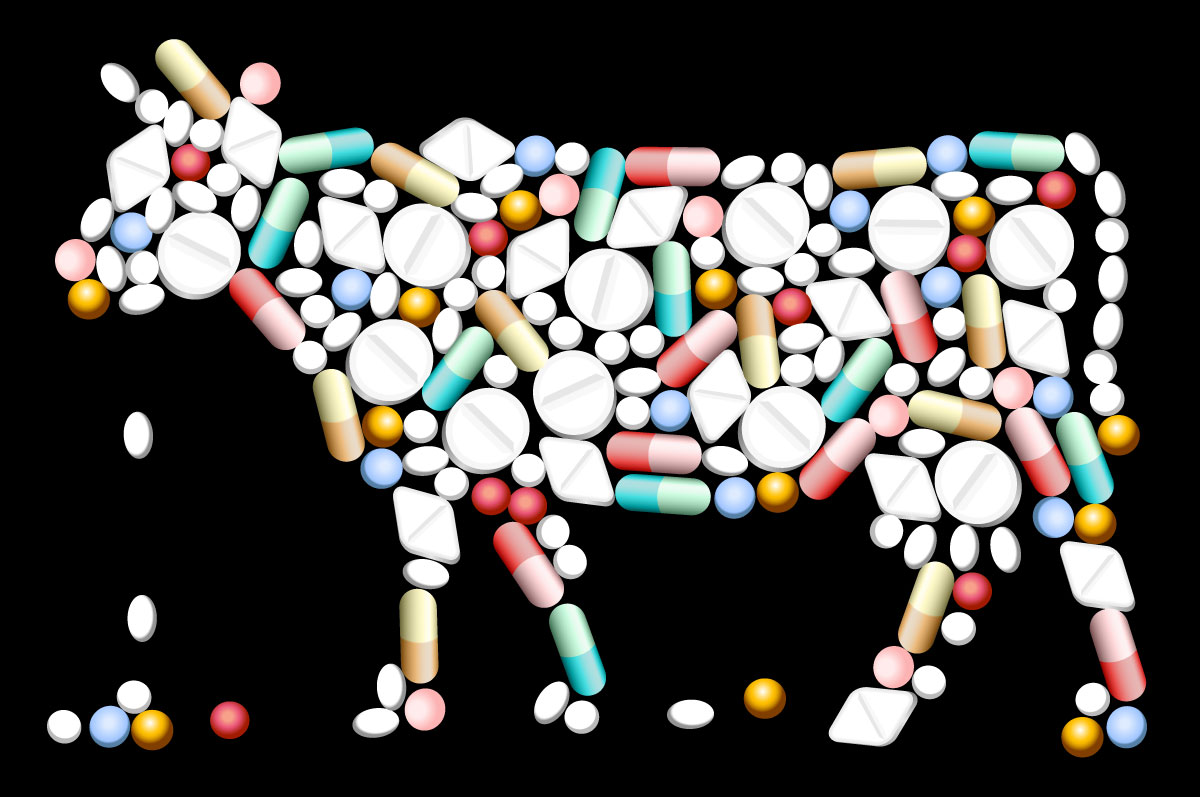
A study has suggested that the antimicrobial used to promote livestock growth breeds bacteria more resistant to the human immune system, scientists have warned.

The research suggests that the antimicrobial colistin, which was used for decades as a growth promoter on pig and chicken farms in China, resulted in the emergence of E coli strains that are more likely to evade our immune system’s first line of defence.

Although colistin is now banned as a livestock food additive in China and many other countries, the findings sound an alarm over a new and significant threat posed by the overuse of antibiotic drugs.

“This is potentially much more dangerous than resistance to antibiotics,” said Prof Craig MacLean, who led the research at the University of Oxford. “It highlights the danger of indiscriminate use of antimicrobials in agriculture. We’ve accidentally ended up compromising our own immune system to get fatter chickens.”

The findings could also have significant implications for the development of new antibiotic medicines in the same class as colistin, known as antimicrobial peptides (AMPs), which the scientists suggest could pose a particular risk of compromising innate immunity.

AMPs are compounds produced by most living organisms in their innate immune response, which is the first line of defence against infection. Colistin is based on a bacterial AMP – microbes use the compounds to shield themselves against competitors – but is chemically similar to some AMPs produced in the human immune system.

The extensive use of colistin in livestock from the 1980s triggered the emergence and spread of E coli bacteria carrying colistin resistance genes, which eventually prompted widespread restrictions on the drug’s use in agriculture. But the latest study suggests the same genes also allow pathogens to more readily evade AMPs that form a cornerstone of our own immune response.

In the study, E coli carrying a resistance gene, called MCR-1, were exposed to AMPs known to play important roles in innate immunity in chickens, pigs, and humans. The bacteria were also tested for their susceptibility to human blood serum.

The scientists found that E coli carrying the MCR-1 gene were at least twice as resistant to being killed by human serum. On average, the gene increased resistance to human and animal AMPs by 62% compared with bacteria that lacked the gene. The study, published in the journal eLife, also showed that the resistant E coli was twice as likely to kill moth larvae that were injected with the infection, compared with the control E coli strain.

MacLean said it was not possible to estimate how this might translate into real-world consequences, such as the risk of an E coli infection leading to sepsis and death. And the prevalence of these strains of E coli have dropped steeply since China banned the use of colistin as a growth promoter, suggesting that these genes carry other “fitness disadvantages” for the pathogens. However, the findings highlight a fundamental risk that has not yet been extensively considered.

“The danger is that if bacteria evolve resistance to [AMP-based drugs], it could also make bacteria resistant to one of the pillars of our immune system,” said MacLean.

Antimicrobial resistance poses a dire global threat – the UN has warned that as many as 10 million people a year could be dying by 2050 as a result of superbugs – and so the need for new antibiotics is pressing. There is growing interest in the potential of AMPs as drugs, and some of those in development include drugs based on human AMPs.

MacLean and colleagues are not calling for the development of such drugs to be put on hold, but say extremely careful risk assessments of the likelihood of resistance emerging and the potential consequences are required. “For AMPs, there are potentially very serious negative consequences,” he said.

Dr Jessica Blair, of the University of Birmingham, who was not involved in the study, said: “Antimicrobial peptides, including colistin, have been heralded as a potential part of the solution to the rise of multidrug-resistant infections. This study, however, suggests that resistance to these antimicrobials may have unintended consequences on the ability of pathogens to cause infection and survive within the host.”

Dr George Tegos, of Mohawk Valley Health System in New York, said that broad conclusions about the potential risks of AMPs could not be drawn from a single study, but added that the findings “raise concerns that are reasonable and make sense”.

Cóilín Nunan, an adviser to the Alliance to Save Our Antibiotics, who was not involved in the study, said: “This new study shows that colistin resistance is probably even more dangerous than previously thought … It is also remarkable that the British government is still opposed to banning preventative mass medication of intensively farmed animals with antibiotics, even though the EU banned such use over a year ago.”

Alliance to Save Our Antibiotics Farming human immune system University of Oxford
Share. Facebook Twitter Pinterest LinkedIn WhatsApp Reddit Tumblr Email
Abdallah el-Kurebe
  • Website
  • Facebook
  • Twitter
  • LinkedIn

Related Posts

L-PRES to scale NVRI vaccine production from 150m to 850m doses

May 13, 2026

Adamawa warns against farming, building on waterways ahead of 2026 rains

May 13, 2026

Kano tomato farmers seek processing plants

May 13, 2026

Leave A Reply Cancel Reply

NEMA launches 2026 national disaster preparedness campaign

May 13, 2026

Lagos to establish cybersecurity operations centre

May 13, 2026

Nigeria becomes China’s largest engineering contracting market

May 13, 2026

Kano pilgrims board warns against taking kolanut to Saudi Arabia

May 13, 2026
About Us
About Us

ASHENEWS (AsheNewsDaily.com), published by PenPlus Online Media Publishers, is an independent online newspaper. We report development news, especially on Agriculture, Science, Health and Environment as they affect the under-reported rural and urban poor.

We also conduct investigations, especially in the areas of ASHE, as well as other general interests, including corruption, human rights, illicit financial flows, and politics.

Contact Info:
  • 1st floor, Dogon Daji House, No. 5, Maiduguri Road, Sokoto
  • +234(0)7031140009
  • ashenewsdaily@gmail.com
Facebook Twitter Instagram Pinterest
© 2026 All Rights Reserved. ASHENEWS Daily Designed & Managed By DeedsTech

Type above and press Enter to search. Press Esc to cancel.