


Relative peace is gradually returning to university campuses after over a decade of unrest and agitation by ASUU and other university unions. Thanks to President Ahmed Bola Tinubu’s attentive listening and the union leaders’ willingness to resolve contentious issues through a give–and–take approach. All man-made problems can be solved through man-made innovative solutions. Over the years, some Nigerians have blamed ASUU for advocating increased funding while advocating university autonomy and academic freedom. It is therefore vital for Nigerians to understand the university system, which is universal and subject to global bench-marking and standardization, especially now that many stakeholders are serving as council members, in adult education, and in university-oriented entrepreneurship. I am therefore paraphrasing my article, which I wrote four years ago (April 2021).
What is the university system? The university system is made up of four statutory organs, making it a kind of government within a government. It has the legal authority to create laws (Statutes) for direct Gazette publication without passing through the National Assembly, as long as these laws do not conflict with constitutional provisions or existing laws. The university’s organs include a council, senate, congregation, and convocation, each with distinct powers and functions designed to work together and enhance teamwork. This is why the university system is managed through a committee system.
The University Council is the highest decision-making and policy-making body with a quasi-legislative function, including the power to make laws (statutes). The Council is the employer of all categories of university employees. The Council’s powers include governing, managing, and regulating the university’s finances, accounts, investments, property, business, and all affairs. As stated in the 2007 Universities Act, 2003 and 2007, “The Governing Council of the university shall be free in the discharge of its functions and exercise of its responsibilities for the good management, growth, and development of the university.
The council has two classifications of membership: ex officio and non-ex officio members, as well as external and internal members, with the Chairman being an external member. Ex officio members are council members by virtue of their offices. These include the Vice-Chancellor, Deputy Vice-Chancellors, and one person from the Federal Ministry of Education. Internal members consist of four members from the Senate and two from the congregation. External members of the council include the Pro-Chancellor/Council Chairman, a convocation representative, and four other members representing various interests appointed by the National Council of Ministers. Due to its critical importance, council membership is strictly governed by university law: “person to be appointed to the council shall be of proven integrity, knowledgeable and familiar with affairs and tradition of the university.” Although no specific academic qualifications are required for nominees, to be knowledgeable and familiar with the university’s affairs and traditions, a nominee must have at least completed their studies at a recognized university. This ensures that a member of the Governing Council is at least a graduate of a recognized institution. With this requirement, the university council excludes unqualified individuals and persons of questionable character. The university council cannot be dissolved unless it is deemed incompetent or corrupt.
The Senate is the second organ of the university system and the highest decision-making and policy-making body on academic matters, covering all educational programs, admissions, and the award of degrees, diplomas, and certificates to deserving undergraduate and postgraduate students, as well as to individuals who merit fellowships or honorary degrees or diplomas. It supervises and regulates the implementation of all the university’s academic programs, including teaching and research. The Senate exercises other functions in accordance with the Laws and Statutes of the university. Membership of the Senate comprises all Heads of Academic Departments, Deans, Directors, Principal officers of the University, all professors, congregation representatives, and co-opted members as stipulated in the university laws and statutes. The Senate usually is a large gathering of eggheads who brilliantly and articulately discuss issues from different points of view that sometimes become stormy and arrive at decisions only by voting. Generally, a strong reason prevails, devoid of emotion.
The last two university bodies are the congregation and the convocation. The congregation is the body through which university staff members, other than members of the senate, are represented on the council and senate. Its main role is to serve as a forum for discussing issues that affect the academic well-being of the university and to make recommendations to the council or senate as appropriate. Members of the congregation include the university officials, all members of the academic staff, and all members of the administrative staff holding degrees from recognized universities or other qualifications deemed equivalent to degrees by the Senate for this Statute. Convocation is a university organ that provides representation for one member on the council.
Membership includes university graduates, the chancellor, the pro-chancellor or chairman of the council, and all academic staff. The Chancellor acts as the chairman of the convocation. Other important university figures are the chancellor and visitor, whose roles and functions are outlined in the university law.
The legal powers vested in the council make the university relatively autonomous, free of the bureaucracy associated with conventional government institutions such as ministries and agencies. Government officials and other individuals questioning the university’s autonomy are either ignorant of the law or being mischievous.
The elaborate, vibrant, and composite structure of the university was designed to achieve three cardinal objectives of teaching, research, and community service.
Given the university’s multifaceted structure, it is necessary to acquire autonomous power to resist external interference and effectively perform the three functions of manpower development, research for development, and community service. University law has granted the necessary autonomy to Nigerian universities to align with international standards. The university system constitutes a critical component of national development. The nation’s economic and developmental vibrancy depends on the intellectual capacity of its citizens, particularly the leadership.
A nation’s intellectual capacity is acquired through its university system. When the system is rotten, it will produce engineers who do not know engineering, lawyers who do not know the law, accountants who do not understand accounting, and other professionals who know next to nothing about the profession they claim to profess. The nation may be compelled to employ these untrained professionals to manage its affairs. How has the university system in Nigeria been faring? What kind of graduates is the system producing? (To be concluded next week)
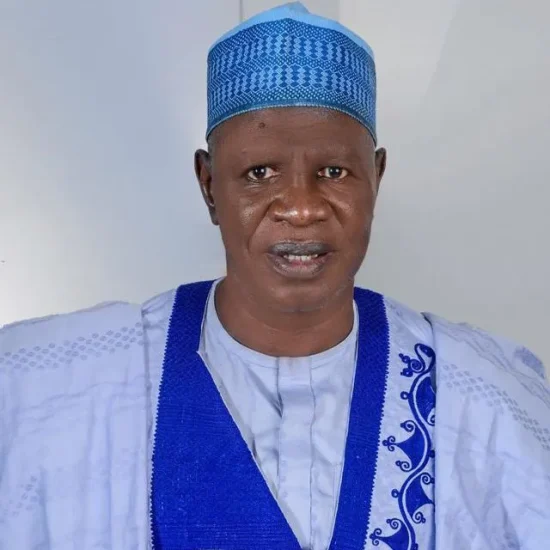
Prof. Othman is the Vice Chancellor of the Federal University Dutsinma
