


This piece is a corollary to last week’s write-up, which posed several questions: What are the mandates of the Northern Nigeria Security Trust Fund? Will the Trust Fund end up similar to Trust Funds established a few decades ago, without tangible results? Will the state governors fulfill their one-billion-naira monthly pledge? Answering these questions and offering recommendations to make the Trust Fund effective and sustainable are pertinent to the success of the high-integrity personalities who serve on the fund’s board of trustees. These skilled personalities have a high capacity and are endowed with a wealth of experience from diverse backgrounds; it would be highly desirable for them to accomplish their assignment and uplift the region and the nation from the dreadful, nightmarish situation that insecurity has landed us in.
The trustees’ mandate is explicit and significant: The Board is expected to mobilize financial resources, promote intelligence sharing, strengthen collaboration among security institutions, and provide strategic oversight for coordinated efforts against banditry, terrorism, kidnapping, cattle rustling, and other forms of violent criminality across the North. At the inauguration, Lieutenant General Faruk Yahaya (rtd) aptly observed that the Fund must complement—not replace—the constitutional responsibilities of the Federal Government and existing security agencies. More importantly, he stressed that its success should be measured not by the number of meetings convened or funds collected, but by its ability to remain focused, responsive, and credible, and, ultimately, by the protection of lives and property. That, in my view, captures the true benchmark by which this initiative should be judged.
For me, the principal concern is not the Board’s quality. On the contrary, the North could hardly have assembled a more experienced group of retired military commanders, senior police officers, and accomplished public administrators. My concern lies elsewhere: Will the nineteen governors sustain the political will required to finance the initiative beyond the enthusiasm of its launch? Will states whose finances depend overwhelmingly on monthly federal allocations consistently honor their commitments during periods of fiscal strain? Will the institutional capacity be in place to ensure transparent procurement, timely resource deployment, rigorous monitoring, and measurable outcomes? Above all, will this initiative survive changes in political leadership and become a permanent regional institution rather than another program tied to the tenure of the present governors and their administrations? Experience urges us to be cautious, because Nigeria has never lacked impressive committees, accomplished personalities, or ambitious declarations. Many reform efforts begun with distinguished leadership, generous public goodwill, and widespread expectations have lost momentum once political priorities shifted or fiscal realities intervened. The ultimate success of this Security Trust Fund will therefore depend less on the reputation of those who lead it than on the commitment of those who founded and fund it, the professionalism of those who implement it, and the transparency with which citizens can assess its performance.
ALSO READ Northern security trust fund: ₦1bn is a beginning, not the solution, by Prof. M. K. Othman
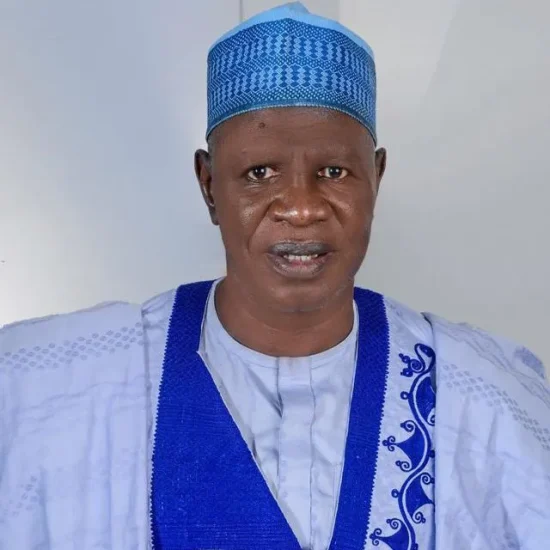
For example, it is on record that Alhaji Yayale Ahmed, the Co-chair of the Board, recently excelled by completing two national assignments that some of his predecessors failed to complete. He led the resolution of long-standing industrial actions stemming from a 15-year-long unresolved crisis between the FGN and unions of tertiary institutions of learning, bringing sanity and relative peace, with no disruption to the academic calendar over the last three years. This example demonstrates his ability to handle difficult assignments. He also marshaled the successful appointment of the ABU Zaria vice chancellor through a rancor-free, fair, and transparent process that brought Prof Adamu Ahmed in 2025, who is tirelessly giving a facelift to the university’s academic programs and environmental serenity.
Returning to the issue at hand, the devastation of insecurity in the north is the central problem. A few regions in the world can develop while living under the scale of insecurity that now confronts us as a people, with consequences extending far beyond casualty figures. Millions of hectares of farmland have become inaccessible, and entire communities have been displaced; food inflation is now inseparable from insecurity because areas once responsible for producing maize, sorghum, millet, beans, rice, tomatoes, onions, and livestock increasingly operate below capacity. Investors naturally avoid places where factories require military escorts and highways double as kidnapping corridors. Universities, schools, and health facilities repeatedly interrupt their operations because no institution can flourish when fear becomes a normal part of daily life. Every attack carries unquantifiable costs that rarely appear in official budgets: abandoned farms, interrupted education, declining tourism, shrinking tax revenues, and the gradual erosion of public confidence in government. Seen this way, the governors’ commitment is not merely about security but about economic recovery, because every successful economy depends first on predictable security. Northern Nigeria cannot hope to industrialize while agricultural belts remain battlefields, inaccessible and prone to danger, with dilapidated or non-existent rural infrastructure.
Still, good intentions do not suspend economic realities: If each of the 19 states contributes ₦1 billion monthly, the fund could mobilize roughly ₦19 billion every month, or ₦228 billion annually, assuming full compliance. By Nigerian standards, this is a substantial amount, exceeding the annual budgets of many government agencies and rivaling capital allocations in several states. Yet when measured against the scale of the security challenges, which stretch across nineteen states, thousands of communities, and vast forests that criminals have transformed into operational bases, the figure begins to look less extraordinary. For example, the north confronts multiple threats simultaneously from Boko Haram remnants in the North-East, ISWAP activities around the Lake Chad Basin, armed banditry across the North-West, kidnapping networks extending into the North-Central, farmer-herder conflicts, illegal mining syndicates, and cross-border criminal movements. No serious analyst should imagine that money alone, regardless of amount, can dismantle such complex ecosystems of violence.
Another uncomfortable reality that deserves attention is that these governors have pledged a collective financial commitment, yet they do not have equal financial capacity. The North is economically diverse; Kaduna and Kano, for example, generate substantially higher internally generated revenue than many of their neighbors because of their relatively larger industrial, commercial, and service sectors. States like Gombe have markedly improved tax administration in recent years, while Borno continues to rebuild after years of insurgency; others remain heavily dependent on monthly allocations from the Federation Account. This is not entirely surprising, as only a handful of states across the country have the financial muscle to finance a significant share of their expenditure from internally generated revenue, and most continue to rely primarily on federal transfers. For example, this dependence raises a legitimate question about long-term sustainability, especially if oil revenues decline or national fiscal pressures intensify. Thus, the Fund inadvertently exposes a deeper structural weakness in Nigeria’s federal system, as many of our governors are mere administrators of allocations rather than builders of productive economies and resource mobilizers.
Still, one billion Naira per month from the nineteen northern state governors cannot be the overall solution to the insecurity in the region, but it is a right step in the right direction. The Fund must clearly study the root and immediate causes of insecurity in the region. For example, are some highly placed Nigerians and their foreign collaborators nurturing and facilitating banditry and insurgency in the country? How? While the Fund needs unflinching support from the state governors, will the governors have the political will to tackle highly placed, politically exposed personalities suspected of directly or indirectly facilitating insecurity? To be concluded next week.
