


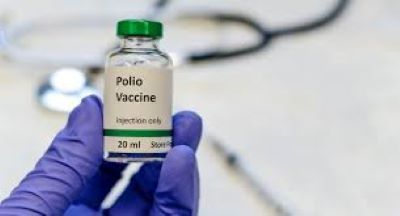
Katsina State says it is preparing to deploy more than 7,000 vaccination teams across 28 local government areas for a polio vaccination campaign scheduled to begin on Nov. 7.
Dr Kabir Suleiman, Director of Epidemiology and Disease Control and Incident Manager of the state’s Polio Emergency Operations Centre, disclosed this while outlining preparations for the campaign.
Suleiman spoke at an event in Katsina on Saturday, supported by the CORE Group Partners Project (CGPP), which is implemented by Save the Children International (SCI), to mark the 2026 World Polio Day.
He said the campaign would prioritise high-risk communities and children who had missed previous vaccination opportunities.
Although Nigeria was certified free of wild poliovirus in 2020, circulating vaccine-derived poliovirus remained a concern in areas with inadequate immunisation coverage, he said.
Suleiman said environmental surveillance had detected circulating vaccine-derived poliovirus in Katsina after a period without reported cases, prompting vaccination interventions to prevent further transmission.
According to him, previous response activities had reached more than 15,000 children. Preparations were also underway for another campaign targeting more than 40,000 children in security-compromised settlements.
“We have already perfected all plans for that campaign. We are targeting over 40,000 children in security-compromised settlements, and we are taking necessary measures to ensure that all eligible children are vaccinated,” he said.
Suleiman identified insecurity as the main challenge facing vaccination efforts, noting that some settlements remained difficult for health workers to access.
He said teams were adopting strategies to reach eligible children in schools, markets, mosques, churches, border communities and other public places.
The official also cited vaccine hesitancy among some caregivers as a challenge and urged parents to take advantage of free vaccination services provided through government and development partner-supported programmes.
On diphtheria, Suleiman said the state had strengthened surveillance, case management and vaccination activities to contain the disease.
He said more than 150,000 children had been vaccinated during the first phase of the diphtheria response, while about 200 patients had received treatment at designated facilities in recent months.
The director said the state government and development partners were continuing interventions in areas with higher transmission to reduce infections and protect vulnerable children.
