


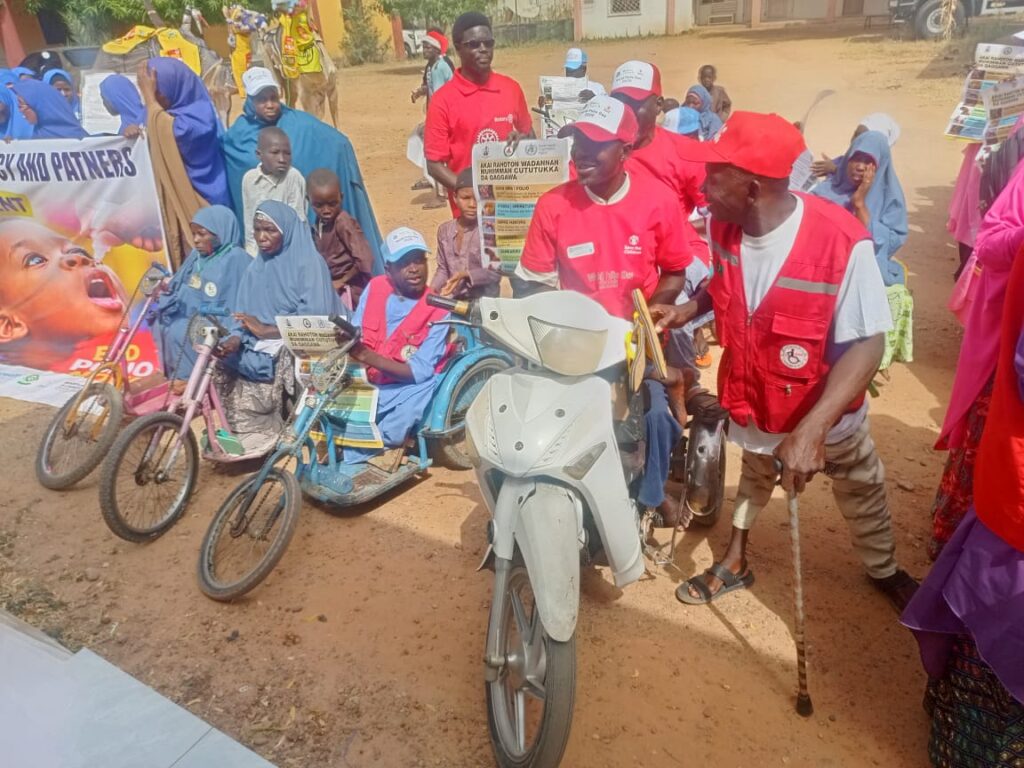
Save the Children International (SCI) has supported Katsina State’s polio eradication efforts, identifying insecurity, vaccine hesitancy and limited access to hard-to-reach communities as major challenges.
Mr Balarabe Abdulkadir, the programme coordinator, said this on Saturday during activities marking 2026 World Polio Day in Katsina. The event was supported by the CORE Group Partners Project (CGPP).
Held under the theme “One Day, One Focus: Ending Polio for Good,” the event brought together health officials, development partners and other stakeholders to renew their commitment to ending the disease.
Abdulkadir called for stronger collaboration among stakeholders to overcome the challenges and protect children from poliovirus infection.
He warned that children missed during vaccination campaigns remained vulnerable to infection, adding that gaps in immunisation coverage could undermine efforts to interrupt poliovirus transmission.
“Every child who misses vaccination remains at risk. Every missed child presents a challenge to our collective efforts to stop transmission,” he said.
Abdulkadir said SCI, through CGPP, worked with government health agencies, traditional and religious leaders, community volunteers, health workers and development partners to strengthen routine immunisation and support vaccination campaigns.
He said the project also helped identify zero-dose and under-immunised children and strengthen disease surveillance to ensure vulnerable children received essential vaccines.
Abdulkadir stressed that polio eradication required more than vaccination campaigns. Sustained community engagement, public awareness and trust-building were also essential to address misconceptions and reach children who had not received recommended vaccines, he said.
He called for stronger coordination among communities and health authorities across state and international borders, warning that population movements could leave children unprotected if vaccination efforts were not properly coordinated.
“Diseases do not respect borders. Children and families move between communities and across international borders for trade, family visits and other reasons.
“This movement creates a need for stronger coordination between neighbouring communities and health authorities,” he said.
Abdulkadir urged governments and policymakers to sustain funding for polio eradication and routine immunisation, strengthen primary healthcare services, and ensure vaccination teams could reach underserved communities, including those affected by insecurity.
He also urged traditional and religious leaders to help address misconceptions about vaccines and encourage parents and caregivers to ensure their children received all recommended immunisations.
Abdulkadir said tackling insecurity, misinformation and missed vaccination opportunities was critical to preventing setbacks in the fight against polio.
“Ending polio requires focused action every day, not only on World Polio Day,” he said.
He called on health workers, caregivers, community leaders, government agencies and development partners to remain committed until poliovirus transmission was interrupted.
He also stressed the need to ensure that no child was left behind in immunisation efforts.
The Acting Executive Secretary of the State Primary Health Care Agency, Dr Shema’u Kabir, thanked development partners for supporting healthcare delivery and protecting public health.
She stressed the need for sustained collaboration among stakeholders to address public health challenges and ensure essential healthcare services reached communities across the state.
