


The Civil Society Legislative Advocacy Centre (CISLAC) has described the proposal by Nigeria Governors Forum (NGF) to the federal government for workers above 50 years of age to be offered one-off retirement package as deceitful and insincere.
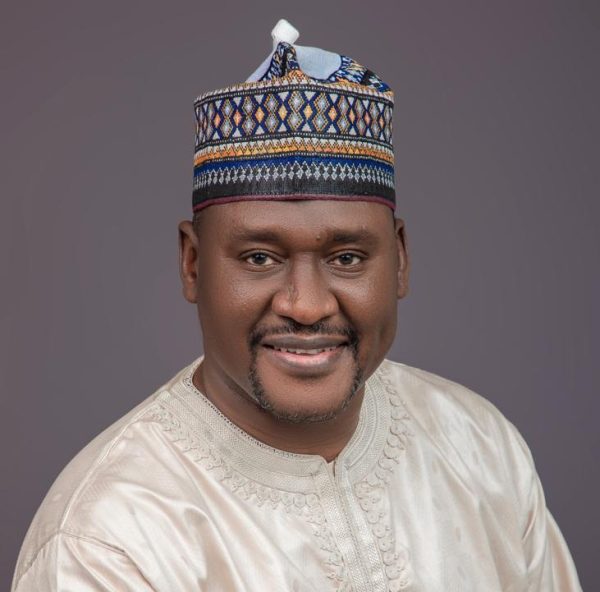
CISLAC, in a statement by its executive director and head of Transparency International Chapter in Nigeria, Auwal Rafsanjani made available to ASHENEWS on Sunday, also said the “approach may amplify existing socio-economic burden, suffering and inequalities among common Nigerians.”
CISLAC observed that although the “proposal was intended in to reduce the overbearing cost of governance that has hitherto rendered Nigeria financially incapacitated to adequately finance the ailing critical sector of the economy, the fact is that it mirrors lop-sidedness, insincerity and lack of readiness by all levels of government to holistically address the contending issues backpedalling country’s socio-economic development.”
Rafsanjani recommended that President Muhammadu Buhari should “address institutionalised mismanagement, systemic embezzlement, inflated budget, procurement corruption, revenue loopholes, among others, to allow adequate resource allocation to finance critical sector and eradicate poverty at all levels,” among others.
Read part of the statement below:
We on this note reiterate our greater concerns and draw the attention of all levels of government to various neglected issues that aggravate high cost of governance and socio-economic inequalities in Nigeria like the systemic mismanagement of nation’s treasury and institutionalised spending of whopping sums on irrelevant activities that continued unabated at national and sub-national levels. This includes poor transparency and accountability, paving way for the inherent incompetence and abuse of public funds amounting to trillions of naira by successive administrations at all levels.
As 85% of reform efforts have failed since independence, we are more worried by the dreaded impact of mismanagement and undue political interests that will continue to frustrate the success of socio-economic reforms; and without pragmatic measures could cost up to 37% of Nigeria’s Gross Domestic Products (GDP) by 2030, as reported by PricewaterhouseCoopers (PwC).
We are concerned by the needless fuel subsidy regime, which serves as a major contributory challenge to high cost of governance in Nigeria, with the Nigerian National Petroleum Corporation (NNPC) estimating an average of N120 billion monthly paid by the government on petrol subsidy. Petrol subsidy payments have reportedly increased by 349.42 per cent from N350 billion in 2019 to N1.573 trillion in 2021, while the National Assembly approved the sum of N4 trillion for petrol subsidies in 2022.
We express total displeasure with the recurring challenges, monumental financial loss and grossly socio-economic cost of ghost workers syndrome that lingers especially at sub-national levels with recent reports exposing floods of ghost workers across many states in Nigeria. As at 2012, an estimated $530 million (over N86 billion at N163/$1 exchange rate) was reportedly lost ghost workers by Nigerian government, with precarious effects on the national budget. This in mid-2016, amounted to over N538bn lost to ghost workers by the Federal and 10 State Governments in five years.
We are perturbed by unchecked inflated budget-line items, non-existed projects and the over-costed public contracts that permeates budgetary and procurement processes at all levels. We recall that some non-existent projects worth N4 billion was reportedly discovered in the 2020 budget proposal of the National Inland Waterways Agency (NIWA); Niger Delta Development Commission (NDDC) allegedly spent over N65 billion for the silting and clearing of water hyacinth against the 2.5 billion budgeted for the activity; the over-priced budget-line attributed to the Federal Road Safety Corps (FRSC)’s budget proposal with the code ERGP10140070, named “purchase of one 500KVA soundproof generator for Lagos office”, and priced at N26,930,992. This menace is not uncommon among other Ministries, Departments and Agencies as well as the State Governments, where billions of naira are appropriated to non-existent and over-priced projects annually.
We are not unaware that public procurement is one of the government activities most vulnerable to corruption and embezzlement. Over N300 billion is lost to public procurement fraud annually, as reported by Chartered Institute of Forensics and Fraud Examiners of Nigeria in 2021. This is enabled by the inability of Nigeria to establish the National Procurement Council in line with the Public Procurement Act of 2007.
We on similar note stress our position that corruption and mismanagement are not farfetched in Defence procurement, as funds approved for the procurement of weapons are frequently unaccounted by successive Security Chiefs, who as well denied the existence of weapons for which the funds were meant.
We on this note recall existing and unaddressed issues widening revenue gaps and the deliberately created loopholes by some State Governors, who by actions and selfish motives support illegal mining of solid mineral resources in some parts of the country, as uncovered by the Minister of Mines and Steel Development.
We maintain our advocacy against unjustified numerous jumbo salaries, allowances, benefits, and public paid expenses enjoyed by the governors, their deputies, former speaker and their deputies throughout and after their tenures. This includes the states that erected private buildings as retirement packages for the public office holders as well as former governors who enjoy double payments from Senatorial positions.
We are also worried by the increasing clamours for life-time pensions and benefits accrued to public office holders across the states, constituting a major component of the rising cost of governance.
We observed that Nigeria’s infrastructure deficit and discouraging policy environment remain major constraints to industrial development and national competitiveness. Through this process, Nigeria loses around 4% of its yearly Gross Domestic Product growth and $17.1 billion in 2020, according to African Development Bank (AfDB).
We also recall that Federal Government has recovered assets worth billions of dollars but without proper accountability for who manages the assets, how they are utilized and how to prevent the re-looting of looted assets. Lack of transparency and accountability in the process has triggered unhealthy struggles over the control of lucrative asset recovery ‘business’, asset freezes, confiscations and repatriations, causing major rivalry among institutions/agencies saddled with the responsibility of fighting corruption.
OUR RECOMMENDATIONS:
• We call on President Muhammad Buhari to take appreciable and drastic step to reduce the growing cost of governance in the country through targeted efforts to addressing institutionalised mismanagement, systemic embezzlement, inflated budget, procurement corruption, revenue loopholes, among others, to allow adequate resource allocation to finance critical sector and eradicate poverty at all levels.
• We encourage all levels of government to give serious consideration to economic diversification to agricultural and industrial sectors through targeted public-private partnership to discourage mono-economy, enhance human capital development and employment creation; as a complementary strategy to reduce over-bloated civil service at all levels.
• We also call on the Governments to institutionalise sustainable measures to block existing revenue leakages including those deliberately supported for more transparency, accountability and efficient management of resources.
• We demand prompt removal of the needless subsidies on petroleum, to enabling adequate financing for the critical sector, job creation, infrastructural development and poverty eradication in Nigeria.
• We call on governments at all levels to create an enabling environment to boost businesses and attract private sector investments through widen economic integration involving security, removal of tariffs and trade barriers as well as policy and regulation harmonisation in the areas of investment, competition policy, digital trade, quality of infrastructure among others.
• We demand strict compliance to remuneration provisions prescribed by the Revenue Mobilisation Allocation and Fiscal Commission in all remunerations and entitlements by the governments at all levels to prevent continued diversion of public revenue resources into private pockets.
• We call on State Governments to devise holistic and sustainable measures to curb recurring ghost workers syndrome, which constitutes a major challenge in efficient management of states’ revenue resources and adequate budgetary allocation to the critical sector.
• We demand exhaustive scrutiny of the budget as submitted by various Ministries, Departments and Agencies, to address issues of inflated budget lines, duplications and unnecessary items.
• We call on the National Assembly to strengthen oversight activities on budgetary implementation as appropriated to prevent or sanction poor implementation, mismanagement and non-existent projects.
• We call on all levels of government to uphold high level integrity in their procurement process through transparency, stakeholder participation, accessibility, e-procurement system and appropriate oversight and control with full implementation of the Procurement Laws, to ensure fairness, non-discrimination and compliance in the public procurement process.
• We call on the Presidency and National Assembly to in spirit of Open Government Partnership, improve fiscal transparency, integrity, transparency and accountability in Defence spending, to block mismanagement and wastage, while enabling adequate budgetary allocation to other sectors.
• We call for full implementation of The Proceeds of Crime (Recovery and Management) Act, 2022; and Money-Laundering-Prevention-and-Prohibition-Act-2022, to strengthen the anti-corruption fight, sanction treasury looters and ensure that repatriated assets are utilized for the benefits of Nigerians.
