


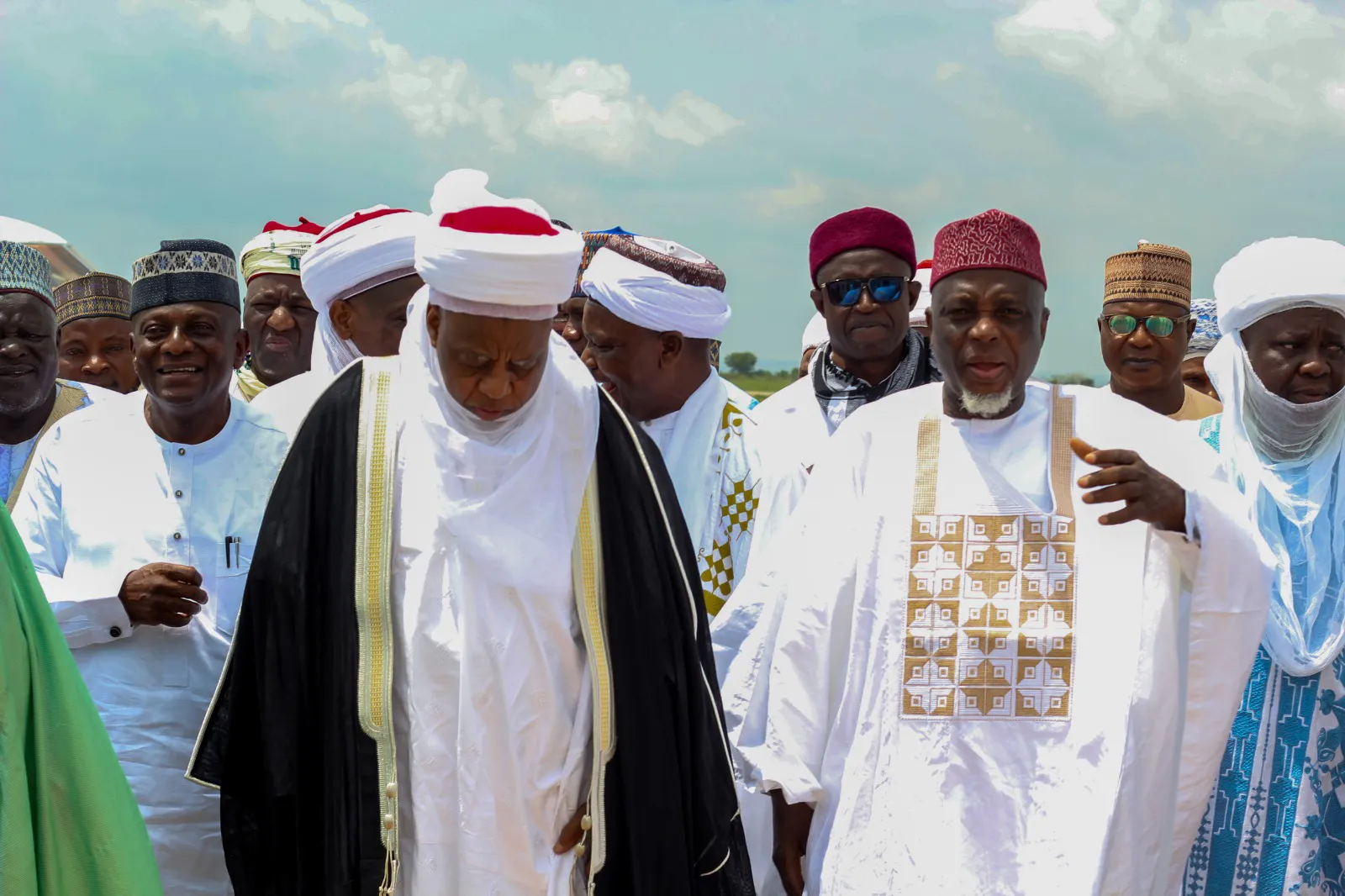
The ancient palace of the Emir of Ilorin became a meeting point of history, brotherhood and Islamic heritage as Sultan Muhammad Sa’ad Abubakar, arrived in Ilorin, Kwara State, and paid a royal visit to the Emir, Ibrahim Sulu-Gambari.
The visit formed part of activities marking the centenary of Zumratul Adabiya Kamaliya, also known as the Ansar-Ul-Islam Society of Nigeria, and brought renewed attention to the longstanding historical, religious and cultural ties between the Sokoto Caliphate and the Ilorin Emirate.
In a gesture that underscored the significance of the occasion, the Emir vacated his royal seat to honour his distinguished guest, highlighting the mutual respect and traditional courtesies that continue to define relationships among Nigeria’s revered traditional institutions.
Beyond the ceremony and royal protocol, the encounter offered a moment to reflect on generations of shared Islamic scholarship, religious learning and traditional leadership that have helped shape the histories of both institutions.
The Sultan’s visit also added historical significance to Adabiya’s 100th anniversary, celebrating a century of Islamic education, moral instruction and community engagement.
A history bound by faith and scholarship
The relationship between Sokoto and Ilorin is rooted in the Islamic reform movement associated with Sheikh Usman ibn Fodio, whose teachings transformed the religious and political landscape of much of northern Nigeria.
Ilorin’s emergence as an emirate was closely linked to this wider movement, with Sheikh Abdusalam ibn Alimi recognised as its first Emir. The emirate also maintained historical connections with Gwandu through Sheikh Abdullahi ibn Fodio, a brother of Usman ibn Fodio and a leading scholar of the Sokoto reform movement.
Over generations, these connections have endured through Islamic scholarship, religious gatherings, royal ceremonies and interactions among traditional rulers and community leaders.
The Sultan’s visit to the Ilorin palace therefore served as more than a formal royal engagement. It brought the shared historical experiences of the two institutions into focus at a time when preserving Nigeria’s cultural and religious heritage remains important.
Royal courtesies with deeper meaning
The exchange also highlighted the significance of traditional courtesies in relationships among Nigeria’s historic royal institutions.
Accounts of such customs include references to the Alkimba, a traditional robe worn with a turban, and the concept of Tuta, or a flag, which some traditions associate with recognition and the beginning of a new relationship between institutions.
While ceremonial practices vary across traditional institutions and historical circumstances, they reflect the importance attached to honour, recognition and the preservation of established customs.
The Emir’s gesture in welcoming the Sultan similarly drew attention to the enduring place of mutual respect in Nigeria’s traditional leadership system.
Adabiya at 100: A century of Islamic heritage
For Zumratul Adabiya Kamaliya, the centenary represents a landmark in its institutional history and an opportunity to reflect on the contributions of its founder, Muhammad Kamal-Deen Al-Adabiyya, and generations of scholars and community leaders associated with its legacy.
The anniversary celebrates the role of Islamic institutions in advancing religious knowledge, promoting moral values and strengthening community relations.
The Sultan’s presence connected the milestone to the broader network of Islamic leadership and traditional institutions across Nigeria, reinforcing the significance of the celebration beyond Ilorin.
For a city renowned for its Islamic heritage and scholarly traditions, the centenary also offers an opportunity to honour the generations whose work has sustained religious learning and cultural identity.
A shared legacy, a continuing bond
The meeting between the Sultan and the Emir offered a reminder that traditional institutions remain important custodians of history, faith and cultural identity.
Their enduring relationship also highlights the potential of religious and traditional leadership to promote dialogue, unity and peaceful coexistence in a diverse society.
As Zumratul Adabiya Kamaliya celebrates 100 years, the Sultan’s visit to the ancient Ilorin palace brings together two significant strands of Nigeria’s heritage: the legacy of Islamic scholarship and the enduring bonds among its historic traditional institutions.
