


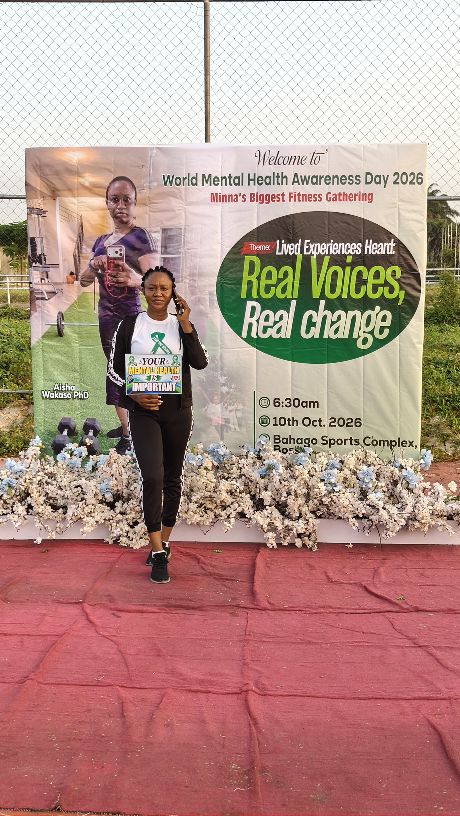
Through fitness, peer support and candid conversations about emotional distress, the journalist is encouraging women to prioritise their wellbeing, set boundaries and seek help when life becomes overwhelming.
For Aisha Wakaso, mental health advocacy is more than a public awareness campaign. It is a deeply personal mission shaped by her own experiences with psychological distress and the struggles of women who confide in her.
That personal connection brought her together with over 200 women at the Bahago Sports Complex in Minna on Saturday, October 10, for Fun, Fitness and Women’s Mental Health, an initiative designed to combine physical exercise, social interaction and conversations about emotional wellbeing.
The programme, held to commemorate the 2026 World Mental Health Day, featured aerobics, dance, a mental health talk and health and wellness activities. It was organised exclusively for women, providing a space for participants to exercise, share experiences and discuss challenges that are often difficult to disclose in their everyday lives.
For Wakaso, the decision to organise the gathering followed repeated encounters with women who approached her privately to discuss their emotional struggles.
“I have had mental health challenges several times. And I know that a lot of women are going through one mental health issue or the other,” she said.
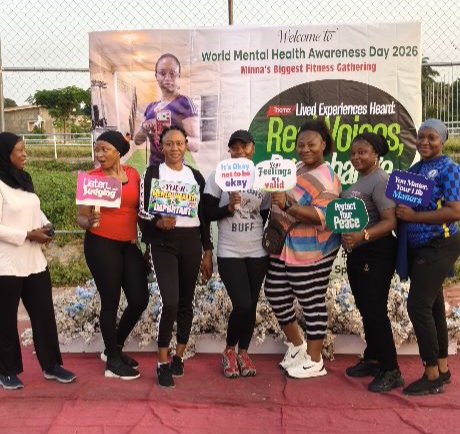
According to her, women frequently send messages to her on Facebook describing their difficulties, prompting her to consider how she could provide support beyond individual conversations.
“I thought, okay, I should gather them, speak to them about their mental health and share coping mechanisms with them,” she said.
The initiative sought to make mental health conversations accessible to women who may be struggling with personal relationships, economic pressures, family responsibilities and other sources of stress.
Rather than treating mental wellbeing as a subject to be discussed only in clinical settings, the programme brought it into a familiar community environment, using exercise and shared experiences as entry points for conversations about emotional health.
From personal pain to practical solutions
Wakaso’s approach reflects a longstanding interest in mental health awareness and advocacy in Niger State.
In October 2021, she organised a mental health awareness walk in Minna and called for greater government investment in mental health services, including trauma centres and private treatment facilities.
She expressed concern that inadequate specialist services and a lack of privacy in existing facilities could discourage people from seeking medical attention.
Reports published by The Nation and TheCable at the time documented her appeal for improved mental health infrastructure and more supportive environments for people experiencing psychological distress.
Five years later, her latest initiative places greater emphasis on practical coping strategies, physical activity, peer interaction and creating opportunities for women to discuss their experiences without fear of judgement.
During her address at Saturday’s event, Wakaso spoke candidly about having contemplated suicide on three occasions before choosing to live.
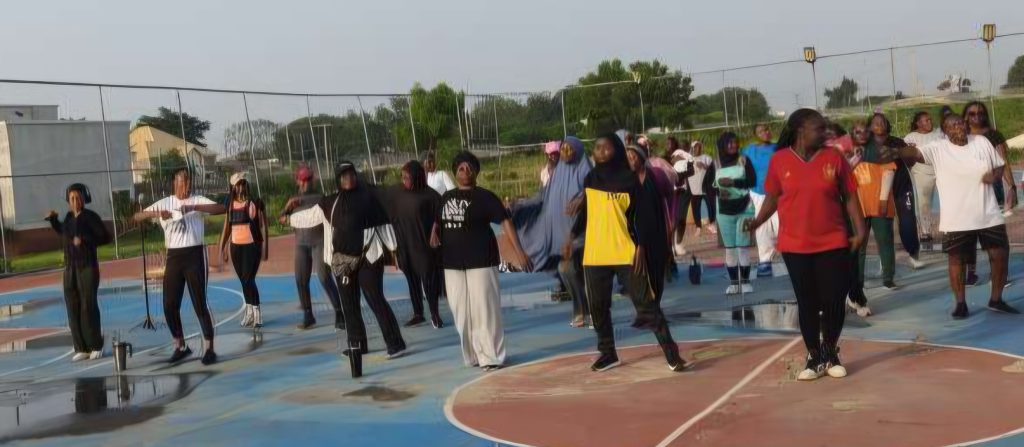
Her disclosure was intended to encourage women experiencing distress to recognise that their circumstances, however painful, do not diminish the value of their lives, “Nobody, no situation is worthy of taking your life,” she told the participants.
She also spoke about the emotional toll of failed relationships and marriages, family difficulties, fear of failure and the pressure to meet other people’s expectations as several fears women face.
Wakaso challenged the tendency to treat personal setbacks as sources of shame, acknowledging painful experiences is part of reclaiming one’s sense of worth rather than allowing circumstances or other people’s opinions to define one’s identity.
“Don’t let anybody make you feel less of yourself,” she urged the women.
The veteran Journalist who is now tha Special Adviser to the Niger State Governor on Print Media encouraged participants to establish personal boundaries, distance themselves from relationships and situations that undermine their wellbeing, and make deliberate efforts to protect their peace.
Her message was not that women should ignore their problems, but that they should recognise their limits, take their wellbeing seriously and avoid allowing difficult circumstances to consume their sense of self.
Exercise as a starting point for wellbeing
The event’s combination of aerobics, dancing and mental health discussions reflected an effort to make wellbeing activities both practical and accessible.
Physical activity can support mental wellbeing and help some people manage stress, although it is not a substitute for professional treatment when needed.
By bringing movement and conversation together, the programme offered participants an opportunity to engage with their wellbeing in a social setting rather than approaching mental health solely through the language of illness.
The gathering also created an opportunity for women to connect with others who may be experiencing similar pressures.
For women who feel isolated by personal difficulties or fear being judged, such spaces can help encourage conversations that might otherwise remain private.
However, the sustainability of such initiatives will depend partly on whether participants can continue to access supportive spaces and, where necessary, professional mental health services.
Wakaso said she hoped the women would leave the gathering better equipped to manage the demands of their daily lives.
“I expect that women are able to put their lives together and then manage their lives and cope through the stress that we face as women. Economically, psychologically and physically,” she said.
Her emphasis on these interconnected pressures acknowledges that women’s emotional wellbeing cannot always be separated from their financial circumstances, relationships and everyday responsibilities.
Building a continuing support system
The response from participants has prompted calls for the programme to continue beyond the World Mental Health Day commemoration.
Wakaso said some women had asked her to organise the activities every week, although she was considering a more manageable schedule because of participants’ work commitments.
“They are asking for it every week, but I know that every week might not work because of people’s work schedules. We might just try and see if we can do it once in a month or once quarterly,” she said.
A monthly or quarterly programme could provide a recurring opportunity for women to discuss their challenges, learn practical coping strategies and maintain social connections.
Such continuity would also create room to build on the initial gathering by introducing sessions on recognising signs of psychological distress, managing stress, supporting people experiencing emotional difficulties and identifying appropriate professional services.
The next step would be to establish a clear referral pathway for participants who need specialised care, ensuring that community activities complement rather than replace clinical support.
Wakaso’s earlier advocacy for trauma centres and private treatment facilities remains relevant to that challenge. Community awareness can encourage people to seek help, but access to qualified professionals, affordable treatment and confidential services is essential to turning awareness into effective care.
Her broader work has also included advocacy for women and girls. A profile published by the Media Career Development Network in 2024 described her as a journalist and media strategist whose interests include women’s rights, girls’ empowerment and mental health awareness. The profile also documented her involvement in menstrual hygiene education and the distribution of sanitary pads to schoolgirls in Minna.
These activities point to a wider interest in addressing issues affecting women’s wellbeing, dignity and opportunities.
Choosing life, peace and self-worth
As the programme drew attention to the relationship between physical activity and mental wellbeing, Wakaso’s most significant message was about the importance of recognising one’s worth even in difficult circumstances.
She urged the women to be courageous in confronting personal challenges, resist the pressure to measure themselves against other people’s expectations and make room for happiness despite setbacks.
Her call to “choose peace” was an appeal for women to take their emotional wellbeing seriously and recognise that they do not have to remain trapped in situations that continually diminish them.
Yet, the burden of protecting mental health should not rest on women alone. Families, communities, healthcare providers and government institutions all have roles to play in reducing stigma and ensuring that people experiencing psychological distress can access appropriate support.
For women in Niger State who are struggling silently, the gathering offered an opportunity to speak, connect and consider practical ways of coping with life’s demands.
For Wakaso, it was also an attempt to transform personal experience into collective support.
Her willingness to speak publicly about her own struggles underscores a central message of the initiative: experiencing psychological distress is not a reason for shame, and asking for help should not be treated as a weakness.
As the call for more sessions continues, the lasting value of the initiative will depend on whether it develops into a sustainable support system that connects women not only to one another, but also to the professional care and wider social support they may need.
If you or someone you know is experiencing suicidal thoughts, seek immediate support from a qualified mental health professional or the nearest emergency service. A person in immediate danger should not be left alone.
