


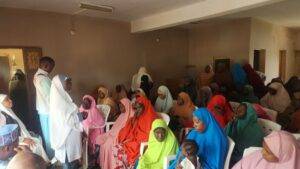
The Centre for Communication and Social Impact (CCSI), through its Faith and Cultural Champions (FCC) Project, is promoting the acceptance of child spacing and other reproductive health services among rural women in Kaduna State.
The intervention, implemented in partnership with the Ummulkhairi Foundation, aims to strengthen family health and reduce maternal and infant mortality rates.
Chairperson of the Ummulkhairi Foundation, Maryam Sani, stated this on Friday during a sensitisation programme in Gyallesu Ward, Zaria Local Government Area.
Sani said participants received practical information on the health, social, and economic benefits of child spacing. She added that the women were also educated on early danger signs of pregnancy that require urgent medical attention.
Health educators highlighted warning signs such as eclampsia, persistent dizziness, severe headaches, and postpartum haemorrhage. Sani urged pregnant women to seek immediate care and attend antenatal clinics regularly.
She noted that the campaign promotes antenatal care, postnatal services, and informed child spacing as effective ways to reduce maternal and infant mortality in vulnerable rural communities.
Sani explained that the intervention is necessary because data shows persistently high maternal and infant mortality rates in the state, making sustained community awareness critical.
Participants asked questions and shared experiences during the interactive session, demonstrating growing confidence in child spacing after facilitators addressed common misconceptions about contraception.
FCC Project Consultant, Abubakar Ibrahim, said the initiative is increasing demand for child spacing services by equipping women and their families with accurate information for informed reproductive health decisions.
He added that the project complements government efforts to reduce maternal mortality through stronger community mobilisation, advocacy, and collaboration with key stakeholders.
The Village Head of Gyallesu, Musa Nayaya, said the involvement of traditional and religious leaders has built public trust and made residents more receptive to messages on responsible child spacing.
Nayaya explained that Islam supports responsible child spacing for the well-being of mothers and children. He pledged to continue mobilising residents for awareness activities.
A religious leader, Abdu Ibrahim, said the sensitisation broadened participants’ understanding of reproductive health and equipped them to educate other families. He expressed concern over maternal deaths linked to postpartum haemorrhage and urged the government and development partners to sustain community-based awareness campaigns.
Participant Sayaqulu Haruna of Unguwar Kaya, Gyallesu Ward, said the discussions dispelled long-held misconceptions about contraceptives and boosted confidence in modern child spacing methods at health facilities.
“The sensitisation has given us hope by exposing us to safe options that protect mothers and improve family well-being,” she said.
The FCC Project targets young married couples, adolescent girls and boys, mothers-in-law, husbands, traditional rulers, and religious leaders because of their strong influence on maternal health and family planning decisions.
