


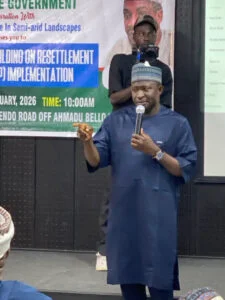
The Agro-Climatic Resilience in Semi-Arid Landscapes (ACReSAL) project in Kaduna State has activated the Resettlement Action Plan (RAP) for erosion control works in Rigasa, Kawo, and Zaria.
Abubakar Buba, the state’s Commissioner for Environment and Natural Resources, said on Tuesday in Kaduna that the exercise marked the state’s transition from consultations to full safeguards implementation ahead of civil works.
Represented by the Director of Environment and Pollution Control, Yusuf Mu’azu, the commissioner said the three sites were selected from over 242 identified ecological challenge locations based on priority and impact.
He said ongoing reforms in waste evacuation—including strengthened local council operations and engagement of additional operators—would reinforce the sustainability of the intervention.
Also speaking, Abdulhamid Umar, the National Project Coordinator of ACReSAL, described the RAP as a critical milestone.
Represented by Attahiru Abdulkareen of the Federal Project Management Unit, Umar said Kaduna’s decision to operationalize three corridors simultaneously positioned it ahead of other participating states under the 20-state ACReSAL framework.
“This is about implementation. Data collection begins immediately, and field teams must remain on ground,” he said.
Umar cautioned against indiscriminate dumping of refuse in rehabilitated channels, warning that blocked drainage could reverse gains and trigger fresh flooding.
According to him, the intervention is designed to restore degraded landscapes, secure communities against erosion risks, and enhance water flow for productive agricultural use.
Jibrin Magaji, District Head of Kawo, welcomed the intervention, noting that recurring floods had endangered lives and damaged homes in the area.
He pledged the community’s support to ensure successful execution of the project.
The RAP implementation precedes the commencement of civil works at the selected sites.
