

• Home
  • Agric
  • Sci & Tech
  • Health
  • Environment
  • Hausa News
  • More
    • Business/Banking & Finance
    • POLITICS
    • Entertainments & Sports
    • International
    • Investigation
    • Law & Human Rights
    • Africa
    • ACCOUNTABILITY/CORRUPTION
    • Hassan Gimba
    • Column
    • Prof. Jibrin Ibrahim
    • Prof. M.K. Othman
    • Defense/Security
    • Education
    • Energy/Electricity
    • Entertainment/Arts & Sports
    • Society and Lifestyle
    • Food & Agriculture
    • Health & Healthy Living
    • International News
    • Interviews
    • Investigation/Fact-Check
    • LAW & HUMAN RIGHTS
    • Oil & Gas/Mineral Resources
    • PRESS FREEDOM/JOURNALISM/PR
    • General News
    • Presidency
  • About Us
    • Contact Us
    • Board Of Advisory
    • Privacy Policy
    • Ethics Policy
    • Teamwork And Collaboration Policy
    • Fact-Checking Policy
    • Advertising
  • Media OutReach Newswire
    • Wire News
  • The Stories
Facebook Twitter Instagram
Trending
  • Kenya study suggests Mount Elgon elephants ‘self‑medicate’ with dozens of medicinal plants
  • Elon Musk leads Forbes’ September 2026 rich list as tech titans dominate top ranks
  • Kwasauri community appeals for urgent rebuild of collapsed health facility
  • Free medical outreach serves 500 in Ese-Ofin
  • Stakeholders renew calls for early detection, awareness and funding for childhood cancer
  • Beyond Uber’s exit, by Dr Fakunle Aremu [II] 
  • Lahbib: Speed, trust, investment key to saving lives in outbreaks
  • WHO Chief: Next pandemic Is when, not if
Facebook Twitter Instagram YouTube
AsheNewsAsheNews
  • Home
  • Agric

    IITA launches Nigeria agriconnect compact

    September 26, 2026

    FG begins free dog anti-rabies vaccination Saturday

    September 25, 2026

    Oyo, UNICEF strengthen partnership on food and nutrition security

    September 25, 2026

    Agronomist urges Borno farmers to improve storage methods

    September 25, 2026

    Brazil, Lagos Fulani community explore livestock, agriculture partnership

    September 25, 2026
  • Sci & Tech

    Elon Musk leads Forbes’ September 2026 rich list as tech titans dominate top ranks

    September 26, 2026

    NDPC urges women entrepreneurs to prioritise data protection in AI

    September 25, 2026

    FUTA don calls for synergy between technology, human learning

    September 25, 2026

    Zoho Nigeria urges firms to prioritise data security

    September 25, 2026

    Science can drive Nigeria’s progress – Expert

    September 24, 2026
  • Health

    Kenya study suggests Mount Elgon elephants ‘self‑medicate’ with dozens of medicinal plants

    September 26, 2026

    Kwasauri community appeals for urgent rebuild of collapsed health facility

    September 26, 2026

    Free medical outreach serves 500 in Ese-Ofin

    September 26, 2026

    Stakeholders renew calls for early detection, awareness and funding for childhood cancer

    September 26, 2026

    Lahbib: Speed, trust, investment key to saving lives in outbreaks

    September 26, 2026
  • Environment

    Sanwo-Olu urges unity of purpose as Nigeria marks Independence Day

    September 25, 2026

    FRSC special marshals zone RS2 rops national ranking

    September 25, 2026

    No life lost in Akaeze flood, says EBS-EMA

    September 25, 2026

    Nigeria must fix transport gaps to unlock economic potential – Obayendo

    September 25, 2026

    Climate governance ranking for Oct. 8

    September 24, 2026
  • Hausa News

    UNA signs MoU to launch air Bissau in Guinea-Bissau

    June 15, 2026

    Otti plans 250-room 5-star hotel in Umuahia

    April 11, 2026

    Anti-quackery task force seals 4 fake hospitals in Rivers

    August 29, 2025

    [BIDIYO] Yadda na lashe gasa ta duniya a fannin Ingilishi – Rukayya ‘yar shekara 17

    August 6, 2025

    A Saka Baki, A Sasanta Saɓani Tsakanin ‘Yanjarida Da Liman, Daga Muhammad Sajo

    May 21, 2025
  • More
    1. Business/Banking & Finance
    2. POLITICS
    3. Entertainments & Sports
    4. International
    5. Investigation
    6. Law & Human Rights
    7. Africa
    8. ACCOUNTABILITY/CORRUPTION
    9. Hassan Gimba
    10. Column
    11. Prof. Jibrin Ibrahim
    12. Prof. M.K. Othman
    13. Defense/Security
    14. Education
    15. Energy/Electricity
    16. Entertainment/Arts & Sports
    17. Society and Lifestyle
    18. Food & Agriculture
    19. Health & Healthy Living
    20. International News
    21. Interviews
    22. Investigation/Fact-Check
    23. LAW & HUMAN RIGHTS
    24. Oil & Gas/Mineral Resources
    25. PRESS FREEDOM/JOURNALISM/PR
    26. General News
    27. Presidency
    Featured
    Recent

    Kenya study suggests Mount Elgon elephants ‘self‑medicate’ with dozens of medicinal plants

    September 26, 2026

    Elon Musk leads Forbes’ September 2026 rich list as tech titans dominate top ranks

    September 26, 2026

    Kwasauri community appeals for urgent rebuild of collapsed health facility

    September 26, 2026
  • About Us
    1. Contact Us
    2. Board Of Advisory
    3. Privacy Policy
    4. Ethics Policy
    5. Teamwork And Collaboration Policy
    6. Fact-Checking Policy
    7. Advertising
    Featured
    Recent

    Kenya study suggests Mount Elgon elephants ‘self‑medicate’ with dozens of medicinal plants

    September 26, 2026

    Elon Musk leads Forbes’ September 2026 rich list as tech titans dominate top ranks

    September 26, 2026

    Kwasauri community appeals for urgent rebuild of collapsed health facility

    September 26, 2026
  • Media OutReach Newswire
    • Wire News
  • The Stories
AsheNewsAsheNews
Home»Energy/Electricity»[VIEWPOINT] Innovative Financing and Policy Support: Accelerating Renewable Energy Development in Africa
Energy/Electricity

[VIEWPOINT] Innovative Financing and Policy Support: Accelerating Renewable Energy Development in Africa

EditorBy EditorAugust 16, 2024Updated:August 16, 2024No Comments6 Mins Read
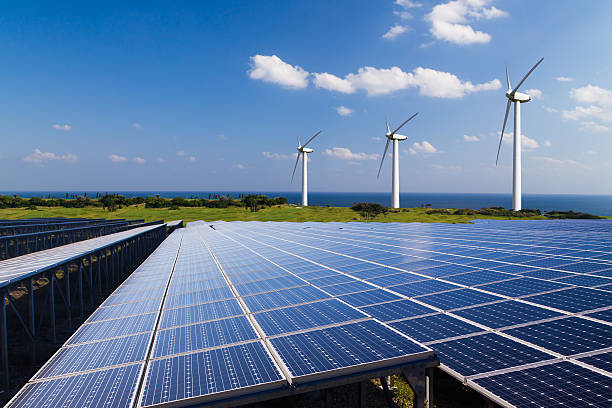
Renewable Energy Image Photo
Share
Facebook Twitter LinkedIn Pinterest Email

As Africa’s energy sector deregulates, exciting opportunities open up for financial innovation to benefit consumers. Private-sector buyers and traders can mitigate default risk and provide certified green energy at lower cost.

By Ana Hajduka

Africa’s renewable energy potential is undeniable, but it remains largely untapped. The problem is that the financing landscape for renewable energy and other projects in Africa was previously reliant on state utilities as buyers.

The scale of projects that could be financed in a country were then limited by the fiscal capabilities of that country and the sovereign guarantees it could provide.

This traditional model of relying on countries to provide such guarantees has faced recent challenges, because of increasing debt burdens, and shifting economic priorities.

Opportunities have therefore emerged for innovative financial approaches that will ensure more guarantees can be acquired from other sources and that risk can be diversified across a portfolio of suppliers and customers.  This would see more projects achieving financial close, to ultimately provide more African people with clean energy.

There is also room to not only grow new renewable energy supply, but to create new renewable energy markets on the continent, where that supply can be sold.

As a consequence, the market is opening up to allow alternative buyers of new renewable energy, which can utilize existing regional competitive energy markets to diversify its risks – buyers such as GreenCo.

ALSO READ Shanghai to switch to new energy buses, taxis by 2027

This is extremely relevant at the moment. Legislation like South Africa’s Electricity Regulation Amendment Bill, is set to open up the electricity sector to new supply and trading models. This foreshadows the opening of a competitive spot market for electricity trade in South Africa – linking in the future the South African spot market with that of the Southern African Power Pool.

Namibia did something similar a couple of years ago, as did Zambia.

These regulatory market developments are important as they facilitate innovation and new private sector business models through which there can be a scale up of bankable offtake agreements for new supply. The problem in the region is not lack of projects. It’s not lack of funding. It’s earning enough lender trust to lend on the back of a  20-25 year power purchase agreement backed by a private sector buyer without state fiscal support.  

Transmission capacity

Transmission constraints are another factor in this emerging scenario. The development of the electricity sector across the region effectively has a ceiling, determined by the available transmission network for new generation.

Previously, development finance institutions would only fund state utilities, and then only when it was proved that sufficient generation would be coming on board to utilize any new transmission infrastructure.

Now, thanks to the growing liberalisation focus in the region, allowing new private sector participants to buy and trade power, these transmission funding inflows can be facilitated. This new supply will be critical to making new transmission investments bankable.

If the private sector can sufficiently guarantee that any proposed new capacity coming on board will utilise the necessary transmission infrastructure, that new capacity effectively backs the viability of the new transmission investing – bringing a direct value add to the state utilities in South Africa and the rest of the SADC region.

Regulatory readiness

But for all of this to fall into place, we need a convergence of the relevant regulatory readiness – and we are already seeing this across the region. In many SADC countries, new legislation is providing the regulatory clarity that the private sector requires to venture into supply, transmission and trade.

The entire ecosystem must work for new entrants, and lenders. Until now, lenders have seldom considered state utilities to be creditworthy, and they have required significant fiscal guarantees to cover the power-purchase obligations of those utilities.

That model is a double whammy. Not only does it encumber utilities with debt for new generation, but it hits the national fiscus as well.

In South Africa, for example, the widely respected REIPPP process has brought online a significant amount of new generation. However, once the South African government started reporting on the process in accordance with IMF fiscal transparency regulations, this added an additional 36% to the contingent liabilities of the national treasury – almost $15 billion – overnight. That is money that can no longer be channeled into education, health and other key infrastructure development (water, transmission etc).

The REIPPP model has been extremely successful in the electricity sector, but it has perhaps outlived its usefulness. There are other priorities, and the private sector should be sufficiently capable to deliver on its own, with the lending community partnering accordingly.

The REIPPP model can be replicated in cases such as storage tenders, and in the transmission space. While transmission is usually considered a government function, it would certainly be possible to incentivize the private sector – and lenders – to enter the space.

New licensees

Across the region, markets are liberalising rapidly. South Africa has shown it can happen almost overnight, as in the case of the country’s generation regulations. This has allowed third-party wheeled projects, from generators directly to customers, and facilitated new license applicants in the market such – such as GreenCo.

This shows how market thinking about the development of the electricity sector has fundamentally changed. There is collaboration like never before.

For GreenCo, events like the forthcoming AOW event offer opportunities to align with mining, commercial and industrial offtakers, as well as suppliers and IPPs. For an entity like ours, it’s also a chance to show potential customers and suppliers the bankability of our own offtake; that lenders have confidence in our power purchase agreements.

Financial innovation must happen in a way that makes lenders comfortable. What that looks like in our case is that all our payment obligations are backed by an internationally AA- credit rated guarantee provider GuarantCo.

We are entering the South African market operationally ready to supply customers within South Africa and outside; and with financial readiness in the form of innovative guarantee structures to be considered bankable in the market.

The ultimate beneficiaries of this financial innovation must be the consumers. Many are looking to decarbonise their operations – for climate change reasons, and to make their products competitive on international markets.

Affordability is another key consideration. In our case, by being able to provide sufficient operational and financial risk mitigation to the lenders of the generators that supply to us, we can supply electricity far more affordably.

Around 70% of the costs of a generation or renewable energy project is from the cost of debt. Therefore, the more bankable an offtaker is, the lower the debt costs, and the cheaper the electricity – a clear demonstration of the benefits of financial innovation for the end consumer.

Hajduka is the founder and CEO of Africa GreenCo.

Africa GreenCo Ana Hajduka Renewable energy
Share. Facebook Twitter Pinterest LinkedIn WhatsApp Reddit Tumblr Email
Editor
  • Website

Related Posts

When home becomes a hazard: UDUS students battle Nigeria’s deplorable roads

September 24, 2026

FG inaugurates 3.3MW solar mini-grid, 2MWh battery storage at Yakubu Gowon University

September 16, 2026

Expert urges wider use of solar mini-grids in Nigeria

September 14, 2026

Leave A Reply Cancel Reply

Kenya study suggests Mount Elgon elephants ‘self‑medicate’ with dozens of medicinal plants

September 26, 2026

Elon Musk leads Forbes’ September 2026 rich list as tech titans dominate top ranks

September 26, 2026

Kwasauri community appeals for urgent rebuild of collapsed health facility

September 26, 2026

Free medical outreach serves 500 in Ese-Ofin

September 26, 2026
About Us
About Us

ASHENEWS (AsheNewsDaily.com), published by PenPlus Online Media Publishers, is an independent online newspaper. We report development news, especially on Agriculture, Science, Health and Environment as they affect the under-reported rural and urban poor.

We also conduct investigations, especially in the areas of ASHE, as well as other general interests, including corruption, human rights, illicit financial flows, and politics.

Contact Info:
  • 1st floor, Dogon Daji House, No. 5, Maiduguri Road, Sokoto
  • +234(0)7031140009
  • ashenewsdaily@gmail.com
Facebook Twitter Instagram Pinterest
© 2026 All Rights Reserved. ASHENEWS Daily Designed & Managed By DeedsTech

Type above and press Enter to search. Press Esc to cancel.