


For Babatunde Ridwanullahi Abiodun, the journey back home was more than a routine trip. It left the 100-level Electrical and Electronics Engineering student at Usmanu Danfodiyo University, Sokoto (UDUS), with troubling questions.
The most disturbing pattern he encountered was passengers being forced to push vehicles trapped in muddy water. According to him, the journey went well until they reached parts of Kebbi State.
When the car got stuck in the mud, passengers were forced to push and pull the vehicle. Yet that was only the beginning of their ordeal.
“At about 7:15 a.m., our vehicle got stuck in the mud. We were there till 10:05 a.m. trying to get the vehicle out,” he recalled of the journey, which eventually lasted 27 hours.
To his surprise, it did not end there. When they arrived in Nasarawa, the vehicle developed another fault due to the road conditions and had to be repaired before they could continue the journey.
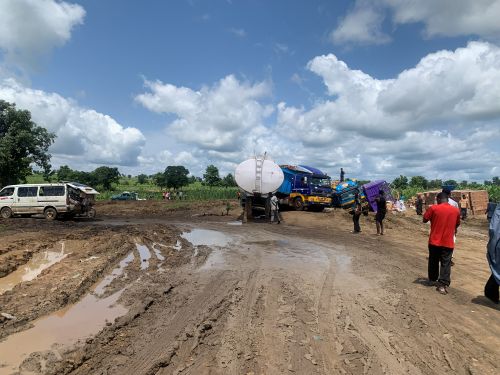
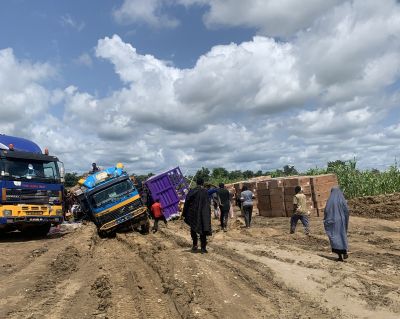
Abiodun said that at some point, trucks were seen colliding with each other as drivers struggled to manoeuvre through the road. By then, their vehicle had suffered even more damage. In Niger State, they were held up again when one of the vehicle’s tyres burst.
Students forced to push their vehicles
For some students, the experience was not only about sitting for long hours in a vehicle; they were also forced to join the rescue effort whenever vehicles became trapped.
Uthman Asiat Oyinkansola, a 200-level Mass Communication student, said her journey was progressing normally until they reached Niger State.
According to her, the vehicle became stuck in mud, and passengers had to look for people to help get it out. They eventually spent more than an hour before the vehicle was freed.
“The road conditions are not good at all. It is a burden for students travelling back home,” Oyinkansola said.
She explained that passengers had to leave the comfort of their seats to push the vehicle.
Instead of remaining seated throughout the journey, she said, students repeatedly had to come out and push whenever the vehicle became trapped.
The experience left her physically exhausted.
“As I got home, I was so tired to the extent of having back pain, not because of the long journey but because of what we went through during the journey,” she said.
An 18-hour journey becomes 27
For Isiaq Buhari Abiodun, a 200-level Primary Education student, the journey raised concerns about whether they would ever reach their destination.
He had expected the trip to take about 18 hours. Instead, they spent approximately 27 hours on the road.
“We really had a long journey. The journey was like, ‘Are we not going to reach our destination again?’” he said.
He said poor road conditions repeatedly affected their movement, including situations where the vehicle had to stop. For him, the difficulty of returning home adds another burden to students who already face the challenge of leaving their families to study far away.
“To stay at Sokoto after sessions is hard, and returning to our state is difficult and dangerous,” he said.
Buhari also expressed relief that they completed the journey without encountering attacks from bandits, kidnappers or armed robbers.
Rain, mud and vehicle faults
The experience was not limited to one route or one group of students.
Shuaib Munirat, a 300-level Linguistics student, said her journey was initially going smoothly until heavy rainfall made the road rough and muddy.
According to her, the poor condition of the road contributed to repeated vehicle problems and further delayed their movement.
At one point, passengers had to push the vehicle through the mud after it developed a fault.
She said the situation was stressful not only for the passengers but also for the driver, who had to deal with both the difficult road and mechanical problems.
“In my experience and opinion, if the road is good, everything will go smoothly,” Munirat said.
Niger and Jebba: difficult stretches
For Abdulkareem Rofiha Titilayo, a 300-level Mass Communication student travelling to Ibadan, some sections of the journey were particularly difficult.
She identified portions of the road around Niger State and Jebba as major sources of delay.
According to her, the long distance was already challenging, but the poor sections of the road made the journey feel even longer.
“Traffic and having to slow down on rough roads also caused the delay,” she said.
Titilayo said the journey was physically demanding, as she spent more than 24 hours on the road before eventually arriving in Ibadan.
Poor roads and stranded trucks
The students’ accounts point to a common problem: poor roads do not only slow down vehicles; they can also create additional traffic and expose travellers to further difficulties.
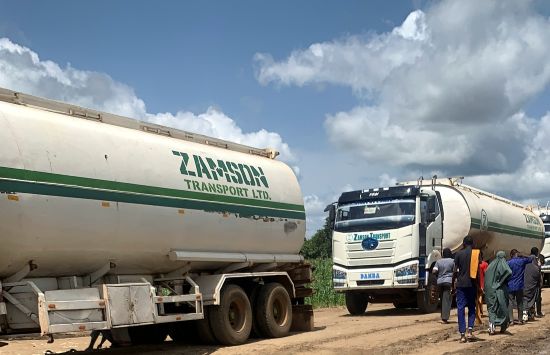
Oyinkansola said stranded trucks contributed to the problem, as vehicles had to wait for one another before passing through difficult sections.
She argued that better roads would reduce such situations.
“Had the road been good, the trailer wouldn’t have been stranded there,” she said.
Abiodun similarly observed that poor road conditions forced drivers to move slowly and carefully, increasing travel time.
The repeated incidents of vehicles becoming stuck, breaking down or suffering tyre damage show how road conditions can turn an ordinary journey into an exhausting experience.
Beyond the roads: the fear of insecurity
While poor roads were the main concern raised by the students, insecurity remained another source of anxiety.
For students travelling long distances through unfamiliar routes, the possibility of encountering bandits, kidnappers or armed robbers adds another layer of fear to an already difficult journey.
Buhari said he was grateful that their group completed the journey without an attack.
The students’ experiences therefore show that travelling home is not simply about the distance between Sokoto and their destinations. The condition of the roads, vehicle reliability, traffic, weather and security all determine whether the journey will be safe and manageable.
Expert: students must prioritise safety
An expert on transportation and national development, Abdulhakeem Abdulganiyu, said an efficient transport system is essential to the development of any country.
According to him, students travelling long distances should take precautions even as they expect government authorities to address the wider problems.
The expert advised students to travel in groups where possible and maintain communication with their drivers and fellow travellers.
Students were also warned against travelling with unknown or unregistered drivers, particularly when making long-distance journeys.
Government must fix roads and expand transport options
The expert stressed that government intervention is necessary to improve the situation.
According to the expert, federal and state governments should improve road networks, arguing that better roads would help reduce road accidents and make journeys more efficient.
The expert also called for greater investment in rail transportation to reduce pressure on the nation’s roads.
Rail transport, the expert noted, could provide a cheaper, safer and faster alternative for students travelling between distant regions.
“Imagine students travelling from North Central to North West taking trains,” the expert said, arguing that Nigeria needs to invest more in modern transportation systems.
The expert further stressed that students, as future contributors to national development, deserve safe and affordable transportation.
A journey that should not be this difficult
The experiences of these students reveal a troubling pattern. A journey expected to take about 18 hours can stretch to 27 hours when poor roads, mud, vehicle faults, stranded trucks and traffic combine.
For students already dealing with the demands of university life, such journeys can bring physical exhaustion, financial pressure and fear.
The students are not asking for luxury. They want roads that allow them to travel safely, reliable transport services and a system that does not turn returning home into a dangerous and exhausting experience.
For Abiodun, despite the 27-hour ordeal, one thing mattered most: arriving safely.
“Alhamdulillah, we eventually reached our destination safely,” he said.
