


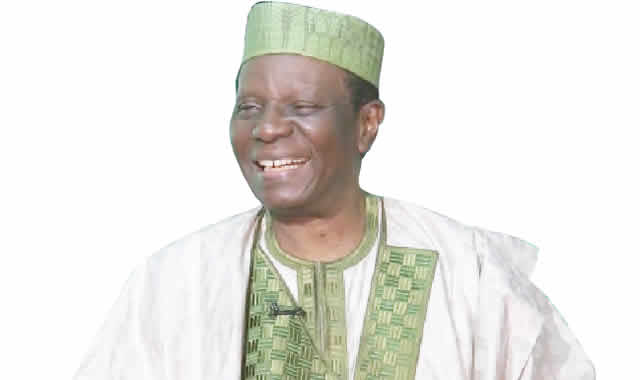
“The plan to restore history as an inevitable frontline teaching subject was first recommended in 2016. That the announcement of its implementation came in 2022, that is, six years later, derogates largely from the urgent public importance of the subject”
Last week’s decision by the Nigerian government to approve the restoration of ‘History’ as a stand-alone subject to be taught in Nigerian schools was a right step in the right direction because anyone who seeks to comprehend the present so as to plan for tomorrow must first understand yesterday. Although history is that important; I am yet to clap for the government on its new stand. As Nigerian events have always exhibited, it is expedient to get the details of any policy pronouncement, before clapping for it. So, which history is to be taught now? If it is the type that was taught in my days in school, I cannot clap because it was not the authentic history of Nigeria but the history of European activities in Africa. It was quite cheeky to make students of African history learn and quite often memorize historical fallacies such as that one alien adventurer – Mungo Park, discovered River Niger. No one bothered to rationalize that a man who was shown a river by the inhabitants of its bank ought not to be credited in history with the discovery of the same river.
To have indoctrinated the indigenous people around the river and their successors into believing that they too did not know the river until the coming of Mungo Park was patently deceitful. Again with the benefit of hindsight, I find it repulsive for Frederick Lugard, colonial governor of Nigeria to be eulogized as the exponent of “indirect rule” – a system of government whereby an imperialist allows the local ruler of a conquered territory to continue to govern the territory on behalf of the conqueror. Yet, in pre-colonial Africa, that is, many centuries before Lugard, using existing rulers to run such territories had been employed in the old Empires of the Western Sudan by rulers like Mansa Musa of Mali, Askia the Great of Songhai and Idris Alooma of Kanem Bornu. Against this backdrop, it is nauseating to clap for the teaching of history which accommodates several historical impurities and distortions especially stories which never begin from the beginning – a good example being the Nigerian media history.
Whereas people began to live in Nigeria during the Paleolithic or Old Stone Age period traceable to between 500,000 and 9000 B.C., the origin of the Nigerian media is authoritatively put at 1859, when a foreign missionary, Rev. Henry Townsend established a newspaper Iwe Irohin in Abeokuta. Does it mean that the people who lived in Nigeria did not communicate with one another before the 19th century? In the precolonial era, the great warrior Obas of the Benin Empire built an expansive wall as long as 20,000 kilometres around the Empire – a defensive edifice recorded in the Guinness Book of Records, as ‘the world’s longest self-protective complex and the greatest earth work ever constructed by man.’ How was the expansionist policy of those warrior Obas disseminated to the public?
The journalist of those days later described as the Town Crier, existed everywhere. In parts of the North he was the “Mai Shela” appointed by the Sarki – Village head from among citizens who had a flair for information management. In Akure, one Chief Osukute was the senior newsman and ‘chief editor’ of the palace news who usually sent his ‘reporters’ on ‘news beats’ to herald dates of important events. Thus, the non-recognition of the precolonial media is one of the failures of history, after all, every country’s media evolved from stage to stage through the nascent media phase to the technologically advanced media of today. No nation began with newspapers because world history aptly records that several centuries before printing was invented, people communicated through diverse means such as scribbling information on stones and sign language. But media in Africa was not so recognized but derisively coined as African communication system and Nigerian media scholars accept it! This appropriately reflects our history – an alien account which began abruptly thereby incapable of teaching any positive lesson.
A hard look at Nigeria would easily betray too many bogus claims making several things look fake. When the unending sermon by Information Minister, Lai Mohammed that fake news is Nigeria’s greatest challenge is critically examined, one cannot but realize that in a country with too many fake issues, there is bound to be a preponderance of fake news. This is because if news is about events, our fake activities and statements can only produce fake news. Nigeria does not have an acceptable census just as her voter’s register, in spite of spirited technological efforts by the electoral body has many fake entries which currently distort INEC’s plans. There are two things which many Nigerian leaders have in common. The first is that they all have faith in rigging elections notwithstanding their pretensions to the contrary while the second is that no leader is comfortable with adherence to the rule of law.
Both traits were bequeathed by history which we must change. It should surprise no one that our ruling political parties are more involved than others in election rigging because having done too little to sustain their fake popularity, they spend more time searching for how to subvert the electoral process. It is in earnest the ruling parties that surreptitiously include their members among the supposed impartial referee of the game in which they are a competing team. Before the 2015 elections, the then ruling PDP sensing imminent defeat manipulated the postponement of voting day which they made public not in Nigeria but at a conference in London. In the last few months, those worried and anxious to reverse the gains of the use of technology belong to the current ruling APC. After canvassing in vain that Nigeria is not ripe for BVAS, the party is still debating its anticipated failure months after the electoral law had been appropriately passed.
Party primaries are exceedingly rancorous because the political culture our politicians are familiar with is one where some money bags known as party caucuses secretly handpick candidates against the run of play. The reluctance in adjusting to the new democratic spirit is that it removes caucuses and what they call party supremacy thereby closing illicit financial flow to founders. The introduction of several mechanisms such as place-holder must be understood against the background of history. Amidst the struggle to gain an upper hand, some cheated dissidents are forced into coalition with their opponents. The G5 group, led by River state governor Nyesom Wike is not doing anything new. In 2013, his predecessor, former governor Rotimi Amaechi joined four other governors to move from the PDP to join the APC. Shortly, attacks on the judiciary would start as part of Nigeria’s political history that is being followed to institutionalize rigging
The enormous power of history can hardly be changed by feeble efforts. The plan to restore history as an inevitable frontline teaching subject was first recommended in 2016. That the announcement of its implementation came in 2022, that is, six years later, derogates largely from the urgent public importance of the subject. The news is that 3700 teachers with 100 from each state and Abuja are to be trained. While there is scanty information to confirm that it would be expeditiously done, one hopes that the people chosen are persons who have interest in becoming educationists and not unemployed people nominated by our legislators as part of constituency projects. Hopefully, the teachers would teach our children the age-long core values that have since been displaced. But will their salaries be regular?
We must look inwards and retrospectively too because there is much that is glorious and worthy of emulation in our past. Respect for elders and constituted authorities, dignity of labour, concern for one’s neighbour, community service, and patriotism need to be restored. It is however defeatist to revive obsolete practices; instead, there should be deep introspection in the search for our forgotten virtues to be channeled into constructive use. At the same time, acculturation, arising from interactions with the outside world, behooves us to employ global realities predicated on advanced technology to develop our country. We need an authentic history and statesmen who would prioritize cultural and developmental practices.
