


Section 22 of the Constitution of the Federal Republic of Nigeria 1999, imposes an obligation on the media to hold Government accountable to Nigerians. “The press, radio, television and other agencies of the mass media,” the section says, “shall at all times be free to uphold the fundamental objectives contained in this Chapter and uphold the responsibility and accountability of the Government to the people.”
The Chapter in reference is Chapter II and it is titled “Fundamental Objectives and Directive Principles of State Policy”. It is in twelve Sections, beginning with Section 13 of the Constitution and ending in Section 24. The Chapter says the country shall be a State based on the principle of democracy and social justice. It lists a number of fundamental objectives for the State, including political, economic, social, educational, environmental, cultural and foreign objectives. It also says the nation’s ethics shall be “discipline, integrity, dignity of labour, social justice, religious tolerance, self-reliance and patriotism”. Last, but not the least, it imposes a number of duties on the country’s citizens, including abiding by the provisions of its constitution, respecting the dignity, rights and legitimate interests of others and declaring income honestly to appropriate and lawful agencies and paying tax promptly.
My initial thought on reading my topic was that I should talk about why and how the Media should hold the politician accountable to the public. However, on second thoughts it occurred to me that this responsibility should go beyond the Media alone as enunciated in the Constitution. Instead, it should be everybody’s concern.
Even then, the Media as the Fourth Estate of the Realm, must lead the way, if only because together as print, radio, television and the internet it is the main source of news and information in society.
While it is important that the Media and the rest of society hold politicians accountable to the rest of society, politicians are not the only ones that should be held accountable to society. Beyond politicians, every group in society should be held accountable to its society. After all it is not politicians alone who are saddled with the responsibility for making decisions on behalf of society. Big Business, Big Labour, Big Pharma, and, of course, Big Media, etc., all of them make decisions that affect people. Therefore, we must go beyond the Constitutional enunciations for the Media to hold Government accountable to the public and hold every institution whose decisions and actions have impact on people and society to account for their decisions and acti ons.
As the leader in holding, not just politicians, but all other groups, accountable to the people, the Media must be guided by knowledge, ethics (integrity, courage, professionalism, impartiality, etc.) and civility in language, if only because intemperate language, generally speaking, but name calling and stereotyping, more specifically, tends to alienate rather than engage.
The first step the Media must take in holding politicians accountable to the public is to be knowledgeable about politics and, of course, everything else it reports. This should start with being knowledgeable about the rules that guide our politics.
The most important of these rules is the country’s Constitution, especially since the Constitution says the only legitimate form of government is the elected one. The second is our new Electoral Act 2022. The third is the Independent National Electoral Commission’s (INEC’s) Election Regulations and Guidelines, 2022. There are, of course, many other documents, including Manuals for Election Officials, political party Constitutions, Case laws, etc. but these three constitute the most important elements of the country’s Electoral Legal Framework.
Our Constitution suffers from a poor image, but in spite of its flaws (something no constitution in the world is free from) the image, including the fact that, with over 75,000 words, it is rather too longish (by comparison, the United States is no more than 8,000, including all its 27 amendments) is not altogether deserved. This poor image is based on the claim that it was written by the Military and, because of that, it is only federal in name but unitary in reality.
Both claims are false. The Military has never written any of our Constitution, certainly neither the current 1999 Constitution nor that of 1979, which the former is essentially a clone of. Both were written by civilians, mostly elected, with a few nominated. The drafts of both were subjected to public hearings in all the nooks and corners of this country before they were promulgated into law. Yes, the Military held a veto over both but in promulgating each into the country’s supreme law, they hardly changed their substance.
As for the claim that the Constitution is unitary in fact, if not in theory, nothing could be further from the truth. This claim has led to the popular fallacy that what Nigeria needs is “true federalism”. A federation is simply a system of government in which a written constitution distributes power and responsibility between a national government and a number of state or regional governments. However, no two federations distribute power and responsibility the same way because the historical context of each country is different, and therefore, the distribution that is appropriate for one country may not be appropriate for another.
Only three days ago, i.e., on November 15, PUNCH, published an editorial titled “Restructuring should dominate 2023 campaigns” in which it referred to the country’s government as “unitary federalism”. It then went on to blame every ill that has afflicted Nigeria on our Constitution. Consequently, it said, “The calls that true federalism be the main agenda (of the 2023 General Election) should therefore be heeded.”
The newspaper highlighted three areas, namely, minerals, police and prison, in which it claims the federal government dominance of legislation, and with it, the distribution of revenue, has spelt doom and insecurity for the country. There may be some truth to this claim but without debating its merit I think it ignores the historical context of country’s current power sharing formular. Even more importantly, it completely ignores the fact that good governance has little, or even nothing, to do with the quantum of revenue available to a government. Indeed, if anything, it can be argued, from Nigeria’s historical experience, that the more money people have, the less frugal and more reckless they tend to be.
As I argued more than ten years ago in one of my columns (October 2, 2012) all the quarrel with our Constitution is essentially a classic case of a bad workman quarrelling with his tool. Of course, our Constitution is not perfect. None is. But in spite of its imperfections, if we had kept faith with it, Nigeria would have been in a much better shape than its current sorry state, given the vast oil and other revenues it has had since former Military Head of State, General Yakubu Gowon, famously, (some would say infamously), declared that money was no object for the country but how to spend it.
As a manmade instrument, all constitutions can always be improved upon. However, only a bad workman, which your typical Nigerian politician is, will contemplate changing his country’s Constitution the eight or so times we have since our Independence in 1960. Compare this to the Americans who have not changed their Constitution since 1787 when they first wrote it and since 1789 when it started functioning. Instead, they have amended it only 27 times or so since then.
With us, however, each time we attempted to change our Constitution, we couldn’t even make up our minds what we mean by “true federalism”, precisely because there is no such thing. For, while some have advocated a return to a modified version of the First Republic regionalism, others have demanded for even more states than the current 36; actually nearly 90 during one of those Constituent Assemblies!
As Simon Kolawole, the publisher of The Cable online newspaper and one of the country’s best regarded columnists, wrote in his Thisday column of June13, 2021 and which is contained in his recent collection of his columns titled “FELLOW NIGERIANS, IT’S ALL POLITICS!”, the argument that “true federalism” is the country’s silver bullet does not stand even the most cursory examination. As he pointed out, of the 193 member-countries of the United Nations, 165 or 85% of them practice unitarism. Of the top 20 most developed of these countries only seven practice federalism, according to the UNDP Human Development Index. Indeed, of the top 10 only three are not unitarist.
It would then seem logical that unitarism is better than federalism at delivering development than unitarism. The fact, however, is that it is not necessarily so simply because Constitutions don’t executive themselves. Human beings do. And we have implemented ours very badly. But instead of blaming ourselves, we heap all the blame on a piece of paper, speaking metaphorically, that is.
So, if we really want to hold our politicians responsible to the public, we should focus more on their conduct and performance rather than on the flaws in our Constitution.
Because the Media has focused more on the Constitution than on political behaviour of our politicians, it has tended to focus its attention more on politicians at the centre because we think that’s where power is concentrated, than on those at the other lower levels of Government, whereas there has been more misgovernance at the State and Local Governments in comparison to the centre.
A popular Hausa proverb says, if a man says he will dash you a gown look at the one he is wearing. Those who argue that giving more responsibilities and resources to the States and Local Governments will necessarily guarantee progress and development in the country should ask themselves how much accountability to the public there has been at those levels compared to the centre.
The answer is pretty obvious; none. This is demonstrated by the fact that virtually all the State Houses of Assembly in the country are worse than rubber stamps compared to the National Assembly as checks on the Executive arm of Government. Worse still, to date no State Independent Electoral Commission has conducted a free, fair and credible Local Government election since the beginning of the current Fourth Republic in 1999.
This is not to say that a case cannot be made for more devolution of powers and resources to the lower levels of Government. It can. However, even as we make such a case, the Media owes the public a duty to beam its searchlights on the behaviour of politicians at those levels much more than it has so far.
However, in beaming its searchlight on political behaviour of politicians, especially at the lower levels of Government, it is imperative that apart from the Media being knowledgeable about what it reports upon, it does so with integrity, fairness and professionalism, among other ethics. Media men and women must be seen to practice what they preach in their private as well as public lives. Otherwise, its oversight of public figures in general, politicians in particular, will sound hollow.
I appreciate that in this age of the internet, when anyone with a laptop, or even just a smart phone, can post a story online and in real time, asking journalists to act professionally is a tough call. But it is precisely this that makes it even more important for them to do so. For it is only their professionalism, i.e., their ability to cross check the accuracy and objectivity of a story before they publish it as news, that can help protect society from fake news, with all the damage it can do.
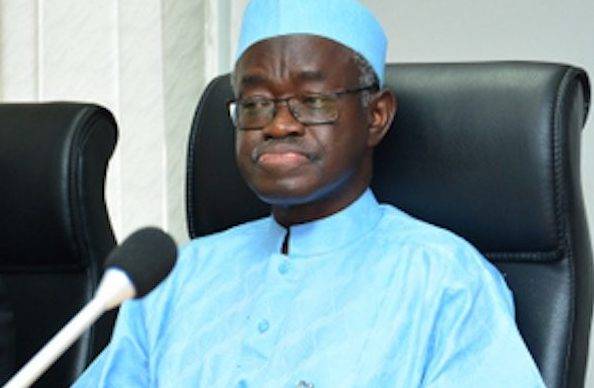
Haruna, an INEC Commissioner delivered this paper at the Media Roundtable on “The Accountability Imperative: Why and How to Hold the Politicians’ Feet to Fire” organized by FrontFoot Media Initiative, Lagos, at Bon Hotel, Ikeja, on November 19, 2022.
