

• Home
  • Agric
  • Sci & Tech
  • Health
  • Environment
  • Hausa News
  • More
    • Business/Banking & Finance
    • POLITICS
    • Entertainments & Sports
    • International
    • Investigation
    • Law & Human Rights
    • Africa
    • ACCOUNTABILITY/CORRUPTION
    • Hassan Gimba
    • Column
    • Prof. Jibrin Ibrahim
    • Prof. M.K. Othman
    • Defense/Security
    • Education
    • Energy/Electricity
    • Entertainment/Arts & Sports
    • Society and Lifestyle
    • Food & Agriculture
    • Health & Healthy Living
    • International News
    • Interviews
    • Investigation/Fact-Check
    • LAW & HUMAN RIGHTS
    • Oil & Gas/Mineral Resources
    • PRESS FREEDOM/JOURNALISM/PR
    • General News
    • Presidency
  • About Us
    • Contact Us
    • Board Of Advisory
    • Privacy Policy
    • Ethics Policy
    • Teamwork And Collaboration Policy
    • Fact-Checking Policy
    • Advertising
  • Media OutReach Newswire
    • Wire News
  • The Stories
Facebook Twitter Instagram
Trending
  • Sultan urges newly turbaned title holders to uphold truth, serve people diligently
  • Insecurity: Which narrative should we believe: Fulanisation or Islamisation?
  • Rising gas prices push FCT households toward traditional fuels
  • Kogi first lady disburses N25m to 500 women in Okunland
  • Over 1,000 Nigerians in South Africa register for repatriation
  • Kano inaugurates management teams to boost healthcare standards
  • Lagos Mainland reconstructs flood-prone Jebba-Osholake road
  • MTN Nigeria opens data, network operations for public scrutiny
Facebook Twitter Instagram YouTube
AsheNewsAsheNews
  • Home
  • Agric

    N-HYPPADEC distributes power tillers to Kaduna farmers

    June 6, 2026

    Niger Assembly approves $14.4m loan to finance Niger Foods

    June 3, 2026

    Expert: Nigerian food products face export challenges

    June 3, 2026

    Agrify, TCF launch AI farming tool in Zuma

    June 3, 2026

    Niger State and AGAN launch private extension initiative to tackle agricultural crisis

    June 2, 2026
  • Sci & Tech

    MTN Nigeria opens data, network operations for public scrutiny

    June 6, 2026

    NIFST urges sanctions for unsafe food practices

    June 4, 2026

    FEC approves national research and innovation development fund

    June 4, 2026

    Africa’s key challenge Is market access, not talent

    June 3, 2026

    Association urges proper metrics to boost Africa’s innovation

    June 2, 2026
  • Health

    Kano inaugurates management teams to boost healthcare standards

    June 7, 2026

    First lady partners with ANSACA to boost HIV awareness in Anambra

    June 6, 2026

    World Menstrual Hygiene Day: Sokoto stakeholders renew commitment to girls’ health, dignity

    June 6, 2026

    Association strengthens regulatory collaboration in West Africa

    June 6, 2026

    Africa CDC, WHO launch Ebola preparedness plan

    June 6, 2026
  • Environment

    Rising gas prices push FCT households toward traditional fuels

    June 7, 2026

    Lagos Mainland reconstructs flood-prone Jebba-Osholake road

    June 6, 2026

    Plastic waste to housing materials to tackle Nigeria’s housing shortage

    June 6, 2026

    NRC pledges to improve worker welfare

    June 6, 2026

    Lagos warns population growth will increase pollution

    June 5, 2026
  • Hausa News

    Otti plans 250-room 5-star hotel in Umuahia

    April 11, 2026

    Anti-quackery task force seals 4 fake hospitals in Rivers

    August 29, 2025

    [BIDIYO] Yadda na lashe gasa ta duniya a fannin Ingilishi – Rukayya ‘yar shekara 17

    August 6, 2025

    A Saka Baki, A Sasanta Saɓani Tsakanin ‘Yanjarida Da Liman, Daga Muhammad Sajo

    May 21, 2025

    Dan majalisa ya raba kayan miliyoyi a Funtuwa da Dandume

    March 18, 2025
  • More
    1. Business/Banking & Finance
    2. POLITICS
    3. Entertainments & Sports
    4. International
    5. Investigation
    6. Law & Human Rights
    7. Africa
    8. ACCOUNTABILITY/CORRUPTION
    9. Hassan Gimba
    10. Column
    11. Prof. Jibrin Ibrahim
    12. Prof. M.K. Othman
    13. Defense/Security
    14. Education
    15. Energy/Electricity
    16. Entertainment/Arts & Sports
    17. Society and Lifestyle
    18. Food & Agriculture
    19. Health & Healthy Living
    20. International News
    21. Interviews
    22. Investigation/Fact-Check
    23. LAW & HUMAN RIGHTS
    24. Oil & Gas/Mineral Resources
    25. PRESS FREEDOM/JOURNALISM/PR
    26. General News
    27. Presidency
    Featured
    Recent

    Sultan urges newly turbaned title holders to uphold truth, serve people diligently

    June 7, 2026

    Insecurity: Which narrative should we believe: Fulanisation or Islamisation?

    June 7, 2026

    Rising gas prices push FCT households toward traditional fuels

    June 7, 2026
  • About Us
    1. Contact Us
    2. Board Of Advisory
    3. Privacy Policy
    4. Ethics Policy
    5. Teamwork And Collaboration Policy
    6. Fact-Checking Policy
    7. Advertising
    Featured
    Recent

    Sultan urges newly turbaned title holders to uphold truth, serve people diligently

    June 7, 2026

    Insecurity: Which narrative should we believe: Fulanisation or Islamisation?

    June 7, 2026

    Rising gas prices push FCT households toward traditional fuels

    June 7, 2026
  • Media OutReach Newswire
    • Wire News
  • The Stories
AsheNewsAsheNews
Home»Viewpoint»Insecurity: Which narrative should we believe: Fulanisation or Islamisation?
Viewpoint

Insecurity: Which narrative should we believe: Fulanisation or Islamisation?

By Bashir Adefaka
EditorBy EditorJune 7, 2026Updated:June 7, 2026No Comments4 Mins Read
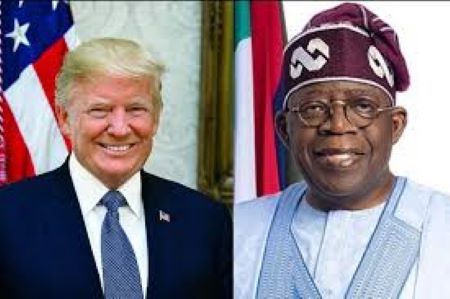
Tinubu with Trump, photo by Dubawa
Mixed ptoho of Tinubu with Trump, photo by Dubawa
Share
Facebook Twitter LinkedIn Pinterest Email

Nigeria stands today at a fragile crossroads. Terrorism, banditry, and violent criminality continue to threaten our national stability, yet beyond the bullets and bloodshed lies another danger—careless rhetoric and divisive narratives that risk tearing apart what remains of our fragile unity.

It has become increasingly common to hear certain groups frame Nigeria’s security crisis as a calculated agenda of “Fulanisation” or “Islamisation.” These claims, repeated loudly and frequently, are often presented as unquestionable truths. But the question must be asked: which narrative are we meant to accept—and on what evidence?

Terrorism is a global phenomenon. It thrives on networks, ideology, criminal opportunism, and weak governance. It does not recognize borders, ethnicity, or even religion in its destructive path. From West Africa to the Middle East, from Europe to Asia, terrorism has left victims of every faith and tribe in its wake. It is not an ethnic project; it is not a religious doctrine. It is criminality weaponized.

Yet in Nigeria, despite extensive research, countless public discussions, and repeated clarifications from religious and security authorities, some individuals—particularly those aligning with separatist ideologies in parts of the South-West, South-East, and North-Central—continue to interpret every violent episode through the lens of ethnic or religious conquest. This interpretation may be politically convenient, but it is dangerously simplistic.

Consider Mali. A country that is overwhelmingly Muslim and home to a significant Fulani population has also battled extremist violence. If terrorism automatically equals Islamisation or Fulanisation, who, then, is being Islamised in Mali? Who is being Fulanised? The absurdity of that logic becomes immediately clear. The Malian people have largely united against insurgents without turning the crisis into an ethnic blame game. Unity, not suspicion, has been their rallying point.

In Nigeria, unfortunately, we sometimes choose accusation over cohesion. Rather than confronting terrorism as a shared national emergency, some prefer to stigmatize entire communities. Muslims are casually labeled as kidnappers. Fulani identity is equated with banditry. Such sweeping generalizations ignore the millions of law-abiding citizens who are themselves victims of the same violence.

Let us be clear: no religion teaches evil. Christianity does not. Islam does not. Traditional beliefs do not. When individuals commit crimes, they do so as criminals—not as ambassadors of their faith. It is both intellectually dishonest and morally reckless to conflate criminality with religion.

Islam, like any other faith, has recognized leadership and established teachings. In Nigeria, religious authorities—including the Sultan of Sokoto—have repeatedly denounced terrorism and clarified what Islam stands for. When religious leaders consistently condemn violence, yet some continue to insist that violence represents the religion, we must ask: is this ignorance, or is it deliberate distortion?

This pattern of distortion feeds exactly what terrorists desire—division. Terrorist groups thrive where mistrust flourishes. They want communities to turn against each other. They want suspicion to replace cooperation. When citizens begin to call for the eviction of entire ethnic or religious groups from certain regions, they are unknowingly advancing the objectives of those who seek chaos.

There is also the troubling role of social media. Influencers and commentators, sometimes driven by attention or ideology, amplify inflammatory statements without context. A recent controversy surrounding Sheikh Ahmed Gumi illustrates how quickly narratives can be weaponized. A comment about coexistence was reframed as a threat. Debate is healthy in democracy, but deliberate misinterpretation is not.

Even more concerning is the apparent inconsistency in the enforcement of cybercrime and hate speech laws. Inciting ethnic or religious hostility online should be treated with seriousness. When laws appear to target only government critics while ignoring those fanning the flames of division, public trust erodes. Selective justice breeds resentment and weakens national unity.

Nigeria’s security challenges are real. But so too is the danger of internal fragmentation. If we continue down the path of labeling, stigmatizing, and provoking one another, we risk creating the very religious or ethnic conflict that extremists hope to ignite.

The path forward requires maturity and discipline. It demands that we separate criminals from communities. It requires that we resist narratives designed to inflame rather than inform. Most importantly, it calls for collective responsibility.

National security is not the government’s burden alone. It is a shared obligation. We must choose the oath of honor over the temptation of outrage. We must defend truth over conspiracy. We must prioritize unity over suspicion.

Nigeria can defeat terrorism. But we cannot defeat it while simultaneously fighting ourselves.

The choice is ours.

Bashir Adefaka, a Prince of two Ondo State kingdoms of Isolo and Akure, is a media proprietor and publisher of The DEFENDER Newspaper in Nigeria. He can be reached via omope72@gmail.com

Insecurity Islamisation
Share. Facebook Twitter Pinterest LinkedIn WhatsApp Reddit Tumblr Email
Editor
  • Website

Related Posts

Groups demand probe of Fayose, Sunday Igboho over insecurity allegations

June 5, 2026

How Sultan Bello industrial and skills hubs shone at the 3rd SSASASNET conference

June 4, 2026

For how long will threats of Northerners, Muslims’ eviction from Yoruba land continue?

June 3, 2026

Leave A Reply Cancel Reply

Sultan urges newly turbaned title holders to uphold truth, serve people diligently

June 7, 2026

Insecurity: Which narrative should we believe: Fulanisation or Islamisation?

June 7, 2026

Rising gas prices push FCT households toward traditional fuels

June 7, 2026

Kogi first lady disburses N25m to 500 women in Okunland

June 7, 2026
About Us
About Us

ASHENEWS (AsheNewsDaily.com), published by PenPlus Online Media Publishers, is an independent online newspaper. We report development news, especially on Agriculture, Science, Health and Environment as they affect the under-reported rural and urban poor.

We also conduct investigations, especially in the areas of ASHE, as well as other general interests, including corruption, human rights, illicit financial flows, and politics.

Contact Info:
  • 1st floor, Dogon Daji House, No. 5, Maiduguri Road, Sokoto
  • +234(0)7031140009
  • ashenewsdaily@gmail.com
Facebook Twitter Instagram Pinterest
© 2026 All Rights Reserved. ASHENEWS Daily Designed & Managed By DeedsTech

Type above and press Enter to search. Press Esc to cancel.