


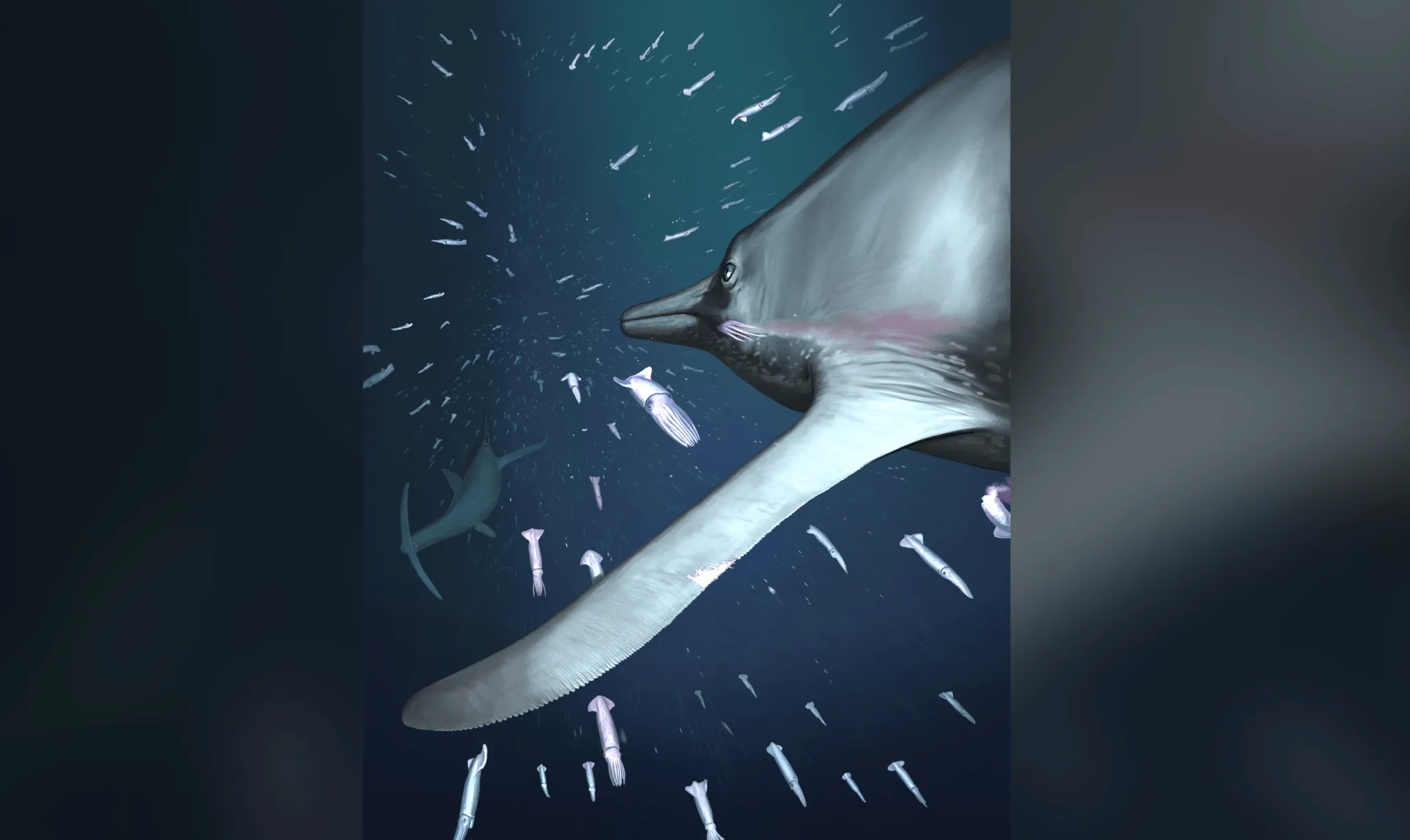
Paleontologists have found the first-ever fossilized remains of soft tissues from a giant ichthyosaur—a dolphin-like marine reptile that ruled prehistoric seas during the Jurassic period. The specimen, estimated to be 183 million years old, was unearthed in the Posidonia Shale of southwestern Germany.
What sets this fossil apart is its extraordinary preservation. In addition to bones, researchers identified remnants of the ichthyosaur’s skin, internal organs, and even cellular structures. Using advanced imaging and molecular analysis, the team confirmed the presence of collagen and other biomolecules rarely found in such ancient specimens.
The study, published in Nature, suggests that the ichthyosaur’s body had a shark-like shape with smooth skin and a counter-shaded coloration—darker on the top and lighter underneath—similar to modern marine animals. This coloration likely helped it evade predators and surprise prey, indicating that ichthyosaurs were not only top marine predators but also adapted for stealth.
“This is the first time we’ve had such a clear look at the soft-tissue anatomy of a large Jurassic ichthyosaur,” said Dr. Johan Lindgren, lead author and paleontologist at Lund University. “It provides remarkable insights into how these reptiles lived, moved, and adapted to their marine environment.”
The fossil belongs to the Stenopterygius genus, a well-known group of ichthyosaurs, and measures over 3 meters (nearly 10 feet) long. The researchers believe that low-oxygen conditions and fine sediments in the ancient seabed played a key role in preserving the soft tissues so well.
This unprecedented find not only enhances understanding of ichthyosaur biology but also demonstrates the potential of molecular paleontology to uncover secrets from deep time.
