


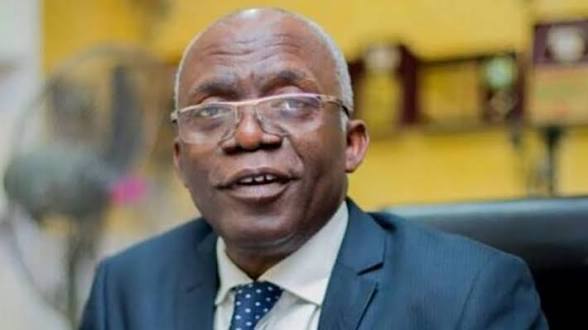
A rights campaigner and Senior Advocate of Nigeria (SAN), Mr. Femi Falana, on Saturday called on the media to intensify advocacy for the reopening of unresolved murder cases.
Falana made the appeal at an interactive session and press conference titled: “The Role of Media in Promoting People’s Rights, Accountability, and Access to Justice in the Context of Growing Insecurity in Nigeria.” The event was organized by the Socio-Economic Rights and Accountability Project (SERAP) in Ikeja.
Falana urged journalists to use their platforms to demand justice for victims of extrajudicial killings and other abuses, noting that several high-profile cases had been abandoned without accountability.
He emphasized that the media must not allow such cases to be forgotten.
Falana cited instances of killings in Lagos allegedly involving police officers, stating that some murder cases have not been revisited despite public outcry.
He listed cases deserving of reopening, including the alleged murder of Master Sylvester Oromoni, a student of Dowen College, Lagos; the 2018 Offa bank robbery in Kwara; the murder of Kudurat Abiola, wife of Chief MKO Abiola; and the killing of six traders at Owode Onirin Market in Lagos State in August 2025.
He urged the media to follow up on rights violation cases until they are resolved, as part of its watchdog role.
The human rights activist noted that the media has not adequately utilized the Freedom of Information Act to seek and obtain information that could promote accountability, justice, and good governance.
He also urged media managers not to sacrifice professionalism for commercial gains through wraparound advertisements.
It was reported that a newspaper wraparound (or wrap) is a high-impact advertising format where a customized printed sheet covers the front page and often the back page of a newspaper.
Falana stated that such practices undermine public trust.
“The media must not sacrifice truth and objectivity on the altar of commercial gains,” he said.
Falana emphasized that the media has a constitutional duty to hold government accountable and defend the rights of citizens.
He called on journalists to prioritize public interest reporting and resist pressures that could weaken their watchdog role.
He highlighted the importance of regional human rights mechanisms, noting that Nigerians can seek justice beyond national borders.
He urged the Federal Government to strengthen institutions responsible for justice delivery and ensure victims of rights violations receive timely justice.
Falana also called for greater collaboration between civil society organizations and the media to promote accountability and protect citizens’ rights.
He reiterated that the fight against human rights violations requires sustained efforts from all stakeholders, including journalists, lawyers, and human rights advocates.
