


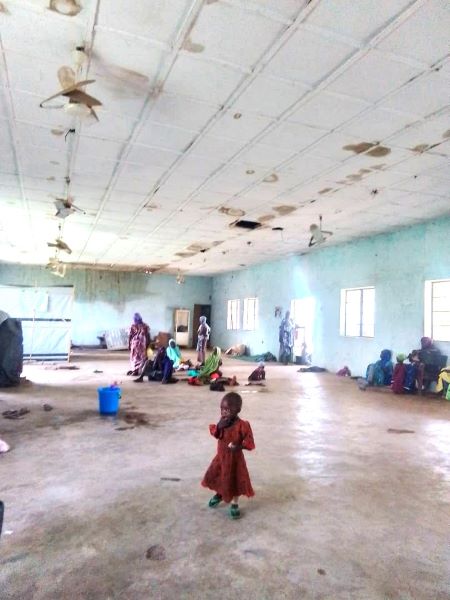
UN aid agencies have warned that relentless violence, famine and disease are fuelling a rising death toll among children in Sudan.
The agencies, which include UN Children’s Fund (UNICEF), World Health Organization (WHO) and Human Rights Council, said attacks on healthcare and a lack of aid access hamper efforts to help.
Heavy fighting have continued between former allies the Sudanese Armed Forces (SAF) and the paramilitary Rapid Support Forces (RSF)
UNICEF said that in parts of North Darfur more than half of all children are acutely malnourished.
The warning follows the release of new data from the IPC, a UN-backed global food security monitoring system, from three localities there, indicating “catastrophic” malnutrition rates.
“Extreme hunger and malnutrition come for children first, the youngest, the smallest, the most vulnerable,” said UNICEF spokesperson Ricardo Pires.
“In Sudan, it’s spreading” he added, stressing: “These are children between six months and five years old, and they are running out of time.”
The UN agency stressed that famine thresholds have been surpassed in locations not previously considered at risk.
Conflict, mass displacement, the collapse of services and blocked access which have sparked starvation alerts for these localities exist “across vast swathes of Sudan”, Pires insisted.
“If famine is looming there, it can take hold anywhere,” he warned.
Pires also warned of the prevalence of disease as a further threat to children’s survival.
“These children are not just hungry; nearly half of all children in At Tine had been sick in the previous two weeks.
“.Fever, diarrhoea, respiratory infections, low vaccination coverage, unsafe water and a collapsing health system are turning treatable illnesses into death sentences for already malnourished children.”
He called on the world to “stop looking away” from Sudan’s children, warning that more than half of the youngsters in North Darfur’s Um Baru are “wasting away while we watch”.
“That is not a statistic. Those are children with names and a future that are being stolen,” the UNICEF spokesperson stressed.
Nearly three years since war erupted between the once-allied SAF and the RSF, 13.6 million people have fled their homes, including 9.1 million displaced within the country.
Dr Shible Sahbani, the WHO’s representative in Sudan, stresed that while the displaced require “urgent” care.
He added that the health system has been “ravaged by attacks, loss and damage of equipment and supplies, a shortage of health workforce and operational funds”.
Since the start of the war in April 2023, WHO has verified 205 attacks on health care that have led to 1,924 deaths and 529 injuries, Sahbani said.
“Such attacks deprive communities of care for years to come, instilling terror in patients and health workers and creating unsurmountable barriers to life-saving treatment,” he added.
Meanwhile, the country faces multiple disease outbreaks, including cholera, malaria, dengue and measles.
While WHO and partners are supporting the response to these outbreaks, Sahbani underscored the need for greater access and protection of health workers and facilities, in line with international humanitarian law.
“Patients and healthcare workers should not risk death while seeking and providing care,” he said. “Above all, we call for peace”, he stressed, adding, “Peace is long due for Sudan.”
His call echoed that of UN High Commissioner for Human Rights Volker Türk, who on Monday once again sounded the alarm over the deadly conflict in Sudan.
Briefing the Human Rights Council in Geneva on the “preventable human rights catastrophe” that took place in North Darfur’s capital El Fasher in October last year.
Thousands of people were killed there in a matter of days after an 18-month-long siege of the city, multiple testimonies gathered by Türk’s office have indicated.
