


Parents and experts have expressed concern over the rising cost of raising children, citing mounting pressure on household incomes and children’s nutrition, healthcare and education.
Children and adolescents make up nearly half of Nigeria’s population, making their welfare, nutrition, education and healthcare critical to the country’s development.
According to UNICEF’s 2025 report on Nigerian children, about two-thirds of children experience multidimensional poverty, facing deprivation in essential areas of well-being.
UNICEF reported in June 2024 that about 11 million Nigerian children under five experienced severe food poverty, putting them at increased risk of wasting and other forms of malnutrition.
For many Nigerian parents, raising children has become increasingly difficult as rising food, education and healthcare costs strain household incomes and force families to make difficult choices.
In an interview with the News Agency of Nigeria on Sunday, Mrs Oluchi Ezeh, a clothes vendor and mother of four, said the rising cost of living had made it increasingly difficult for families to afford necessities.
She said food expenses now consumed a large share of household incomes, leaving many parents struggling to provide three meals a day.
“Parents are making enormous sacrifices, putting aside their personal needs to provide for their children, but honestly, it has not been easy,” she said.
Ezeh said financial difficulties exposed children to hardship, including dropping out of school and seeking alternative means of survival. She urged the government to improve the economy.
Another parent, Mr Lawrence Adeniyi, a civil servant and father of four, said rising food prices, school fees, healthcare, rent and transportation costs had made it increasingly difficult to provide for his children.
He said the high cost of medical consultations and drugs sometimes forced him to delay taking sick children to hospital.
“I skip meals so the children can eat, wear old clothes and postpone my medical check-ups to ensure their needs are met,” he said.
Mrs Esther Okon, a civil servant and mother of four, said she now prioritised essential household needs and substituted expensive fish and meat with eggs to manage limited resources.
“I even sold my gold to ensure my children could feed properly and enjoy a reasonable standard of living,” she said.
Okon said she had also sacrificed buying new clothes, shoes and handbags. She urged the government to increase salaries and introduce measures to cushion families against rising costs.
Economist Mr Iheanyi Nze said rising living costs had made raising children increasingly expensive, particularly for low- and middle-income families whose earnings lagged behind prices.
He said children’s essential needs, including food, education, healthcare and transportation, could not be postponed, leaving parents with limited options when prices rose faster than household incomes.
Nze noted that rising school fees, transportation costs, uniforms and textbooks further strained household budgets.
“Disinflation is not deflation. Prices are still rising, just more slowly, so the price level reached after earlier spikes has not reversed,” he said.
He recommended targeted cash transfers, improved public education, subsidised healthcare for children and better food storage to reduce household expenses.
He cautioned against blanket subsidies and price controls, advocating targeted financial assistance and improved public services to ease the burden on vulnerable families.
Dr Fidel Ezeome, a senior registrar in the Department of Paediatrics at Irrua Specialist Teaching Hospital, said financial difficulties adversely affected children’s nutrition, healthcare and overall development.
He said infant formula costing between N9,000 and N15,000 could amount to N40,000 to N60,000 a month for parents.
“Poor nutrition weakens children’s immune systems, increasing their risk of infections, frequent hospital admissions, poor weight gain and impaired brain development,” he said.
Ezeome said a lack of funds could also prevent parents from affording medical investigations and treatment, leading to poor health-seeking behaviour.
“A child with uncomplicated malaria can develop severe, life-threatening malaria when parents cannot afford antimalarial drugs,” he said.
He recommended exclusive breastfeeding for infants under six months, adequate nutrition, affordable protein sources such as soya beans and egg whites, and routine immunisation.
He also advised parents to prioritise preventive healthcare, use mosquito nets, consider health insurance and seek early medical attention to prevent complications and higher treatment costs.
Dr Oluwaseun Ariyo, a senior lecturer in the Department of Human Nutrition and Dietetics at the University of Ibadan, said families were struggling to afford balanced meals.
Ariyo said many households now prioritised satisfying hunger over providing nutritionally balanced meals, as declining purchasing power made it difficult to afford a variety of essential foods.
He said parents who previously bought fish, eggs, meat, milk, fruits and vegetables regularly were relying on cheaper staples such as rice, garri, yam and cassava.
Ariyo said some households had reduced meal portions, skipped meals or cut back from three meals a day to two, leaving some children without breakfast.
“Being able to fill a child’s stomach does not necessarily mean the child is adequately nourished,” he said.
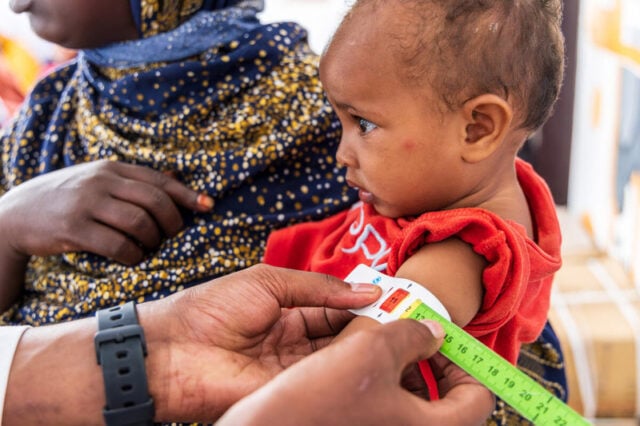
He said inadequate nutrition could cause weakened immunity, micronutrient deficiencies, poor concentration, stunting, impaired brain development, reduced productivity and wasting, which occurs when children are too thin for their height.
The nutritionist advised parents to prioritise affordable foods such as beans, groundnuts, soybeans, eggs, small dried fish, seasonal fruits and locally available vegetables.
He recommended meals such as beans porridge with vegetables and fish, pap with egg or moi-moi, rice and beans with vegetable stew, and yam porridge with vegetables and fish.
“Parents can feed their children well without expensive, imported or packaged foods, because nutritious, affordable foods are available across Nigeria; the key is combining them well,” he said.
He urged parents to prioritise dietary variety and food safety and reduce spending on sugary drinks and processed snacks. He also called on the government and its partners to make nutritious foods more affordable.
On the effect of rising costs on education, Mr Dayo Moyo, principal of Isador Model School in Agodo-Egbe, Lagos State, said quality education required competent teachers, adequate facilities and learning resources, all of which increased operating costs.
He said many school owners had been forced to increase fees to meet these needs amid the country’s economic challenges.
“Many parents can no longer afford their preferred schools or provide essential learning materials, forcing them to settle for whatever they can afford,” he said.
Moyo said the situation could lower academic performance, widen educational gaps, affect children’s confidence, limit future opportunities and increase school dropout rates.
He said the academic gap between disadvantaged children and their more privileged peers could widen, making it difficult to bridge without deliberate interventions.
