


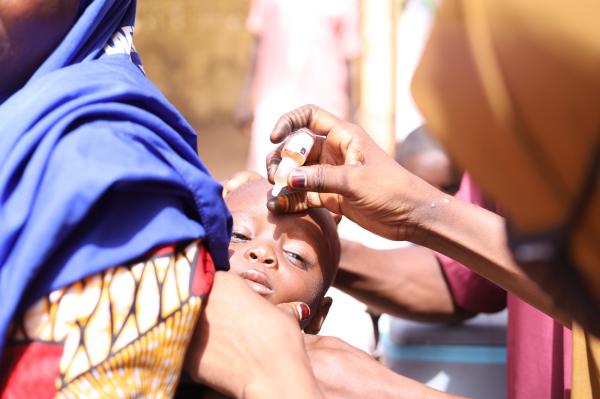
Sokoto State Government, the United Nations Children’s Fund (UNICEF) and its partners have stepped up polio vaccination efforts in Sokoto State, targeting children in nomadic settlements and communities affected by insecurity.
The five-day campaign, which began on November 7 across the state’s 23 local government areas, is targeting children under five, particularly those who have never received a polio vaccine or were missed during previous rounds.
UNICEF’s Head of Field Office in Sokoto, Michael Juma, said the campaign had adopted special strategies to reach children in hard-to-access communities, including nomadic populations and families displaced by insecurity.
He said vaccination teams were using pre-campaign mapping to identify nomadic settlements and track the movement of families whose children may otherwise be missed.
Juma spoke during a media roundtable ahead of the campaign, stressing the need for sustained surveillance and daily review of vaccination data to identify areas requiring additional visits.
According to him, teams would return to settlements where eligible children were missed, particularly in difficult-to-reach areas.
Communities in parts of Isa, Gudu and Illela local government areas are among those facing access challenges because of insecurity and difficult terrain.
To improve access, retired health workers and other local health personnel have been mobilised, while traditional rulers, religious leaders, community gatekeepers and local security structures are supporting vaccination teams.
UNICEF’s Polio Coordinator in Nigeria, Asnakew Tsega, said polio remained a serious threat despite progress made towards eradication.
He said between 68 and 69 children had suffered paralysis from two circulating poliovirus strains in 2026, stressing that even a single confirmed case could trigger an outbreak.
Tsega urged parents to allow their children to receive repeated doses of the polio vaccine, explaining that additional doses help close immunity gaps and protect children from the virus.
“Polio is a paralytic disease. It is very infectious, it paralyses children and affects everyone,” he said.
He added that the disease was preventable through vaccination.
The campaign is being conducted through house-to-house visits and vaccination points in markets, streets, schools and other public places to reach eligible children.
Juma also called on journalists to help counter misinformation about vaccination and encourage parents and caregivers to cooperate with health workers.
The exercise is supported by UNICEF, the World Health Organisation (WHO), the Bill & Melinda Gates Foundation, the United States Government, the Global Polio Eradication Initiative, Gavi, Rotary International and other development partners.
The Sokoto State Government and its partners have urged traditional and religious leaders, parents and community stakeholders to support the campaign and ensure that no eligible child is left unvaccinated.
