


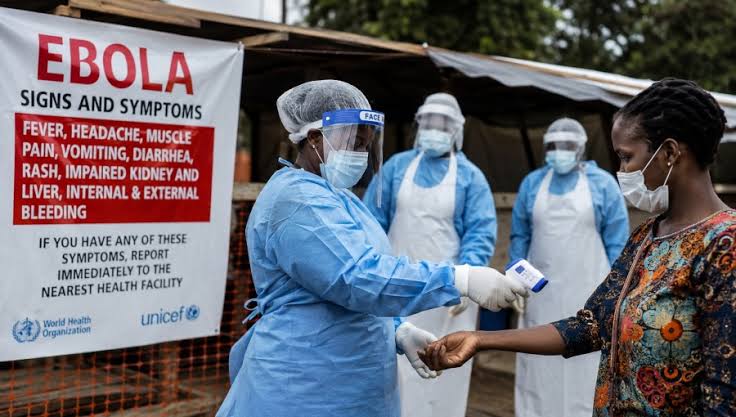
The Association of Nigerian Private Medical Practitioners (ANPMP) says it has intensified surveillance, infection prevention and control measures, and staff training at private health facilities nationwide to support Nigeria’s Ebola response.
The association’s National President, Dr Ernest Chukwuma, made the disclosure in an interview with reporters on Sunday in Lagos.
The move follows the detection of an index case of Bundibugyo virus disease in the Federal Capital Territory (FCT) on Oct. 20.
The patient was medically evacuated to Switzerland on Oct. 26. Nigeria has since intensified contact tracing, case investigations and infection prevention measures.
Chukwuma noted that private medical practitioners provide more than 70 per cent of healthcare services in Nigeria. He said the association had directed its members to maintain a high index of suspicion.
“Private practitioners, as first points of contact for many Nigerians seeking medical attention, have a critical role to play in early detection, reporting and containment.
“This is particularly important as we approach the Christmas season, with many visitors expected in the country,” he said.
Chukwuma said he was relieved that there were no active Ebola cases in Nigeria, but stressed that vigilance remained essential, particularly with increased travel and social activities during the festive season.
He said state chapters had been directed to organise refresher training for doctors, nurses and other health workers on case identification, triage, infection prevention and control, and referral procedures.
He outlined six key measures: heightened surveillance and early detection; immediate isolation and notification of suspected cases to state epidemiologists and the Nigeria Centre for Disease Control and Prevention (NCDC); strict enforcement of infection prevention and control protocols; regular staff training; public education; and collaboration with relevant health authorities.
On infection prevention, Chukwuma said private facilities had been urged to strengthen hand hygiene, ensure adequate supplies and proper use of personal protective equipment (PPE), practise safe waste disposal and regularly decontaminate their premises.
He cautioned practitioners against attempting to manage suspected Ebola cases independently, emphasising the need for immediate reporting and referral through established public health channels.
The association was also educating patients and communities that Ebola spreads through direct contact with the blood and body fluids of an infected person, not through the air, he said.
“We advise them to seek care early at health facilities,” he said.
Chukwuma reaffirmed ANPMP’s commitment to working with the NCDC, the Federal Ministry of Health and state health authorities to strengthen Nigeria’s response.
According to the World Health Organization (WHO), five countries—Democratic Republic of the Congo, France, Kenya, Nigeria and Uganda—had reported Ebola cases since the outbreak was declared on May 15.
The WHO said outbreaks in France and Uganda had been controlled by August, while Kenya and Nigeria continued their response efforts.
It said no new cases had been reported in Kenya or Nigeria since its previous update on Oct. 23.
As of Nov. 3, a total of 62 contacts had been identified in Nigeria for follow-up, the WHO said.
The NCDC’s situation report, published on Nov. 4, said six contacts had completed the 21-day follow-up period, while 56 remained under observation.
The agency reported no newly identified contacts or symptomatic contacts in the preceding 24 hours.
Bundibugyo virus disease is a severe Ebola disease caused by the Bundibugyo virus, one of the Orthoebolavirus species.
It is a zoonotic disease, with fruit bats suspected to be its natural reservoir. Initial human infections are thought to occur through contact with the blood or secretions of infected wildlife, including bats and non-human primates.
The virus can then spread from person to person through direct contact with the blood, secretions, organs or other bodily fluids of infected people. It can also spread through contaminated surfaces and materials.
The incubation period ranges from two to 21 days, and infected people are not infectious before symptoms appear.
Early symptoms include fever, fatigue, muscle pain, headache and sore throat. These may progress to vomiting, diarrhoea, organ dysfunction and, in some cases, bleeding.
The WHO said early symptoms could resemble those of other illnesses, including malaria, making laboratory testing essential to confirm a diagnosis.
No vaccines or specific treatments are currently approved for Bundibugyo virus disease.
According to the WHO, outbreak control depends on early identification and isolation of cases, medical care, contact tracing, safe burial practices and community engagement.
