


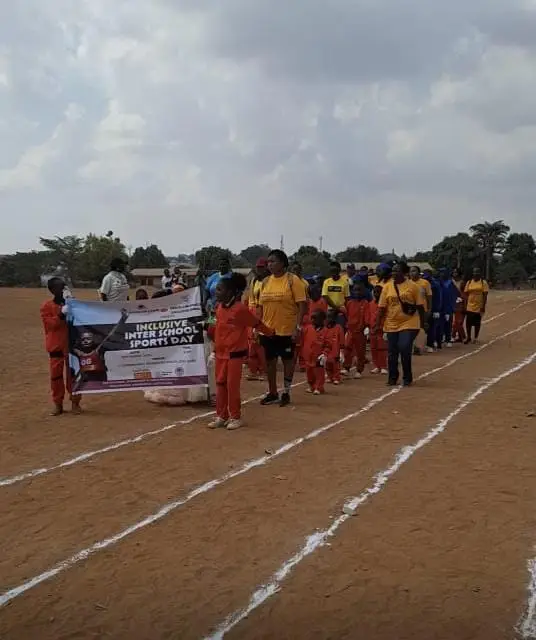
Stakeholders have called for greater societal acceptance of children with special needs during the fifth Inclusive Interschool Sports Day organised by The Engraced Ones on Wednesday in Abuja.
The event featured children from School of Grace and GraceLane Miracle (Inclusive) School, alongside other supporting institutions, promoting inclusion, dignity, and shared humanity through sports and interactive activities.
Chairman of the occasion, Chinedu Enemor, said the event encouraged society to move beyond pity toward acceptance and support for children with Down syndrome, autism, cerebral palsy, and other conditions.
“It is about identifying with people with Down syndrome, autism, cerebral palsy, and other challenges.
“Today is not only about winning trophies; it is about respect, love, and recognising their place in our society,” he said.
He urged parents and the public not to withdraw or isolate children with special needs.
“Let us not shy away from the responsibility of helping our children to grow,” Enemor added.
Convener of The Engraced Ones, Mrs Biboara Yinkere, said the initiative aimed to change public perception of children with special needs and grow into a platform similar to global movements like the Special Olympics.
“We want society to see that these children can do more than people think,” she said, emphasising the importance of recognising their abilities and potential beyond common assumptions.
“We are working to involve more schools so that inclusion becomes the norm, not the exception,” she added.
She also highlighted the transformative power of exposure, encouragement, and early engagement for children with special needs.
Yinkere added that the activities help children follow instructions, stay focused, and build self-awareness.
“For some of them, just following instructions or holding a ball is a huge achievement.
“One of the boys could not handle anything before, but today he is holding the ball with support.
“At the sound of the whistle, they start and finish; so, they are learning to follow instructions,” she said.
Mrs Ngozi Belolisa, Executive Director of Safe Host International Initiative and Academy, said the event promotes learning through play for neurodivergent children, who often respond better to sports, dance, and physical activities than traditional classroom methods.
Belolisa said the initiative has boosted children’s confidence while fostering empathy and teamwork among their neurotypical peers.
“We make their learning fun. That is why they relate more to sports, sounds, and body movement,” she said.
She added that many parents witnessed their children perform activities they never thought possible and urged that inclusion extend beyond schools into everyday life.
Belolisa called for more inclusive policies, infrastructure, and trained personnel.
“They need acceptance, opportunity, and an environment where they can thrive,” she said, stressing the importance of societal support.
Parents at the event echoed these sentiments.
Mrs Juliana Nwoko, mother of a five-year-old girl with cerebral palsy, said, “It makes me feel a sense of belonging, and I feel excited seeing my child participate.
“But we need that feeling everywhere, not just here,” she added, highlighting the need for wider societal support.
Another parent, Mrs Janet Okolo, said the event changed her perception of children with special needs.
“I never knew they could do the things they are doing here, so I believe that with support, they can do amazing things,” she said.
Participants and organisers agreed that beyond competition, the sports day highlighted acceptance, inclusion, and the untapped potential of every child, with activities including sack races, relays, 50-metre dashes, egg races, and march-past events.
