

• Home
  • Agric
  • Sci & Tech
  • Health
  • Environment
  • Hausa News
  • More
    • Business/Banking & Finance
    • Politics/Elections
    • Entertainments & Sports
    • International
    • Investigation
    • Law & Human Rights
    • Africa
    • ACCOUNTABILITY/CORRUPTION
    • Hassan Gimba
    • Column
    • Prof. Jibrin Ibrahim
    • Prof. M.K. Othman
    • Defense/Security
    • Education
    • Energy/Electricity
    • Entertainment/Arts & Sports
    • Society and Lifestyle
    • Food & Agriculture
    • Health & Healthy Living
    • International News
    • Interviews
    • Investigation/Fact-Check
    • Judiciary/Legislature/Law & Human Rights
    • Oil & Gas/Mineral Resources
    • Press Freedom/Media/PR/Journalism
    • General News
    • Presidency
  • About Us
    • Contact Us
    • Board Of Advisory
    • Privacy Policy
    • Ethics Policy
    • Teamwork And Collaboration Policy
    • Fact-Checking Policy
    • Advertising
  • Media OutReach Newswire
    • Wire News
  • The Stories
Facebook Twitter Instagram
Trending
  • Naira weakens to N1,369/$ as reserves drop by $731m
  • CBN restricts BDC access to forex market over compliance concerns
  • IPC raises concerns over NBC restrictions on broadcasters’ on-air opinions
  • Artemis II: Space exploration, and the question of African future, By Prof. M. K. Othman
  • Striking workers urged to embrace peace
  • Bauchi drivers lament fuel price hike amid low patronage
  • Enugu library boss urges Youths to revive reading culture
  • Social media fuels health misinformation – Expert
Facebook Twitter Instagram YouTube
AsheNewsAsheNews
  • Home
  • Agric

    U.S. revives GSM-102 credit scheme to deepen agricultural trade with Nigeria

    April 27, 2026

    Poultry farmers seek increased financing to boost production

    April 27, 2026

    Malnutrition: FG rolls out community food bank programme in Northeast

    April 27, 2026

    Yam prices surge across Lagos markets

    April 26, 2026

    Croc-City 2026: Kaduna targets hunger with strategy, not rhetoric

    April 26, 2026
  • Sci & Tech

    Artemis II: Space exploration, and the question of African future, By Prof. M. K. Othman

    April 28, 2026

    Nigeria needs unified cybersecurity – Expert warns

    April 27, 2026

    MTN Nigeria backs youth platform with over N45m

    April 27, 2026

    PalmPay CEO flags trust issues in digital payments

    April 25, 2026

    Meta to cut 10% of workforce amid AI push

    April 25, 2026
  • Health

    Social media fuels health misinformation – Expert

    April 28, 2026

    FCT residents express mixed views on childhood immunisation

    April 28, 2026

    Oluremi inaugurates nursing quarters, mega schools in Maiduguri

    April 28, 2026

    WHO concludes exercise Polaris II to test global pandemic preparedness

    April 28, 2026

    Oluremi reaffirms govt commitment to women’s empowerment

    April 27, 2026
  • Environment

    CTV audience grows over 300% to 8m viewers on GOtv

    April 27, 2026

    Yobe council approves N59.8bn for project, infrastructure

    April 27, 2026

    Rainstorm damages homes, school in Kaduna

    April 27, 2026

    LASTMA to launch free short code for traffic reports

    April 27, 2026

    LASEMA averts casualties in truck accident at Daleko bridge, Isolo

    April 27, 2026
  • Hausa News

    Otti plans 250-room 5-star hotel in Umuahia

    April 11, 2026

    Anti-quackery task force seals 4 fake hospitals in Rivers

    August 29, 2025

    [BIDIYO] Yadda na lashe gasa ta duniya a fannin Ingilishi – Rukayya ‘yar shekara 17

    August 6, 2025

    A Saka Baki, A Sasanta Saɓani Tsakanin ‘Yanjarida Da Liman, Daga Muhammad Sajo

    May 21, 2025

    Dan majalisa ya raba kayan miliyoyi a Funtuwa da Dandume

    March 18, 2025
  • More
    1. Business/Banking & Finance
    2. Politics/Elections
    3. Entertainments & Sports
    4. International
    5. Investigation
    6. Law & Human Rights
    7. Africa
    8. ACCOUNTABILITY/CORRUPTION
    9. Hassan Gimba
    10. Column
    11. Prof. Jibrin Ibrahim
    12. Prof. M.K. Othman
    13. Defense/Security
    14. Education
    15. Energy/Electricity
    16. Entertainment/Arts & Sports
    17. Society and Lifestyle
    18. Food & Agriculture
    19. Health & Healthy Living
    20. International News
    21. Interviews
    22. Investigation/Fact-Check
    23. Judiciary/Legislature/Law & Human Rights
    24. Oil & Gas/Mineral Resources
    25. Press Freedom/Media/PR/Journalism
    26. General News
    27. Presidency
    Featured
    Recent

    Naira weakens to N1,369/$ as reserves drop by $731m

    April 28, 2026

    CBN restricts BDC access to forex market over compliance concerns

    April 28, 2026

    IPC raises concerns over NBC restrictions on broadcasters’ on-air opinions

    April 28, 2026
  • About Us
    1. Contact Us
    2. Board Of Advisory
    3. Privacy Policy
    4. Ethics Policy
    5. Teamwork And Collaboration Policy
    6. Fact-Checking Policy
    7. Advertising
    Featured
    Recent

    Naira weakens to N1,369/$ as reserves drop by $731m

    April 28, 2026

    CBN restricts BDC access to forex market over compliance concerns

    April 28, 2026

    IPC raises concerns over NBC restrictions on broadcasters’ on-air opinions

    April 28, 2026
  • Media OutReach Newswire
    • Wire News
  • The Stories
AsheNewsAsheNews
Home»Column»Prof. M.K. Othman»Artemis II: Space exploration, and the question of African future, By Prof. M. K. Othman
Prof. M.K. Othman

Artemis II: Space exploration, and the question of African future, By Prof. M. K. Othman

EditorBy EditorApril 28, 2026Updated:April 28, 2026No Comments6 Mins Read
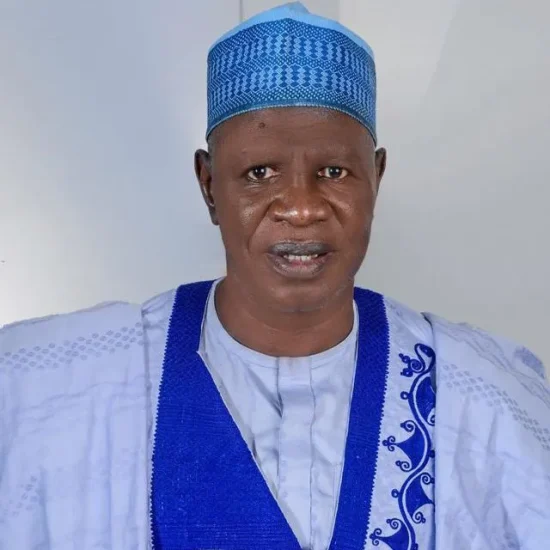
Nigeria - Prof. MK Othman
Prof. MK Othman
Share
Facebook Twitter LinkedIn Pinterest Email

In 1977, as a teenager in Form One at Government Secondary School Funtua, my form teacher asked me to indicate what I wanted to be. I said journalist and astronaut – two careers that are inordinately opposed, one art-based and the other science-based. Journalism, because I used to watch my uncle glued to his radio, listening to the BBC Hausa service and the famous Radio Nigeria Kaduna, and I was told journalists were champions at radio, television, and newspapers. Astronaut, because our science teacher taught us about the solar system, a gravitationally bound system comprising the Sun and its nine planets – Mercury, Venus, Earth, Mars, Jupiter, Saturn, Uranus, Neptune, and Pluto – each with one or more moons revolving and orbiting them. My skills and love for mathematics and physics strongly influenced my ambition to pursue a science-based career, and I ended up becoming a trained engineer. Nevertheless, my interest in planetary science has not diminished, and I have written a couple of pieces on the subject. These early aspirations remind me that, even as an African child with limited resources, the dream of reaching for the stars was within my grasp.

In one of my pieces titled “Apollo 11: Marking 60 Years of Man’s Terrestrial Romance with Space,” I discussed the first mission of man to the moon in 1969.

The event of 20th July 1969, when Apollo 11 landed on the moon with three astronauts, watched live by an estimated 650 million people across more than 70 countries, was simply beyond imagination. One of the most astonishing phenomena of the Apollo missions was the effective 2-way communication between Apollo 11 and NASA; there was no “no service” or “poor service” over an average distance of 384,400 km between Earth and the Moon. There was an ecstasy of relief and tremendous joy at NASA when Armstrong’s voice announced, “The Eagle has landed,” signaling a safe landing. It was a vintage moment in planetary science and a victory for mankind. The pinnacle of the event in the lunar environment was the telephone conversation between President Nixon and Armstrong.  That telephone conversation was so historically flabbergasting to the entire world. President Nixon described it as “the most historic phone call ever made from the White House”.

The astronauts spent a total of 3 days on the Moon, during which they drove the lunar rover across the surface. Thereafter, the next challenge was mounting on Apollo 11 and flying back to Earth’s surface with the lunar souvenirs safely, as scheduled. The Apollo 11 spacecraft consisted of three parts: the Command Module, nicknamed “Columbia”; the Service Module; and the Lunar Module, christened “Eagle.” The Service Module contained the main spacecraft propulsion system and consumables, while the Lunar Module was the two-person craft used by Armstrong and Aldrin to descend to the Moon’s surface on July 20. The Command Module is the only part of the spacecraft to return to Earth.

On April 1, 2026, Artemis II launched, marking a renewed era in human space exploration. For the first time since Apollo, humans traveled beyond low Earth orbit, reminding us that exploration is driven by courage, imagination, and scientific ambition—even in challenging times.

By the time the shuttle splashed down in the Pacific Ocean on 10 April 2026, after approximately ten days, including a four-day journey around the Moon, Artemis II had already secured its place in history. It stood not only as a technical achievement but also as a symbol of sustained scientific progress built over decades. Institutions such as NASA, working alongside global partners, have continued to push the boundaries of innovation in ways often invisible to the everyday observer; much of their progress has been tested and refined aboard platforms like the International Space Station, where research in microgravity has contributed to advances in medicine, engineering, climate science, and even agriculture. As Africa continues to address challenges of health, agriculture, and technology, it is crucial to see how innovations from space exploration could inspire solutions and development on the continent. In all, this demonstrates that the benefits of space exploration extend far beyond the confines of outer space and into the practical realities of life on Earth, including prospects relevant to Africa’s progress.

It is important to recognize that missions like Artemis II are part of a broader continuum of human activity in space. As I observed in my December 2022 feature on the International Space Station—then described as a “beehive” of human activity—space has long served as a laboratory for collaboration, innovation, and discovery among nations that might otherwise be divided by politics or geography. Astronauts and scientists have lived and worked in that orbiting environment, testing ideas and developing technologies that have shaped modern science in subtle yet profound ways. Artemis II builds directly on that foundation by extending human presence beyond low Earth orbit once again. This progress presents opportunities for African participation, whether through educational partnerships, technological collaboration, or inspiring the next generation of African scientists. It connects earlier achievements with present ambition and future possibilities, illustrating a clear and deliberate progression in humanity’s quest to understand not only the universe but also our place within it, including Africa’s role.

Beyond science and technology, space exploration embodies resilience, risk, and sacrifice. Many contributors remain unrecognized, yet their efforts drive progress. From failures to successes, humanity’s pursuit of the unknown propels advancement. Artemis II exemplifies this tradition, proving that persistence and courage expand our boundaries for the benefit of all. For Africa, embracing this spirit of resilience and learning from these global feats can catalyze the pursuit of our own scientific challenges and opportunities.

The Apollo and Artemis projects were both initiated, developed, and successfully executed by NASA of the USA, despite the nation’s economic, security, and social challenges. Its principal role in waging war against Iran is not a distraction from its Artemis II mission, thanks to the foresight and vision of its leaders. This raises critical questions for Africa: Are we preparing to take part in space exploration, to build local capacity, and to harness the technological, educational, and economic benefits these projects generate? What does space exploration mean for our future in Africa? To be continued next week.

Artemis II Space exploration
Share. Facebook Twitter Pinterest LinkedIn WhatsApp Reddit Tumblr Email
Editor
  • Website

Related Posts

Nigeria needs unified cybersecurity – Expert warns

April 27, 2026

MTN Nigeria backs youth platform with over N45m

April 27, 2026

PalmPay CEO flags trust issues in digital payments

April 25, 2026

Leave A Reply Cancel Reply

Naira weakens to N1,369/$ as reserves drop by $731m

April 28, 2026

CBN restricts BDC access to forex market over compliance concerns

April 28, 2026

IPC raises concerns over NBC restrictions on broadcasters’ on-air opinions

April 28, 2026

Artemis II: Space exploration, and the question of African future, By Prof. M. K. Othman

April 28, 2026
About Us
About Us

ASHENEWS (AsheNewsDaily.com), published by PenPlus Online Media Publishers, is an independent online newspaper. We report development news, especially on Agriculture, Science, Health and Environment as they affect the under-reported rural and urban poor.

We also conduct investigations, especially in the areas of ASHE, as well as other general interests, including corruption, human rights, illicit financial flows, and politics.

Contact Info:
  • 1st floor, Dogon Daji House, No. 5, Maiduguri Road, Sokoto
  • +234(0)7031140009
  • ashenewsdaily@gmail.com
Facebook Twitter Instagram Pinterest
© 2026 All Rights Reserved. ASHENEWS Daily Designed & Managed By DeedsTech

Type above and press Enter to search. Press Esc to cancel.