


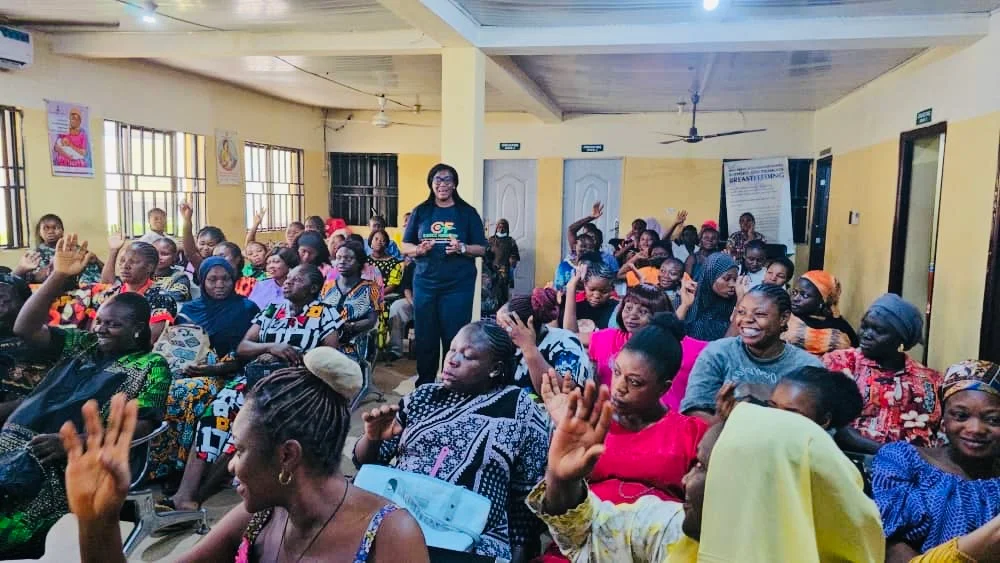
The C-Circle Foundation for Sustainable Health and Environment has launched a nationwide campaign to end the consumption of ‘nzu’ (edible clay), a hidden source of lead poisoning in Nigeria.
The campaign, held in Abuja on Wednesday, coincided with the 2025 International Lead Poisoning Prevention Week. It was themed, “No Safe Level: Act Now to End Lead Exposure”, and supported by the Lead Exposure Elimination Project (LEEP).
Dr. Chimere-May Ohajinwa, an environmental toxicologist and head of the C-Circle Foundation, warned that nzu poses both chemical and hygienic risks, as it is often sold uncovered and handled without proper hygiene.
“While attention has focused on lead in paints and fuel, edible clay remains a silent but dangerous source of exposure in homes and markets,” she said. “Most nzu sold in markets is displayed openly and eaten without washing. Beyond lead, it can expose consumers to bacteria, dust, and parasites.”
Dr. Ohajinwa noted that a recent radio campaign by the Foundation revealed widespread ignorance about the dangers of eating nzu. “One caller confessed she could not go a day without eating it and was unaware of the health risks,” she said.
Across markets in southern Nigeria, vendors sell lumps of nzu for as little as N100. While many believe it aids digestion, researchers describe it as a toxic substance harmful to mothers and unborn babies.
During the campaign, experts appeared on Radio Nigeria, NTA, Hot FM, and People’s FM to explain how lead affects health and ways citizens can reduce exposure in their homes and communities. Many listeners were surprised to learn that eating nzu could cause poisoning.
Dr. Ohajinwa described geophagy—the craving and consumption of clay—as an addictive condition requiring behaviour change. “Our campaign aims to replace myths with science and encourage safer alternatives for managing nausea during pregnancy. This is about protecting mothers and future generations.”
The Foundation also visited antenatal clinics to educate pregnant women on lead poisoning and distributed flyers and informational materials in local languages to improve awareness.
Lead poisoning, she stressed, is entirely preventable through community education, regulation, and enforcement of existing environmental laws. “Lead poisoning is a silent killer, but it can be stopped. With awareness and enforcement, we can protect mothers and children from toxic exposure,” she said.
The Foundation urged Nigerians to stop eating nzu, buy only certified lead-free paints, and avoid unregulated cosmetics or herbal remedies that may contain heavy metals. It also called on government agencies to strengthen public health campaigns and ensure that products containing harmful substances are removed from markets.
Dr. Ohajinwa reaffirmed the Foundation’s commitment to building a healthier Nigeria, where preventable toxic exposures are eliminated through education and collaboration.
It is recalled that eating nzu is a common cultural practice, especially among pregnant women in southern Nigeria, believed to relieve nausea and cravings. However, studies show the clay contains unsafe levels of lead, arsenic, and cadmium. Experts warn that lead crosses the placenta, causing brain damage, miscarriages, low birth weight, and long-term developmental problems in children. Despite these risks, nzu continues to be sold openly without regulation or warning labels.
Lead, a heavy metal used in batteries, paints, and industrial materials, is harmful even at low exposure. Health experts agree there is no safe level of lead for humans.
The C-Circle Foundation is a Nigerian non-profit organization promoting sustainable health and environmental protection through community-driven programs and public education.
