


A study considered to be the first continental analysis of mass importation and consumption of different polymers and plastics in Africa observed that 17 percent of all polymers and plastics were imported into Nigeria.
The study which also examined the associated pollution potential stated that urgent solutions are needed to tackle this global challenge.
The study observed that over 117.6 million tonnes (Mt) of polymers were imported into Africa.
The study also predicted that by 2030, approximately 235.3 Mt of polymers and plastic in these forms would be consumed in some 33 African countries except if policy changes are made to address the challenge.
In light of this, a ban on the usage and distribution of styrofoam and single-use plastics was announced by the Lagos State government last week.
Speaking through the state’s Ministry of Environment and Water Resources, the government cited the effect of single-use plastic on the environment as a major reason for the ban.
Tokunbo Wahab, the state’s commissioner for environment and water resources who took to his X handle to announce the ban said that the duo was causing a menace to the environment.
“Following the menace which single-use plastics especially non-biodegradable Styrofoam are causing on the environment, the Lagos State government (@followlasg ) through the Ministry of the Environment and Water Resources (@LasgMOE ) is hereby announcing a ban on the usage and distribution of Styrofoam and other single-use plastics in the State with immediate effect,” his post said.
Speaking when he met with representatives of the Manufacturers Association of Nigeria and the Restaurant and Food Services Proprietor Association of Nigeria shortly after announcing the ban, Wahab maintained that the state government was not going back on its decision.
The government even went ahead to issue a deadline for the parties to clear out the stock they had in their stores.
“You will all agree with me that for over three years, this conversation has been ongoing, waiting for when the big bold step of enforcement will be taken,” he reminded them.
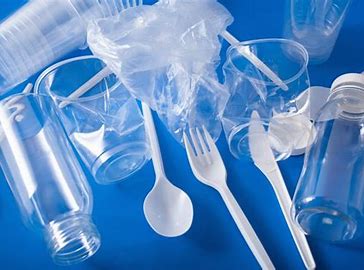
Styrofoam is a lightweight plastic mostly used to make food containers and cutleries in Nigeria.
Popularly known in its form as “take-away” packs, styrofoam food containers are popular for their affordability in Nigeria.
The downside to it however is that it is not reusable just like many other plastic products.
Mixed reactions
While this decision has been hailed for its significant potential to promote environmental sustainability, many also expressed concern over its potential impact.
Not only is this expected to significantly reduce waste and improve its management, but it is also expected to reduce the hazard to the environment.
Known as the epicenter of commercial activities and a hub for millions of businesses, the ban on styrofoam and single-use plastic can be viewed by many as a decision long overdue.
The state has a waste disposal problem, despite efforts by the government.
Some parties have called for a re-evaluation of the ban by the government, identifying a burden on small and medium businesses.
Stakeholders including the U.S.-Nigeria Trade Council USA have faulted the government’s ban on styrofoam, citing the economic effect of the ban especially on businesses.
Similarly, the Nigerian Youth Biodiversity Network (NYBN), the official youth constituency of the United Nations Convention on Biological Diversity, (UNCBD-GYBN), Nigeria chapter, and the Sustainable Environment Food and Agriculture Initiative (SEFAAI), a UNEP and UNCBD accredited environmental NGO despite lauding the initiative faulted the state government for not providing alternatives.
“A ban on single-use plastic and Styrofoam packs must come with practical alternatives that will make consumers and businesses (especially the big multi-corporations that produce plastic drinks, bottled water, and plastic packaging materials) easily tag along with the ban, most importantly when they are to go entirely without plastic,” the groups said.
Instead, it said that “a phased approach to plastic ban should have been better, with consistent and clear messaging on what material is banned and the time-frame for such material to be phased-out.”
Dangers of plastic waste
Plastic waste in Nigeria has become a major issue for stakeholders given the lack of proper management of such products.
This is evident in the way plastic waste is disposed.
A lack of proper waste disposal mechanisms leads to pollution of the environment.
The United Nations Environment Programme (UNEP) estimates that 400 million tonnes of plastic are produced annually.
If the world keeps up with this pace, the global production of primary plastic is forecasted to reach 1,100 million tonnes by 2050, the UNEP says.
More worrisome is the fact that the world has been able to recycle only 10 percent of the nearly seven billion tonnes of plastic waste generated globally.
This points to a huge challenge.
Also, a report published by the Organization for Economic Co-operation and Development (OECD) on plastic leakage and greenhouse gas emissions observed that emissions from the plastics lifecycle may reach 4.3 billion tonnes of GHG emissions.
Unlike other materials, plastics do not decompose. Instead, they transform into microplastics, which are just smaller pieces that are found everywhere.
When they end up in our oceans and rivers, fish and other water creatures mistake them for food. The intake of such microplastics affects their health and may be transferred to humans when consumed.
Millions of these animals are estimated to die from microplastics. This poses another challenge to food security for human beings.
Furthermore, when plastic waste is disposed of by way of burning, it releases dioxin, a harmful chemical that causes cancer as well as other serious health challenges.
Groundwater pollution is also an adverse effect of the toxins released by plastics. When they get into the soil, they can contaminate drinking water, another source of health challenges for humans and animals.
These toxins also linger in the environment, further polluting it.
In addition, Single-use plastic not only lacks second-hand value, they are not recyclable or reusable nor do they have economic value.
Way out
Currently, Nigeria’s environment is threatened by an inefficient recycling and waste management system.
In this case, despite being a large producer of plastic products, the country has failed to among other things promote recycling, an action meant to slow down the rate at which we use plastic in the country.
Various stakeholders have for a long time advocated for a ban on single-use plastic by the federal government.
Others have advocated for taxation on plastic products to reduce their usage in the country.
Lagos State has taken the lead in issuing an outright ban on styrofoam and other single-use plastic products. How well and far the government can implement this ban will be a template for replicating the ban across Nigeria.
