


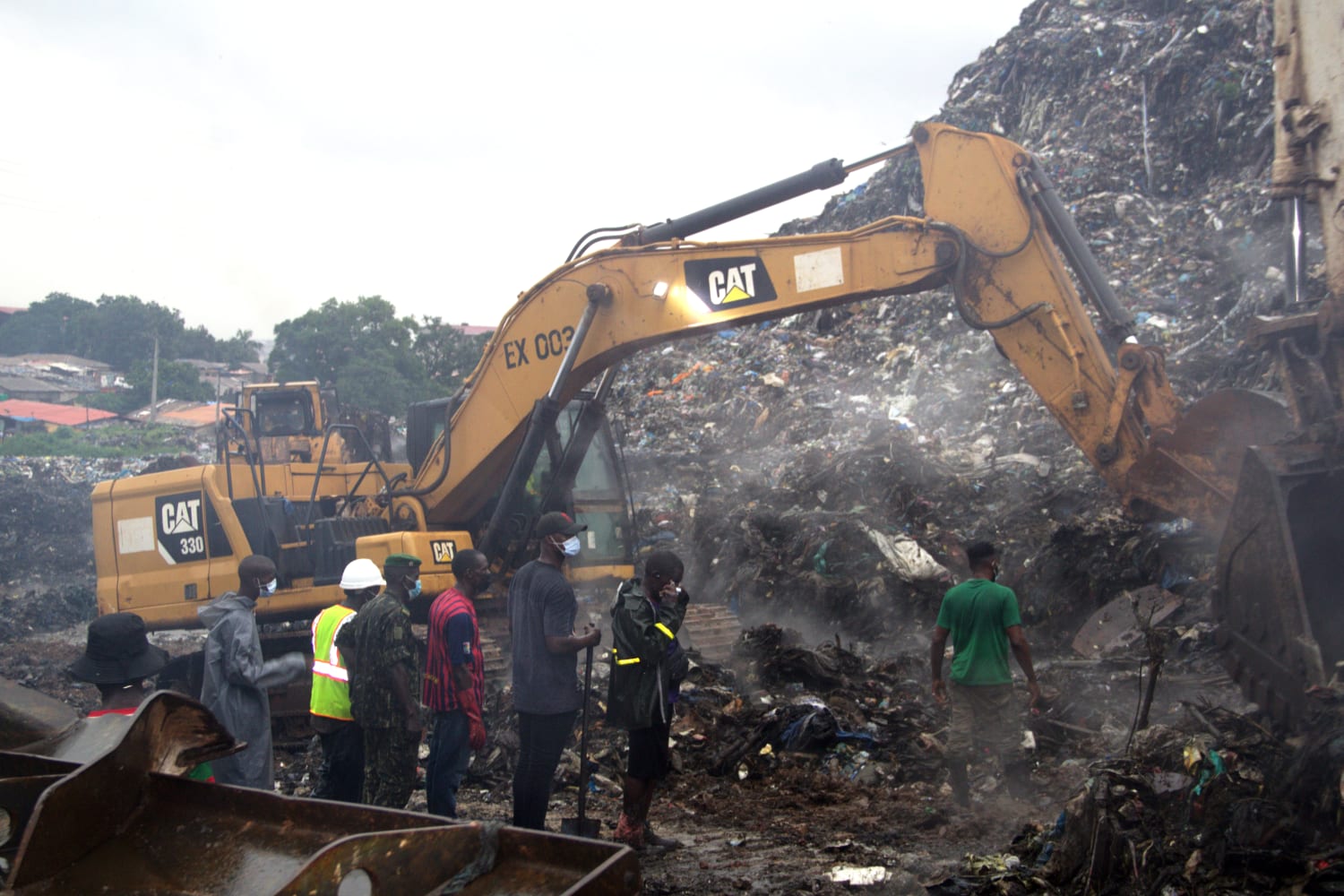
A massive mound of rubbish collapsed onto nearby homes early Sunday morning in Guinea’s capital, killing at least 30 people and injuring 22 others after heavy overnight rains triggered a deadly landslide at the city’s largest landfill.
The disaster struck around 2 a.m. local time at the Dar-es-Salam (also known as Dar Es Salam) open-air waste dump in the Gbessia commune. Torrential rain washed over the towering heap of refuse, sending it cascading onto informal settlements of tents, shacks, and other dwellings below. Several homes were destroyed in the collapse.
Authorities confirmed six people were seriously injured and 16 sustained lighter injuries. One resident, Cire Diallo, told reporters she had lost all five of her children in the tragedy. “I have lost all my children. All I can do is put my trust in God,” she said.
Neighbourhood leader Lancine Sylla earlier reported that 18 bodies had already been recovered and taken to the morgue, expressing fears of a high death toll as search efforts continued. Rescuers, including military personnel, deployed excavators and other equipment to comb through the scattered waste for survivors and recover bodies. Local residents gathered at the scene as the operation unfolded.
Prime Minister Amadou Oury Bah visited the site on Sunday to assess the situation and oversee the ongoing search and rescue efforts. The government stated that “significant material and human resources” had been mobilized and called on people to remain calm, show solidarity, and follow instructions from rescue services. Measures were also put in place to provide medical care for the wounded and assistance for those affected.
The landfill, the primary dumping ground for Conakry’s roughly two million residents, had been deemed unsafe. Just days earlier, on Thursday, Territorial Administration Minister Djénabou Touré announced plans to close the site and relocate the waste outside the capital due to the dangers it posed, particularly during the rainy season. Closure was scheduled for the same day the collapse occurred. Residents in the surrounding area had received eviction notices, though many remained at the time of the disaster.
This is not the first such tragedy at the site. A similar landfill collapse in 2017 killed at least eight to 10 people after heavy rains.
Witnesses described the scale of the landslide as large enough to bury an apartment building along with more precarious dwellings. Search and recovery operations continued in the following days amid further rain, with authorities working to relocate remaining at-risk families and provide support, including shelter for hundreds of affected people.
The incident underscores persistent challenges with waste management and informal housing in densely populated West African cities, where seasonal heavy rains frequently lead to landslides and flooding.
