


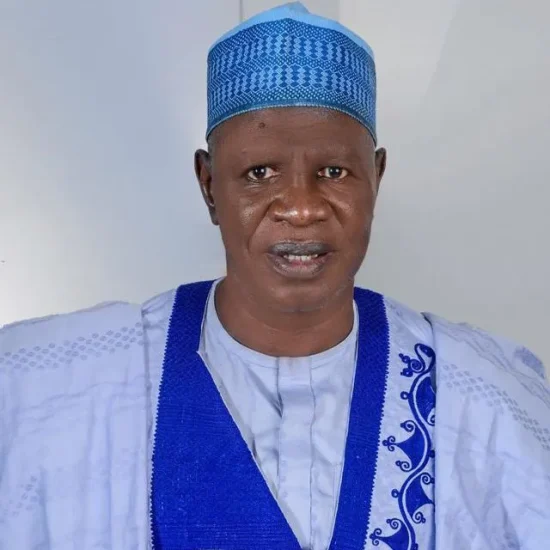
On Tuesday, 10th February, 2026, as I stepped out of my official car at the university clinic, the crowd’s solemn eyes were fixed on me, rife with unspoken questions. Why did the cold hand of death snatch away Muhammad Hassan Sale, a Lecturer II, a gentleman, and a promising, hard-working academic in the Agronomy Department? What will become of his nursing wife and their two little children?
Just two hours earlier, Sale and his wife had left their home together; she was hurrying to the hospital for postnatal immunization, while he rushed to catch a university bus headed over 60 kilometers away for the day’s work, unaware of the tragedy that awaited his family. Inside the bus, he was comfortably seated, but soon he began gasping for air. The driver diverted to the university clinic for immediate medical attention. As is customary, the university Director of Health Services called to inform me of Sale’s emergency, assuring me they were doing their best to revive him. I promised to stop by the clinic to check on his condition. Moments later, I received another call informing me that Sale had passed away and that the family needed to be notified. I confirmed we were en route to the clinic.
Upon my arrival, I was greeted by the Director and a senior professor from Sale’s department, along with several other staff members. They looked to me, waiting for guidance on the next steps. Delivering the news of death requires a unique strategy, especially when it strikes suddenly, as it did in this case. Standing before Sale’s lifeless body, wrapped professionally in cloth, I could not bring myself to pull it away and see his face. I could only offer heartfelt prayers for Allah’s mercy and forgiveness for our departed junior colleague. Sale was but 38 years old; he had joined the university after his national service and had diligently served as the examination officer for his department. At the time of his death, he had been working tirelessly to compile first-semester examination results in time for the upcoming senate meeting.
The alarming trend of academic deaths was prominent at the February 2026 NEC meeting of the Academic Staff Union of Universities in Abuja, where nearly 50 deaths were recorded between November 10, 2025, and February 6, 2026, in less than three months. A similar number had been reported in the third quarter of 2025. Some academics succumbed to prolonged illnesses, while others died suddenly at home, even mid-meal. While death is a necessary end and every soul must eventually confront it, the frequency and spatial distribution of these deaths demand examination. What might be causing this unsettling phenomenon?
Although each person dies at their appointed time, the underlying causes of these deaths are diverse. However, an overwhelming academic workload—comprising teaching duties, endless marking, pressure to publish, looming research deadlines, committee responsibilities, program accreditation exercises, administrative meetings, external examinations, community obligations, and prevailing economic hardships—greatly contributes to exhaustion, ultimately leading to fatal outcomes. The academic workload is the engine room of the university system, affected by global benchmarking and standardization. A malfunctioning university system produces unprepared professionals who struggle to manage society’s affairs, with dire consequences that could push the nation into an abyss of insecurity, squalor, and poverty.
The university system is pivotal for nation-building, fostering innovation, strong governance, infrastructure development, successful foreign policy, increased productivity, and nearly every facet of human growth. It cultivates leaders who can navigate and overcome barriers to societal advancement. Without a doubt, the Nigerian university system is designed in line with global best practices, enabling it to address societal needs and aspirations. Therefore, academics must brace themselves to meet their responsibilities—teaching, research, and community service—as part of their sacred duty.
What are the underlying factors behind academic exhaustion and excessive workloads in Nigeria? First, a significant brain drain of senior academics over the last two decades has left the remaining faculty to shoulder the increased workload. This brain drain, coupled with industrial disharmony and low employability in the system, further exacerbates the strain on academics, many of whom convert their excessive responsibilities into “Excess Workload” for financial gain. While many love it to no end, I hate to hear “Excess Workload” because it implies additional work for an already overstretched person. What an irony!
The importance of employing more qualified personnel cannot be overstated. Universities need to recruit top-tier intellectual talent to effectively fulfill their primary roles of teaching, research, and community service. University councils must closely examine existing statutes governing manpower recruitment to resist external pressures that seek to hire any labor available in the market. The focus should be solely on attracting the best, or at the very least, trainable graduates.
Secondly, many universities struggle with inadequate internally generated revenue (IGR), leaving them overly reliant on government funding. Strengthening the relationship between industries and universities is essential to fostering research and innovation that boosts the productivity of the industrial sector and generates income. Some academics indulge in abstract research that lacks relevance, given our low level of development and insufficient infrastructure. Why can’t our scholars develop research themes that directly address pressing societal issues? Collaborative research efforts among academics are currently weak, which only adds to the fatigue and stress faculty members face. Joint endeavors with a common purpose can yield remarkable outcomes.
Thirdly, our university system often resembles the civil service model, where hard work leads to more responsibilities, while those who underperform are allowed to remain complacent. As diligent academics receive promotions and take on heavier workloads, the burden only intensifies, leading to stress and exhaustion. We must cultivate an environment where every faculty member can contribute meaningfully. A possible solution is to enhance the mentor-mentee system, wherein senior academics, from Senior Lecturers onwards, would be required to supervise four to five mentees. Graduate assistants should work on tutorials, postgraduate programs, and other academic responsibilities under the strict guidance of their mentors, who would provide annual confidential performance evaluations. Such evaluations could inform decisions about whether junior academics are retained or encouraged to withdraw from the university system, or even forced to vacate their appointments, thereby ensuring the development of future leaders within academia. I wish we could do it. This is a policy memorandum to university councils in Nigeria.
We must actively work to reduce stress, learn to relax, share responsibilities whenever possible, seek regular medical care, support one another, and advocate for more humane work schedules and improved working conditions.
Finally, it is heartening to note that relative peace and a stable academic calendar have returned to university campuses after over a decade of unrest and turmoil caused by ASUU and other university unions. This positive development is thanks to President Ahmed Bola Tinubu’s willingness to listen, the union leaders’ readiness to resolve contentious issues through compromise, and the dedicated efforts of the Minister of Education, Dr. Maruf Tunji Alausa, along with Mallam Yayale Ahmed and his capable team. As I mourn our departed colleagues and pray for their souls to rest in peace, I urge all stakeholders to work together to address the rising number of deaths among academics.
Stop press. As I am sending this piece, I received shocking news of the deaths of two of our personnel yesterday, 2nd March 2026. May Allah accept their souls in Aljanna Firdausi and give us the fortitude to bear their loss. Amen.
