


An environmentalist, Ibrahim Ahmad, has said the N29.69 billion flood and erosion control project in Bauchi metropolis will protect the environment and improve livelihoods.
He said the initiative demonstrates the Bauchi State Government’s commitment to environmental sustainability and the overall development of the state.
Ahmad spoke in Bauchi on Sunday while responding to a survey by reporters on how state governments are utilising ecological funds.
He said the project was designed to control gully erosion and stormwater channels in Bauchi metropolis as well as flooding in over 15 flood-prone local government areas of the state.
The expert noted that such interventions are imperative to control flooding and erosion, protect lives and property, and promote sustainable development.
While commending the initiative, Ahmad called for effective implementation to ensure the project achieves its objectives.
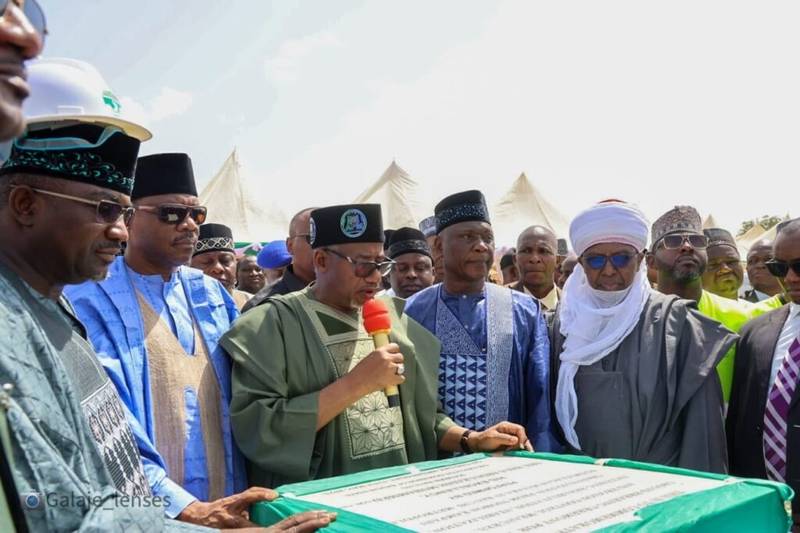
It will be recalled that on May 13, the Bauchi State Government flagged off an $18.5 million (equivalent to N29.69 billion) flood and erosion control project.
The project is being funded by the World Bank through its Agro-Climatic Resilience in Semi-Arid Landscapes (ACReSAL) programme.
Performing the groundbreaking ceremony, Governor Bala Mohammed said the project aims to curb gully erosion and stormwater damage ravaging communities.
He noted that gully erosion and uncontrolled stormwater channels running from Tsohon Kamfani to Gwallagan Mayaka communities in the metropolis are threatening the town’s topography.
Mohammed said the state government had paid 40 per cent of the total contract sum as mobilisation fee to the contractor, while the full amount is readily available.
He assured that the project would be completed as scheduled.
“This event is far more than the commencement of a construction project; it represents another bold milestone in our administration’s commitment to sustainable development, environmental protection, urban renewal, public health, economic growth, and the wellbeing of our people,” he said.
According to the governor, the intervention is a key component of the Bauchi Urban Renewal Project, in alignment with Bauchi Project II, aimed at modernising infrastructure and building climate-resilient communities.
He said small stormwater pathways and gully erosion have destroyed homes, farmlands, roads, and livelihoods in the town.
The governor highlighted that the project is expected to restore 9,842 hectares of degraded lands and provide protection to more than 213,000 people.
Mohammed stressed the need for community involvement in the implementation and monitoring of the project through deepened stakeholder engagement.
In Jigawa State, the government said it has committed substantial funds to confront growing climate challenges such as flooding and erosion.
Mr Sagir Musa, Commissioner for Information, Youths, Sports and Culture, said the government has adopted practical environmental policies, ecological restoration, and community-driven climate action.
He said the Umar Namadi administration has placed climate resilience and environmental sustainability at the heart of its development agenda through policies and strategic investments.
“The recently approved Jigawa State Climate Change Policy complements efforts to promote environmental sustainability, climate resilience, sustainable agriculture, and responsible natural resource management.
“With the implementation of the World Bank-supported ACReSAL project, the state has executed major ecological restoration projects,” he said.
Musa listed some of the projects to include the Danmasara–Yalwawa gully erosion and flood mitigation scheme.
He said the project has reclaimed over 400 hectares of degraded land through integrated erosion control, drainage infrastructure, and flood mitigation measures.
However, there was no information from Gombe State as officials in relevant environment agencies declined to comment on the type of interventions or how the state government is utilising the ecological fund.
On flood preparedness, Bauchi, Gombe, and Jigawa have adopted different approaches to mitigate disasters. These include upscaling public awareness creation, inter-agency collaboration, evacuation, and emergency response services.
The Jigawa government has adopted a comprehensive strategy combining rescue equipment, engineering interventions, stockpiling of relief items, and community participation.
While Gombe’s preparedness centres largely on public sensitisation despite lacking a structured evacuation framework, Bauchi relies on flood control projects, early warning systems, and community mobilisation.
The Gombe State Emergency Management Agency (SEMA) said Dukku, Nafada, Kwami, Shongom, and Yamaltu/Deba Local Government Areas have been identified as vulnerable to flooding, as indicated in the 2026 flood outlook by the Nigeria Meteorological Agency (NiMet).
Mr Haruna Abdullahi, Executive Secretary of the agency, said SEMA has embarked on community sensitisation, engaging stakeholders on measures to reduce flood risks.
He said Local Emergency Management Committees, chaired by the vice chairmen of the local government councils, have been activated to strengthen grassroots disaster preparedness.
Abdullahi said the committees comprise security agencies, traditional rulers, religious leaders, and other stakeholders, and are responsible for coordinating emergency response services.
He said residents have been encouraged to clear blocked drains, shun indiscriminate refuse disposal, and avoid erecting structures on waterways.
The secretary, however, disclosed that Gombe State has no formal evacuation plan but relies on preventive measures to promote public compliance with safety advisories.
He said the agency has intensified awareness campaigns through radio programmes and other communication platforms in collaboration with NEMA, NOA, and relevant institutions.
Also, the Jigawa government said it has made adequate arrangements to tackle anticipated flooding through coordinated mitigation, evacuation, and emergency response measures.
Hamza Muhammad, Special Adviser to Governor Umar Namadi on Community Development and Social Inclusion, said proactive interventions began in February following NiMet’s flood forecasts.
Muhammad, who co-chairs the Technical Committee on Flood Mitigation in the Hadejia Jama’are River Basin Development Authority (HJRBDA), said the state government has procured over 20 speedboats to facilitate prompt evacuation of affected residents and safeguard property in flood-prone communities.
He said the state is collaborating with HJRBDA, NEMA, NIHSA, NiMet, UNICEF, the Nigerian Red Cross, Yobe State, and other stakeholders to fast-track proactive contingency planning.
On his part, Hanafi Yakubu, Executive Secretary of SEMA in Jigawa, said NiMet predicted flooding in 11 out of the 27 LGAs of the state.
Yakubu said comprehensive sensitisation campaigns involving traditional rulers, security agencies, ministries, and local councils are ongoing in vulnerable riverine communities.
He said the state government has procured canoes, food and non-food relief materials to strengthen emergency response capacity, and has deployed six amphibious excavators for channel dredging and aquatic weed clearance to reduce flood risks.
The secretary said the government also provided 15 community-based organisations with manual tools to sustain environmental sanitation and water channel clearance.
Similarly, the Bauchi SEMA said NiMet predicted flooding in 17 out of the 20 LGAs of the state.
Mr Adamu Nayola, Director of Relief and Rehabilitation at SEMA, said the agency has strengthened early warning dissemination through radio, television, town criers, religious leaders, and community-based organisations.
He said the agency advised residents in riverine communities to relocate to safe areas, including designated public schools.
Nayola said farmers were also encouraged to cultivate early-maturing or flood-tolerant crops to minimise agricultural losses.
He said the agency is working closely with NEMA, NiMet, NIHSA, traditional institutions, and community leaders to improve disaster preparedness.
