


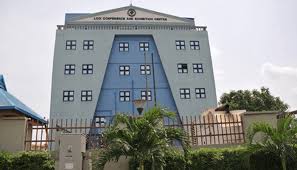
The Lagos Chamber of Commerce and Industry (LCCI) on Saturday urged the government to consolidate ongoing macroeconomic reforms, as inflation continues to weigh heavily on manufacturers.
It listed Micro, Small and Medium Enterprises (MSMEs), traders, and consumers among those affected.
The Director-General of the LCCI, Dr Chinyere Almona, gave the advice in a statement issued in Lagos while reacting to the latest inflation figures released by the National Bureau of Statistics (NBS).
Almona noted that Nigeria’s headline inflation rate rose marginally to 15.69 per cent in April from the 15.38 per cent recorded in March.
She, however, noted that the sharp moderation in month-on-month inflation from 4.18 per cent to 2.13 per cent signalled a gradual easing in the pace of price increases and offered cautious optimism for businesses and households.
“The chamber observes that inflation continues to weigh heavily on manufacturers, MSMEs, traders, and consumers through rising costs of food, transportation, energy, and logistics.
“The higher rural inflation rate of 16.36 per cent also highlights ongoing supply chain disruptions, insecurity in food-producing areas, and weak distribution infrastructure,” she said.
Almona also noted that although inflation had declined significantly from the 26.82 per cent recorded in April 2025, businesses and households were yet to experience meaningful relief, as purchasing power remained weak and operating costs remained high.
She urged the government to stabilize the foreign exchange market, address energy and logistics costs, improve food supply systems, and strengthen support for domestic production and private sector investment.
According to her, there is also a need for stronger coordination between fiscal and monetary authorities to sustain the moderation in inflation and restore investor and consumer confidence in the economy.
“The LCCI reiterates that durable price stability can only be achieved through productivity-driven reforms, improved infrastructure, enhanced food security, and a more business-friendly operating environment,” she said.
Almona also called for long-term strategies to reduce the impact of global shocks on the economy, including disruptions in energy supply chains and trade wars.
She said Nigeria had the opportunity to reposition its oil and gas industry as a major gas supply hub to Europe and a net exporter of crude oil to African countries.
The LCCI director-general further noted that disruptions arising from the Middle East crisis had significantly affected global urea supply, stressing the need for Nigeria to prioritize local urea production to strengthen food security.
“We need an indigenous plan to boost crude production and increase crude supply to local refineries in order to reduce fuel import bills,” she said.
