


• Home
  • Agric
  • Sci & Tech
  • Health
  • Environment
  • Hausa News
  • More
    • Business/Banking & Finance
    • POLITICS
    • Entertainments & Sports
    • International
    • Investigation
    • Law & Human Rights
    • Africa
    • ACCOUNTABILITY/CORRUPTION
    • Hassan Gimba
    • Column
    • Prof. Jibrin Ibrahim
    • Prof. M.K. Othman
    • Defense/Security
    • Education
    • Energy/Electricity
    • Entertainment/Arts & Sports
    • Society and Lifestyle
    • Food & Agriculture
    • Health & Healthy Living
    • International News
    • Interviews
    • Investigation/Fact-Check
    • LAW & HUMAN RIGHTS
    • Oil & Gas/Mineral Resources
    • PRESS FREEDOM/JOURNALISM/PR
    • General News
    • Presidency
  • About Us
    • Contact Us
    • Board Of Advisory
    • Privacy Policy
    • Ethics Policy
    • Teamwork And Collaboration Policy
    • Fact-Checking Policy
    • Advertising
  • Media OutReach Newswire
    • Wire News
  • The Stories
Facebook Twitter Instagram
Trending
  • NAFDAC holds workshop on medicine safety in Karu
  • AFAN predicts drop in food prices after fertiliser distribution
  • IBB university secures ABU approval for medical students clinical training
  • Edo state reaffirms commitment to fight drug abuse
  • PAAU student arrested for alleged forced cult initiation
  • Africa’s first social justice improv festival opens in Abuja
  • Umahi orders temporary halt on Ibadan-Ife-Ilesa road work
  • Floods, Windstorm devastate Ebonyi farmlands, shops
Facebook Twitter Instagram YouTube
AsheNewsAsheNews
  • Home
  • Agric

    AFAN predicts drop in food prices after fertiliser distribution

    June 22, 2026

    Northern Nigeria’s poultry economy: Unlocking a multi-billion dollar investment opportunity across the value chain, By Dr. Fakunle Aremu

    June 19, 2026

    Association trains farmers on agroforestry, carbon opportunities

    June 18, 2026

    IWMI, IFPRI link Kano farmers to solar irrigation support

    June 17, 2026

    Dangote expects over $4bn annual forex earnings from fertiliser exports

    June 16, 2026
  • Sci & Tech

    ALTON supports CBN’s local data hosting mandate

    June 20, 2026

    NDPC seeks INEC data records over breach allegations

    June 20, 2026

    SGF urges Galaxy Backbone to boost cybersecurity, broadband

    June 20, 2026

    Experts urge AI, satellite data to build safer, more sustainable cities at FUTA symposium

    June 19, 2026

    Anambra disburses N80m to 80 startups for tech growth

    June 19, 2026
  • Health

    NAFDAC holds workshop on medicine safety in Karu

    June 22, 2026

    Expert urges focused use of N10bn for Ebola preparedness

    June 22, 2026

    From Sokoto to Bulgaria: Dr. Dange’s mission to transform pediatric care

    June 21, 2026

    Nigeria’s Fathers face silent mental health crisis

    June 21, 2026

    NGO promotes menstrual hygiene in Benue schools

    June 20, 2026
  • Environment

    Floods, Windstorm devastate Ebonyi farmlands, shops

    June 22, 2026

    Progress on Lagos-Calabar road celebrated

    June 22, 2026

    Sanitation concerns at Lagos market

    June 21, 2026

    Lagos envoy defends waste enforcement efforts

    June 20, 2026

    Tinubu: Abuja crime hideouts disappearing

    June 20, 2026
  • Hausa News

    UNA signs MoU to launch air Bissau in Guinea-Bissau

    June 15, 2026

    Otti plans 250-room 5-star hotel in Umuahia

    April 11, 2026

    Anti-quackery task force seals 4 fake hospitals in Rivers

    August 29, 2025

    [BIDIYO] Yadda na lashe gasa ta duniya a fannin Ingilishi – Rukayya ‘yar shekara 17

    August 6, 2025

    A Saka Baki, A Sasanta Saɓani Tsakanin ‘Yanjarida Da Liman, Daga Muhammad Sajo

    May 21, 2025
  • More
    1. Business/Banking & Finance
    2. POLITICS
    3. Entertainments & Sports
    4. International
    5. Investigation
    6. Law & Human Rights
    7. Africa
    8. ACCOUNTABILITY/CORRUPTION
    9. Hassan Gimba
    10. Column
    11. Prof. Jibrin Ibrahim
    12. Prof. M.K. Othman
    13. Defense/Security
    14. Education
    15. Energy/Electricity
    16. Entertainment/Arts & Sports
    17. Society and Lifestyle
    18. Food & Agriculture
    19. Health & Healthy Living
    20. International News
    21. Interviews
    22. Investigation/Fact-Check
    23. LAW & HUMAN RIGHTS
    24. Oil & Gas/Mineral Resources
    25. PRESS FREEDOM/JOURNALISM/PR
    26. General News
    27. Presidency
    Featured
    Recent

    NAFDAC holds workshop on medicine safety in Karu

    June 22, 2026

    AFAN predicts drop in food prices after fertiliser distribution

    June 22, 2026

    IBB university secures ABU approval for medical students clinical training

    June 22, 2026
  • About Us
    1. Contact Us
    2. Board Of Advisory
    3. Privacy Policy
    4. Ethics Policy
    5. Teamwork And Collaboration Policy
    6. Fact-Checking Policy
    7. Advertising
    Featured
    Recent

    NAFDAC holds workshop on medicine safety in Karu

    June 22, 2026

    AFAN predicts drop in food prices after fertiliser distribution

    June 22, 2026

    IBB university secures ABU approval for medical students clinical training

    June 22, 2026
  • Media OutReach Newswire
    • Wire News
  • The Stories
AsheNewsAsheNews
Home»Africa»The weaponization of disinformation in Africa’s security crises, By Fidel Amakye Owusu
Africa

The weaponization of disinformation in Africa’s security crises, By Fidel Amakye Owusu

EditorBy EditorOctober 3, 2025Updated:October 4, 2025No Comments4 Mins Read
Fidel Amakye Owusu
Share
Facebook Twitter LinkedIn Pinterest Email

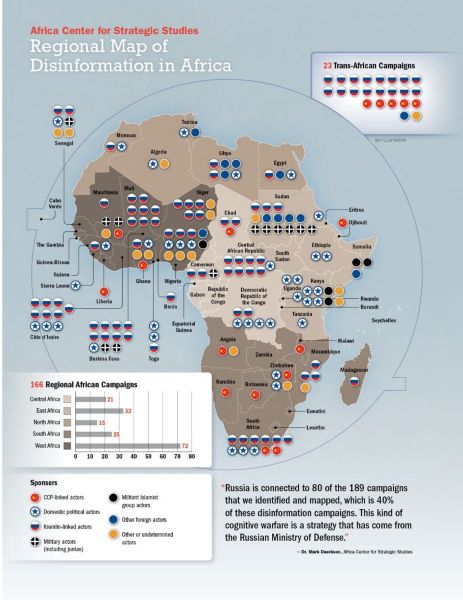
In recent years, Africa’s security landscape has become increasingly shaped not just by armed groups, political upheavals, and foreign interventions, but by a less visible weapon: disinformation. From violent extremists to state actors and even criminal gangs, disinformation has been deployed as a strategic tool to win sympathy, obscure failures, and manipulate perceptions. Its impact is proving just as dangerous as guns and bombs.

Extremists, preachers, and the digital battlefield

Violent extremist organizations across Africa, particularly in the Sahel, have mastered the use of disinformation. They exploit religious narratives and cleverly crafted identities to present themselves as defenders of marginalized communities. In gold-mining regions, for example, extremist groups deploy preachers who cast them as protectors of artisanal miners against state neglect.

These narratives are amplified through social media networks, where ordinary people—often unaware they are spreading falsehoods—help extend the reach of extremist propaganda. By misusing parochial interpretations of religious texts and cloaking themselves in deceptive language, extremist groups steadily build a façade of legitimacy that enables them to recruit, fundraise, and secure local collaborators.
Governments and the politics of disinformation

But it is not only extremist groups that use this tactic. Governments—both elected and unelected—have also adopted sophisticated disinformation strategies. In many cases, they use it to distract attention from pressing socioeconomic crises such as unemployment, corruption, and insecurity.

By shaping narratives and silencing fact-checkers, these states not only suppress dissent but also undermine accountability. In the Information Age, when citizens have greater access to alternative sources of news, the consequences of such state-led disinformation are more corrosive than ever. It fosters irresponsibility at the highest levels and further erodes public trust in governance.

Military juntas, Wagner, and manufactured victories

The resurgence of military governments since 2021 has added another dimension to the disinformation problem. Military juntas in countries like Mali, Burkina Faso, and Niger have justified their rule with claims of restoring stability and fighting terrorism, yet many of their strategies have proven counterproductive.

I have long warned about the dangerous collaboration between these regimes and Russian private military contractors such as Wagner. For years, disinformation painted Wagner as a decisive force in counterterrorism. In reality, recent revelations—including Malian forces accusing Wagner of incompetence—show that many of the so-called “successes” were manufactured propaganda.

The result is stark: today, the Sahel stands as the epicenter of global terrorism. Worse still, educated Africans and non-Africans alike fell for the Wagner narrative, mistaking disinformation for truth and embracing anti-imperialist rhetoric that only deepened insecurity. Foreign powers, too, continue to exploit disinformation to advance their geopolitical interests in Africa, making the region a playground for dangerous narratives.

Bandits and the new face of criminal propaganda

Disinformation is no longer the preserve of extremists and governments. Even criminal groups such as bandits have started to deploy it. Recently, one group demanded the construction of schools and hospitals in exchange for halting their attacks. On the surface, such demands seem rooted in legitimate socioeconomic grievances. But in reality, they represent a new frontier in criminal propaganda—an attempt to gain public sympathy and legitimacy while continuing acts of violence.

A battle beyond the battlefield

The rise of disinformation in Africa’s security crises reveals a troubling truth: the fight for stability is no longer confined to physical battlefields. It is being waged in minds, narratives, and digital spaces. Extremists exploit faith and frustration, governments manipulate stories to protect their power, and criminals reinvent themselves as champions of social causes.

Disinformation has become both a weapon and a shield. Until African societies, institutions, and partners confront this reality, the region will continue to be haunted not just by insecurity, but by the powerful lies that sustain it.

Owusu is an International Relations and Security Analyst and Geopolitics wtiter

Africa's security Criminal propaganda Disinformation Extremism Politics of disinformation Wagner Group Weaponization
Share. Facebook Twitter Pinterest LinkedIn WhatsApp Reddit Tumblr Email
Editor
  • Website

Related Posts

Inside the AU files: The unanswered questions in Nigeria’s failed 2031 African Games bid

June 9, 2026

Sahara Desert: 49 people die of thirst after truck breaks down

June 5, 2026

Ex-President Jonathan warns public against fake Instagram account

May 30, 2026

Leave A Reply Cancel Reply

NAFDAC holds workshop on medicine safety in Karu

June 22, 2026

AFAN predicts drop in food prices after fertiliser distribution

June 22, 2026

IBB university secures ABU approval for medical students clinical training

June 22, 2026

Edo state reaffirms commitment to fight drug abuse

June 22, 2026
About Us
About Us

ASHENEWS (AsheNewsDaily.com), published by PenPlus Online Media Publishers, is an independent online newspaper. We report development news, especially on Agriculture, Science, Health and Environment as they affect the under-reported rural and urban poor.

We also conduct investigations, especially in the areas of ASHE, as well as other general interests, including corruption, human rights, illicit financial flows, and politics.

Contact Info:
  • 1st floor, Dogon Daji House, No. 5, Maiduguri Road, Sokoto
  • +234(0)7031140009
  • ashenewsdaily@gmail.com
Facebook Twitter Instagram Pinterest
© 2026 All Rights Reserved. ASHENEWS Daily Designed & Managed By DeedsTech

Type above and press Enter to search. Press Esc to cancel.