


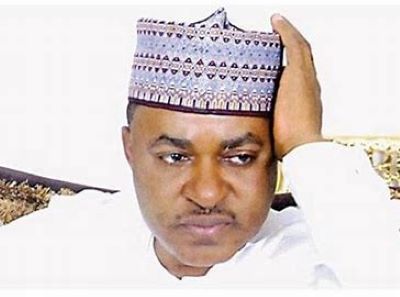
A former Bauchi State Governor, Isa Yuguda, speaks on the petrol subsidy removal policy of the President Bola Tinubu administration. He was a guest on Channels Television’s Politics Today programme during the week. According to him, the Federal Government still pays petrol subsidy, though minimal. The ex-governor said a complete removal will inflict untold hardship on Nigerians, even as he urged states to judiciously make use of the double allocations that they now get by channeling it to drive down the cost of products in the economy. EXCERPTS:
There are those who say it looks like a dagger in the heart of the economy but there are those who believe that it is a necessary surgery that needs to be done though it has a lot of implications. And there are those who argue that it was a knee jerk approach. How do we find ourselves? Was it the right decision that the President made on petrol subsidy at the time or the wrong one?
Let me put the issue of petrol subsidy removal in its proper context. I was a member of the Presidential Committee on Economic Meltdown in 2008, 2009. And I chaired the committee on investigating the subsidy regime. To the best of my understanding, the removal itself was a decision of our representatives in the National Assembly because they prepared the 2023 budget and they did not provide for petrol subsidy post 29th May 2023. So, if the budget of 2023 did not include a provision for the entire petrol subsidy, including the one that has been removed. Then, it’s not a new thing. For everybody that reads the budget, Nigerians would have understood that there was no provision for a certain percentage of the subsidy post May 29th. So, what Mr President did was not news, it was something that was already there and he had to bite the bullet to announce it. So, you can’t say that he actually removed the subsidy; the subsidy was removed by the budget of 2003, it was a law. If he (Tinubu) came in and said he paid a subsidy, where is he going to get the money from? And if he does take the money from somewhere, he will be committing an impeachable offense.
Are we still paying subsidy?
We’re still paying subsidies.
So, the IMF was correct that Nigeria is still paying subsidy?
Well, the IMF have their own problems but if they said it, it’s true, they (the government) is paying subsidy because between 300 to 400 billion naira every month goes into that (subsidy). But that subsidy that was removed was the one I spoke about last time around; it’s the one that was going into private pockets. I decoupled that subsidy that ordinarily shouldn’t have been paid. And if it would be paid, it should have been paid into the treasury of the country. And today, the increase in revenue that we see is as a result of removal of that monies that were going into the private pockets that is going into the treasury of the government today. And we see it reflecting in the revenues of the Federal Government.
The one that we discovered (is that) when a ship leaves Europe, brings in petroleum products, it was discovered that sometimes they berth within the West African coast to discharge some of this fuel. And, of course, when it comes, it takes time, sometimes up to two months before a ship will berth which means demurrage is paid in the region of almost $120 million. All is part of what the poor man is paying in Nigeria because that money was supposed to have gone into the treasury. Not only that, even when they berth from the ship side to the tank farm, hundreds of thousands of liters are lost, and that one too subsidy is being paid. And then when the tankers are filled off from the Atlas tanks and they are up country bound, some of them find themselves in Niger Republic, some of them in Chad Republic, some of them far away Central Africa Republic, including Cameroon. So, you can see that may be close to about one-third of what is imported goes out. And then you have that subsidy that is being paid in petrol products that are pumped through pipelines and we discovered that in many instances, the pumping was done in just imaginary pipelines where the pipelines don’t exist.
ALSO READ Poultry association loses N6bn to fuel subsidy removal, cash crunch
So, we all pay subsidies and that is what the President removed. So, instead of going to these private pockets, Nigerian private pockets, the oil magnates, those who operate the industry, the President harvested the money and ploughed it into the treasury of the government. And that’s why most states are getting twice or even three times of what they used to get. So, you can see that money has gone into state treasuries, local government treasuries and also the national treasury and this money hitherto was going into private pockets. That’s the explanation I wanted every Nigerian to understand. But the subsidy regime now we are paying it’s still there. It may not be adequate, probably if it had been adequate, maybe the prices would have been forced down, but that which was removed was the one that was stolen money.
So, do we need to be paying any subsidies at all?
Yes, we do, for now, because if the government doesn’t subsidize for now, I think the pains will be more than what we are feeling today, even though ordinarily, we are not supposed to feel any pain but the fact is that there is there is a reduction in the subsidy payment. The reduction, which is maybe in the region of N200 billion added to the N400bn we are paying now would have made the petroleum products much cheaper but that is the reality. Anything that has to do with the withdrawal of the subsidy completely will inflicts pains on the country.
But there are those who argue that maybe the President and his administration are not able to handle the after-effects properly.
Well, I think the president has done his best. If to the extent that these monies are paid into the national treasury and are shared, the onus lies on the recipients of this increased revenue: the state government, and the local government. And of course, maybe more allowances would have been paid to the National Assembly members, I would not know that aspect but if you are getting N500 billion, now, you are getting almost one trillion naira this year. That is more like a windfall.
The question is that the decision is being criticized, that it wasn’t properly designed and no strategy to absorb the after–effects. And now it is affecting the prices of commodities and it is affecting our economic industries across board.
Well, we understand that there is that reaction from Nigerians but I’m assuring you, looking at the entire thing, you will appreciate that that wouldn’t have triggered the kind of reaction from our producers, distributors, marketers but that reaction was just a spontaneous action because it’s a tradition in Nigeria that once there an increase in fuel prices, everybody will start increasing the price of their goods. So, it is more of a psychological thing (to increase prices at this time).
It wasn’t a natural economic effect?
It couldn’t have been natural.
Is it the work of saboteurs?
It could have been triggered by some invisible hands but the reality is that I cannot see a connection between the removal of subsidy and somebody loading his cattle from Bauchi to Lagos and who hiked prices by 50%. It doesn’t make sense to me. So, the whole thing is just a psychological reaction on the part of Nigerians that everything is going to be expensive and therefore they have to improve the cost of goods. So, anything that has no foreign exchange component or subsidy removal should not be affected. After all, the subsidy has not been completely removed. Like I said, it is being paid.
I would imagine that the beneficiaries (state governments) of this increase in revenue would have come up and teamed with the Federal Government and see how they could introduce palliatives as quickly as possible to counter the move made by producers of consumer goods and producers of goods and services. For instance, if a state was receiving an additional 5 billion naira every month, of course, the state can intervene. If you pump in 5 billion to neutralise the effect of the imaginary increase in cost, the money will stabilise the prices, the prices will start coming down because they will realize that the so-called subsidy removal has not even impacted on their production cost or transportation, even if it is just marginal.
What would the President do to be able to stem the tide of the rising cost of prices of commodities? Because now the average citizen is feeling the pinch, their salaries have not changed, and the cost of living has increased. And now the hardship in the land, and you see how some people are reacting to it, looting warehouses where food items are being stored. These are sad realities of our time.
These are realities. But what I’m saying is that that situation wouldn’t have arisen. It is not the President. When you have governors, all the revenues they get, their responsibility is to make sure that every person in his state sleeps with his children, with his stomach filled up. It is their responsibility and of course, part of the President’s responsibility but they only make noise when they approach the President and tell him the gaps. That is when the President will intervene.
That is in addition to the normal intervention, the President is doing. If today, every state is five billion naira richer, why should they be constructing roads? Why should they engage in investing in capital projects which ordinarily will not impact the lives of the people because the people now are challenged with feeding their families?
These things that we are seeing happening on our streets is most unfortunate. The President is not the only person managing the country; the governors should have come in. I would have expected that the National Economic Council would have taken it up. Let the governor come and sit with the Presidency and let everyone take his own fair share of responsibilities. The states have increased income and this increase income should have impact. We must not allow hunger and deprivation in our country.
ChannelsTV
