


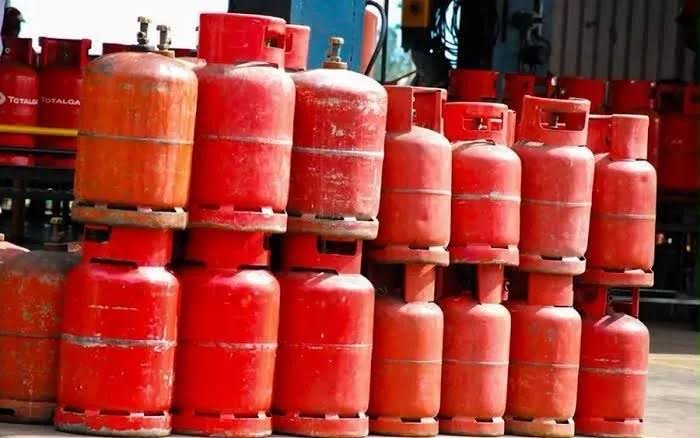
The Liquefied Petroleum Gas Retailers Association of Nigeria (LPGAR) has attributed rising cooking gas prices to global supply disruptions, particularly US-Iran tensions.
Mr. Ayobami Olarinoye, LPGAR Chairman under the Nigeria Union of Petroleum and Natural Gas Workers (NUPENG), disclosed this in Lagos.
Speaking with reporters on Saturday, Olarinoye said international developments continue to impact Nigeria’s petroleum market.
“The oil and gas sector operates in a global market. It’s difficult to isolate Nigeria’s LPG from worldwide events,” he stated.
He explained that these international issues have disrupted supply chains, making it hard for Nigeria to avoid higher prices.
Olarinoye called on the government to intervene and cushion the impact on consumers.
He urged increased investment in refineries, especially those focused on LPG production, and emphasized the need for more storage capacity and infrastructure to meet rising demand.
“The LPG consumption pattern has changed significantly and grown substantially. We need more storage and related facilities,” he said.
He expressed sympathy for Nigerians who have embraced cleaner cooking energy but now face higher costs.
“LPGAR is sympathetic to Nigerians facing rising prices for cooking gas,” he added.
Olarinoye noted that current prices are largely driven by market forces but urged industry cooperation.
He expressed optimism that prices could ease as supplies improve through NLNG allocations and imports.
“Prices are gradually decreasing, although marginally. More gas shipments are entering the market via NLNG and imports,” he said.
He also mentioned that a private refinery recently reduced its ex-depot price by N170 per kilogramme, lowering the rate from N1,400.
Olarinoye identified product availability and supply chain costs as major challenges for retailers.
He accused some LPG offtakers with retail outlets of selling directly below the purchase prices of independent retailers.
“We found that some offtakers with retail stations sell to end users at lower prices,” he said.
He described this practice as an issue requiring investigation by relevant authorities, warning that the price gap puts pressure on LPG retailers.
“The margin between wholesale and retail prices makes business difficult for our members,” he explained.
Olarinoye added that retailers are wrongly blamed for price increases caused by broader market factors.
