

• Home
  • Agric
  • Sci & Tech
  • Health
  • Environment
  • Hausa News
  • More
    • Business/Banking & Finance
    • POLITICS
    • Entertainments & Sports
    • International
    • Investigation
    • Law & Human Rights
    • Africa
    • ACCOUNTABILITY/CORRUPTION
    • Hassan Gimba
    • Column
    • Prof. Jibrin Ibrahim
    • Prof. M.K. Othman
    • Defense/Security
    • Education
    • Energy/Electricity
    • Entertainment/Arts & Sports
    • Society and Lifestyle
    • Food & Agriculture
    • Health & Healthy Living
    • International News
    • Interviews
    • Investigation/Fact-Check
    • LAW & HUMAN RIGHTS
    • Oil & Gas/Mineral Resources
    • PRESS FREEDOM/JOURNALISM/PR
    • General News
    • Presidency
  • About Us
    • Contact Us
    • Board Of Advisory
    • Privacy Policy
    • Ethics Policy
    • Teamwork And Collaboration Policy
    • Fact-Checking Policy
    • Advertising
  • Media OutReach Newswire
    • Wire News
  • The Stories
Facebook Twitter Instagram
Trending
  • Galadima vows to make agriculture Adamawa’s growth engine
  • Advocate calls for grassroots action on climate change
  • Investing in girls’ education yields over 21x returns – Expert
  • ASRTI commends FG on Nigeria airways retirees’ benefits
  • Sanwo-Olu declares ‘small state of emergency’ on Lagos waste
  • Army redeploys top commanders [NAMES, REASONS]
  • First Lady unveils Agri-360 training for 5,000 women, youths
  • Enugu set to produce over 900 doctors yearly
Facebook Twitter Instagram YouTube
AsheNewsAsheNews
  • Home
  • Agric

    Galadima vows to make agriculture Adamawa’s growth engine

    September 9, 2026

    Lagos traders, consumers seek alternatives as beans prices soar

    September 9, 2026

    LIFE-ND incubation model yields results in Delta – Arenyeka

    September 8, 2026

    Kwara Fadama-CARES pledges collaboration with AFAN

    September 8, 2026

    AGRA, partners forge renewed alliance to boost farmer prosperity across Africa

    September 8, 2026
  • Sci & Tech

    Australia to let users switch off social media algorithms

    September 9, 2026

    Africa contributes less than 1% of dementia research despite projected 348% rise in West Africa – Maina

    September 9, 2026

    Nigeria must stop consuming foreign neuroscience knowledge, NSN president says

    September 9, 2026

    GenScan AI: Nigerian scientist’s machine-learning tool cuts MRI scan time by 90%

    September 8, 2026

    Army deploys AI simulation technology to strengthen counter-terrorism operations

    September 8, 2026
  • Health

    Investing in girls’ education yields over 21x returns – Expert

    September 9, 2026

    Enugu set to produce over 900 doctors yearly

    September 9, 2026

    NCDC urges early Lassa fever preparations ahead of dry season

    September 9, 2026

    WHO names Kerry special envoy for health resilience

    September 9, 2026

    Islam allows medical treatment, discourages vanity cosmetics – Scholar

    September 9, 2026
  • Environment

    Advocate calls for grassroots action on climate change

    September 9, 2026

    ASRTI commends FG on Nigeria airways retirees’ benefits

    September 9, 2026

    Sanwo-Olu declares ‘small state of emergency’ on Lagos waste

    September 9, 2026

    First Lady unveils Agri-360 training for 5,000 women, youths

    September 9, 2026

    NiMet predicts cloudy, thundery weather nationwide

    September 9, 2026
  • Hausa News

    UNA signs MoU to launch air Bissau in Guinea-Bissau

    June 15, 2026

    Otti plans 250-room 5-star hotel in Umuahia

    April 11, 2026

    Anti-quackery task force seals 4 fake hospitals in Rivers

    August 29, 2025

    [BIDIYO] Yadda na lashe gasa ta duniya a fannin Ingilishi – Rukayya ‘yar shekara 17

    August 6, 2025

    A Saka Baki, A Sasanta Saɓani Tsakanin ‘Yanjarida Da Liman, Daga Muhammad Sajo

    May 21, 2025
  • More
    1. Business/Banking & Finance
    2. POLITICS
    3. Entertainments & Sports
    4. International
    5. Investigation
    6. Law & Human Rights
    7. Africa
    8. ACCOUNTABILITY/CORRUPTION
    9. Hassan Gimba
    10. Column
    11. Prof. Jibrin Ibrahim
    12. Prof. M.K. Othman
    13. Defense/Security
    14. Education
    15. Energy/Electricity
    16. Entertainment/Arts & Sports
    17. Society and Lifestyle
    18. Food & Agriculture
    19. Health & Healthy Living
    20. International News
    21. Interviews
    22. Investigation/Fact-Check
    23. LAW & HUMAN RIGHTS
    24. Oil & Gas/Mineral Resources
    25. PRESS FREEDOM/JOURNALISM/PR
    26. General News
    27. Presidency
    Featured
    Recent

    Galadima vows to make agriculture Adamawa’s growth engine

    September 9, 2026

    Advocate calls for grassroots action on climate change

    September 9, 2026

    Investing in girls’ education yields over 21x returns – Expert

    September 9, 2026
  • About Us
    1. Contact Us
    2. Board Of Advisory
    3. Privacy Policy
    4. Ethics Policy
    5. Teamwork And Collaboration Policy
    6. Fact-Checking Policy
    7. Advertising
    Featured
    Recent

    Galadima vows to make agriculture Adamawa’s growth engine

    September 9, 2026

    Advocate calls for grassroots action on climate change

    September 9, 2026

    Investing in girls’ education yields over 21x returns – Expert

    September 9, 2026
  • Media OutReach Newswire
    • Wire News
  • The Stories
AsheNewsAsheNews
Home»Health & Healthy Living»Investing in girls’ education yields over 21x returns – Expert
Health & Healthy Living

Investing in girls’ education yields over 21x returns – Expert

NewsdeskBy NewsdeskSeptember 9, 2026Updated:September 9, 2026No Comments5 Mins Read
Share
Facebook Twitter LinkedIn Pinterest Email

Investing in adolescent girls’ education can generate more than 21 times the initial investment through improved education, health and economic outcomes, Prof. William Rudgard, an Oxford University researcher, has said.

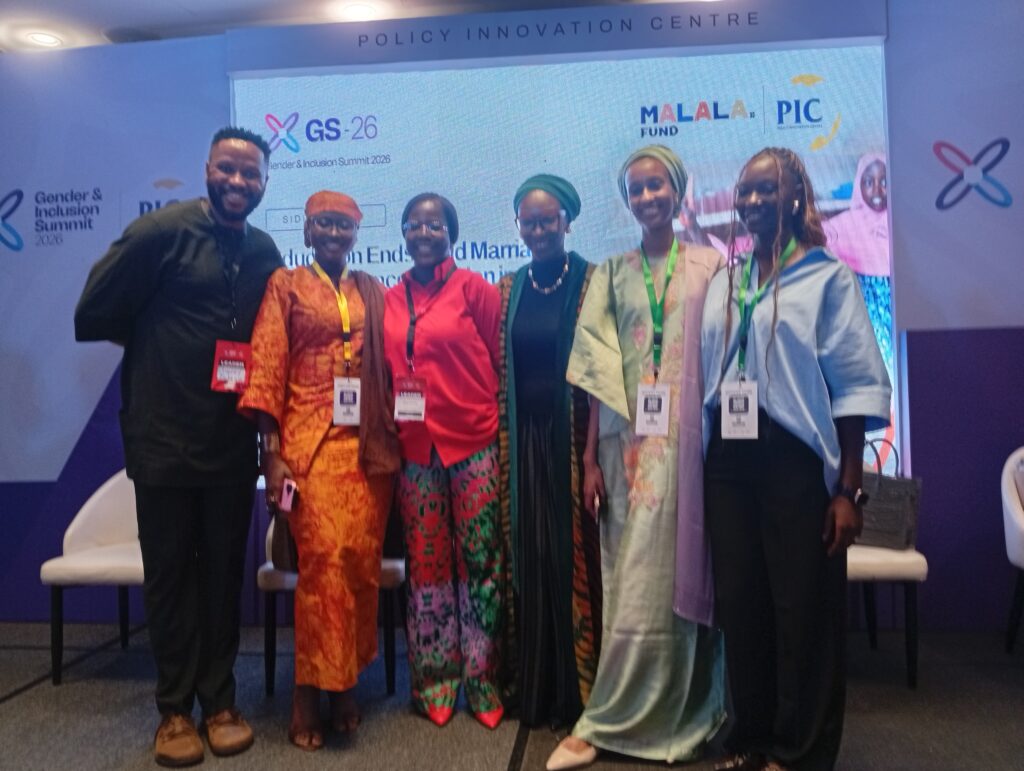
Rudgard made the statement while presenting evidence on investing in adolescent girls at a Malala Fund side event during the Gender & Inclusion Summit (GS-26) in Abuja.

The session, titled “Education Ends Child Marriage: From Evidence to Action in Nigeria’s Northwest and Northeast,” brought together policymakers, development partners, civil society organisations and girls to examine education as a strategy against child marriage.

Rudgard said modelling for Kano and Kaduna showed that investing $114 million (about ₦166 billion) to reach 1.1 million adolescent girls could generate about $2.5 billion in societal benefits.

He said the intervention could produce 3.9 million additional years of schooling, 327,170 fewer child marriages, 383,035 fewer adolescent pregnancies and 3,651 fewer maternal deaths across the two states.

According to him, other projected gains included fewer cases of sexual violence, child stunting and deaths, while increased educational attainment was expected to improve girls’ future earning potential.

Rudgard said returns on education increased substantially with additional years of schooling, making the transition from primary to secondary education particularly critical for adolescent girls.

He recommended targeting girls most at risk of dropping out, combining community engagement, safe spaces and school support, and adapting interventions to local conditions before scaling them up.

Earlier, Nabila Aguele, Chief Executive Officer of the Malala Fund, said Nigeria already had policies and frameworks supporting girls’ education, including pathways for married, pregnant and adolescent girls to return to school.

Aguele, however, noted that the major challenge was implementation, questioning whether girls and their families knew about existing policies and whether schools and communities had adequate resources to facilitate re-entry.

She said local solutions were already working and could be scaled up, adding that ending child marriage should be treated as a development and human-capital priority.

Aguele said child marriage costs Nigeria nearly $10 billion annually through its effects on health, education and women’s earnings, and called for gender-responsive education planning and budgeting.

Also speaking, Omawumi Gbamis, Programme Manager of the Nigeria Governors’ Spouses Forum (NGSF), representing the forum’s Chairperson, Prof. Olufunke Abdulrazaq, said education strengthened girls’ agency, economic potential and ability to make informed choices.

Gbamis said first ladies had an important role in keeping girls’ education on the policy agenda through advocacy, partnerships and practical interventions that enable girls to remain in and complete school.

On government commitments, Dr Umar Pella, Commissioner for Education in Adamawa, said the state would make implementation of its school re-entry guideline a key component of the 2027 appropriation.

He said married girls should not be excluded from education, adding that the government would work with religious and traditional leaders, as well as communities, to support their return.

Mr Ibrahim Ahmed, Permanent Secretary of the Bauchi Ministry of Education, representing the commissioner, said the state would publicly inaugurate its gender-in-education policy and school re-entry guideline by the end of September 2026.

He said Bauchi would strengthen community-level tracking by engaging village heads and schools to identify adolescent girls who were out of school and improve enrolment data.

Representing Kano’s Commissioner for Education, Dr Ali Makoda, Mr Halidu Mohammed, Technical Adviser to the Governor on Education, said the state had identified 104 married girls seeking to return to school.

He said the identification followed an intervention after the state launched its school re-entry guideline, adding that Kano would conduct a survey to identify gaps in the transition from primary to secondary education.

Mohammed said the state would also provide additional classrooms and construct new schools through its 2027 budget to accommodate more girls transitioning to secondary education.

In a grantee spotlight, Hassana Shuaibu, Senior Programme Officer at Assisting, Caring and Empowering (ACE) Charity, said successful development of re-entry guidelines required listening to girls, families, school heads, teachers and community leaders.

Shuaibu said this was necessary to understand the barriers affecting girls’ education, adding that a one-size-fits-all approach was inadequate because girls faced different challenges across states.

She said organisations worked with ministries of education to contextualise national re-entry guidelines, including addressing the needs of married girls, while girls themselves participated in policy discussions.

Habiba Mohammed, Team Leader at the Centre for Girls’ Education, said safe spaces and life-skills programmes helped girls build confidence, understand their rights and remain in school.

She said the organisation trained community mentors and worked with religious and community leaders and “role-model mothers” to support girls’ retention in school.

Mohammed added that life-skills programmes helped girls make informed decisions about education, marriage and their future, strengthening their ability to navigate social and economic pressures.

Toyin Chukwudozie, Executive Director of Education as a Vaccine, said the Joint Action Grant model demonstrated the value of organisations pooling expertise, resources and strategies around a shared outcome.

Chukwudozie said the approach enabled organisations working on policy, campaigns and state- and federal-level interventions to complement one another in addressing challenges surrounding girls’ education and child marriage.

Rachael Emmanuel, a 16-year-old adolescent mother and advocate with the Participatory Communication for Gender Development (PAGED) Initiative, shared how stigma and school restrictions disrupted her education.

Emmanuel, who became pregnant while in Senior Secondary School One (SS1), said she eventually returned to school and urged governments to provide supportive facilities for adolescent mothers.

She appealed for schools equipped with facilities that would enable adolescent mothers to care for their babies while attending classes, without being forced to abandon their education.

Stanley Achonu, Senior Director at the Malala Fund, who moderated the session, said the commitments made by stakeholders would be recorded on the GS-26 commitment tracker and monitored over the next year.

The stakeholders said sustained investment, effective implementation of re-entry policies, coordinated interventions and stronger community support were essential to keeping girls in school and reducing child marriage in Nigeria.

girls Oxford University
Share. Facebook Twitter Pinterest LinkedIn WhatsApp Reddit Tumblr Email
Newsdesk
  • Website

Related Posts

Enugu set to produce over 900 doctors yearly

September 9, 2026

NCDC urges early Lassa fever preparations ahead of dry season

September 9, 2026

WHO names Kerry special envoy for health resilience

September 9, 2026

Leave A Reply Cancel Reply

Galadima vows to make agriculture Adamawa’s growth engine

September 9, 2026

Advocate calls for grassroots action on climate change

September 9, 2026

Investing in girls’ education yields over 21x returns – Expert

September 9, 2026

ASRTI commends FG on Nigeria airways retirees’ benefits

September 9, 2026
About Us
About Us

ASHENEWS (AsheNewsDaily.com), published by PenPlus Online Media Publishers, is an independent online newspaper. We report development news, especially on Agriculture, Science, Health and Environment as they affect the under-reported rural and urban poor.

We also conduct investigations, especially in the areas of ASHE, as well as other general interests, including corruption, human rights, illicit financial flows, and politics.

Contact Info:
  • 1st floor, Dogon Daji House, No. 5, Maiduguri Road, Sokoto
  • +234(0)7031140009
  • ashenewsdaily@gmail.com
Facebook Twitter Instagram Pinterest
© 2026 All Rights Reserved. ASHENEWS Daily Designed & Managed By DeedsTech

Type above and press Enter to search. Press Esc to cancel.