


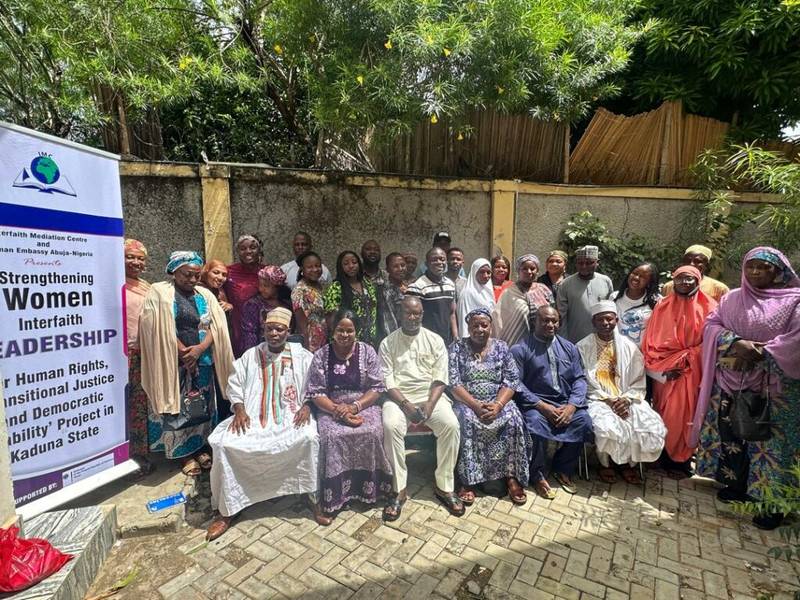
The Interfaith Mediation Centre (IMC) in Kaduna State has called for stronger women leadership in addressing human rights, transitional justice, and democratic stability challenges across the state.
The call was made during a two-day engagement organised by IMC, with support from the German Embassy in Abuja, across Kaduna State’s three senatorial zones.
The programme aimed to strengthen women’s interfaith leadership and create platforms for women and youth voices in peacebuilding and democratic processes.
Mrs Nafisa Muhammad, the project’s Monitoring and Evaluation Officer, said the initiative sought to amplify women and youth participation in community decision-making.
Muhammad noted that women remain central to the project because they are among society’s most vulnerable groups, with their rights frequently neglected or denied.
“Women play vital roles in society and our voices need to be heard because most of the time our rights have been denied,” she said.
She explained that participants identified unique challenges affecting their communities and proposed practical solutions during discussions held across the three senatorial zones.
According to her, participants from Kaduna Central focused largely on mediation and farmer-herder conflicts threatening peaceful coexistence in affected communities.
Muhammad added that participants from Zaria and Kafanchan identified different social and security concerns requiring tailored interventions and community-based responses.
She disclosed that the programme also included an empowerment component targeting vulnerable women selected from communities across the three zones.
Mrs Olufunke Bamikole, Chairperson of the International Federation of Women Lawyers (FIDA), Kaduna branch, described the engagement as impactful and highly participatory.
Bamikole, who served as one of the facilitators, said discussions focused on harmful cultural practices, women’s rights, and pathways to justice and peaceful coexistence.
She noted that participants were enlightened on how to understand, protect, and assert their rights whenever such rights are violated.
“The training has helped participants understand their rights and how to seek justice when such rights are threatened or violated,” Bamikole said.
Participants commended the organisers, describing the engagement as enlightening, especially on issues concerning human rights, inclusion, and community peacebuilding.
Ann Solomon, one of the participants, pledged to share the knowledge gained with members of the women’s association she leads in her community.
“I know that laws and rights exist but I didn’t know them in detail before; now I know better,” Solomon said.
Another participant, Rilwan Muhammad, praised the facilitators for ensuring the inclusion of persons with disabilities during the engagement.
He urged the organisers to sustain deliberate inclusion of women with disabilities in future activities, interventions, and community development programmes.
