


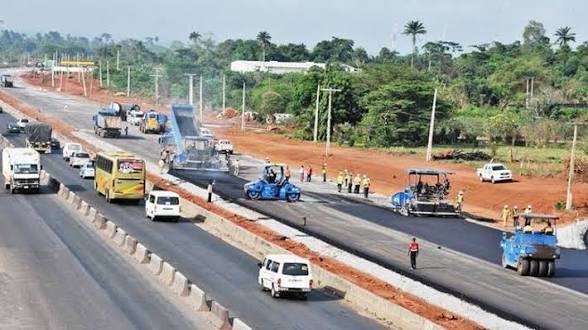
The Senate has approved a $516,333,700 syndicated financing facility for the construction of the Sokoto–Badagry Super Highway.
The approval followed consideration and adoption of the report of the Senate Committee on Local and Foreign Debts during Wednesday’s plenary.
The loan request came via a letter from President Bola Tinubu dated April 20, seeking legislative backing for external borrowing in line with the Debt Management Office Establishment Act 2011 and the Fiscal Responsibility Act 2007. It was referred to the Senate Committee on Local and Foreign Debt on April 23, which subsequently recommended approval.
Sen. Adamu Aliero (APC-Kebbi) presented the report on behalf of the committee chairman, Sen. Aliyu Wamakko (APC-Sokoto). He explained that the facility would finance Section One, Phase One (A and B1) of the highway, covering about 120 kilometres as part of a broader corridor expected to span roughly 1,000 kilometres from Sokoto to Badagry.
Aliero said the project is strategically designed to enhance national connectivity, linking Sokoto, Kebbi, Niger, Kwara, Oyo, Ogun, and Lagos states. He described it as a major infrastructure initiative aimed at improving trade, transportation efficiency, and national integration.
He added that the project would reduce travel time, lower logistics costs, improve access between agricultural zones and markets, and strengthen supply chains across key sectors, including agriculture and manufacturing.
The financing is structured as a syndicated facility provided by Deutsche Bank, with partial credit enhancement support from the Islamic Corporation for the Insurance of Investment and Export Credit. The loan has a nine-year tenor, including a grace period of up to three years, with an interest rate benchmarked at CME SOFR plus 5.35 percent per annum.
Aliero noted that while the loan will add to Nigeria’s external debt, it is tied to long-term capital development projects expected to generate significant economic returns.
Senators debated the proposal, with many highlighting its potential to boost economic growth, enhance national integration, and unlock agricultural and transport value chains.
Deputy Senate President Jibrin Barau emphasized the project’s role in connecting northern and southern Nigeria efficiently. Sen. Adetokunbo Abiru noted that previous loans had been delayed due to global financial constraints, making this arrangement a viable alternative for ongoing projects.
Senate President Godswill Akpabio put the motion to a voice vote, and it was overwhelmingly adopted. The Senate approved the $516.3 million loan for Phase One, Section One (A and B1) and mandated strict oversight by relevant committees.
The upper chamber also directed quarterly reporting by the Federal Ministry of Finance, the Debt Management Office, and the Federal Ministry of Works, and requested submission of the financing agreement within 30 days. Lawmakers stressed transparency, competitive procurement, and periodic project evaluation to ensure value for money and timely delivery.
With Senate approval, the request now awaits transmission to the executive for final processing and implementation.
