


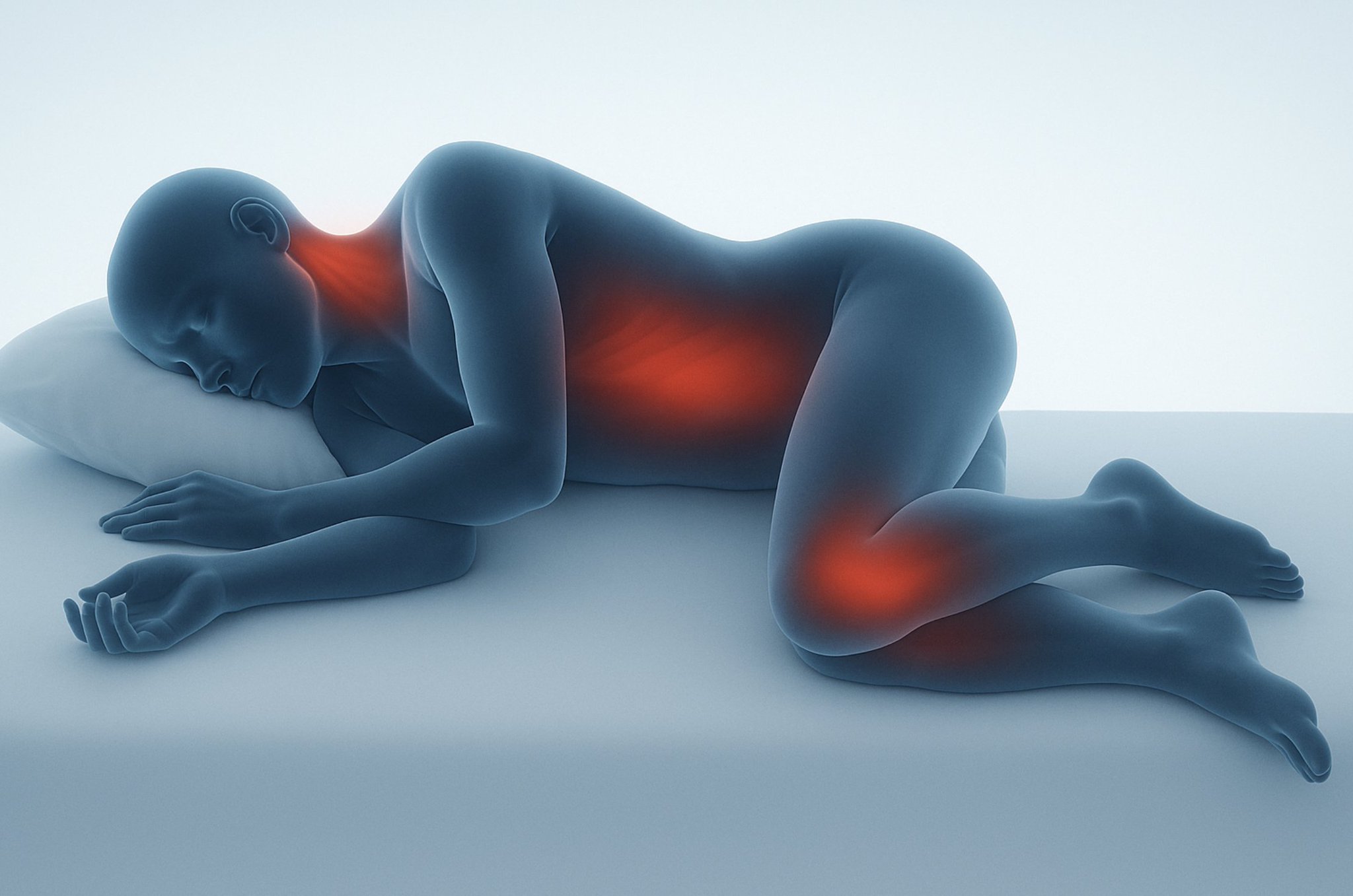
Millions of people sleep on their side and they have no idea that, silently, it’s damaging their joints and muscles. But “sleeping on your back” is terrible advice for most.
Your body spends about 25,000 hours in your preferred sleeping position over 10 years.
For side sleepers, this means 25,000 hours of uneven pressure on hips, shoulders, and knees.
This is what really happens to your body:
- The lower shoulder bears the weight of the upper body for hours.
This restricts blood flow and forces the lower shoulder to rotate internally.
Over time, this can lead to “side sleeper’s shoulder” (chronic pain, reduced range of motion).
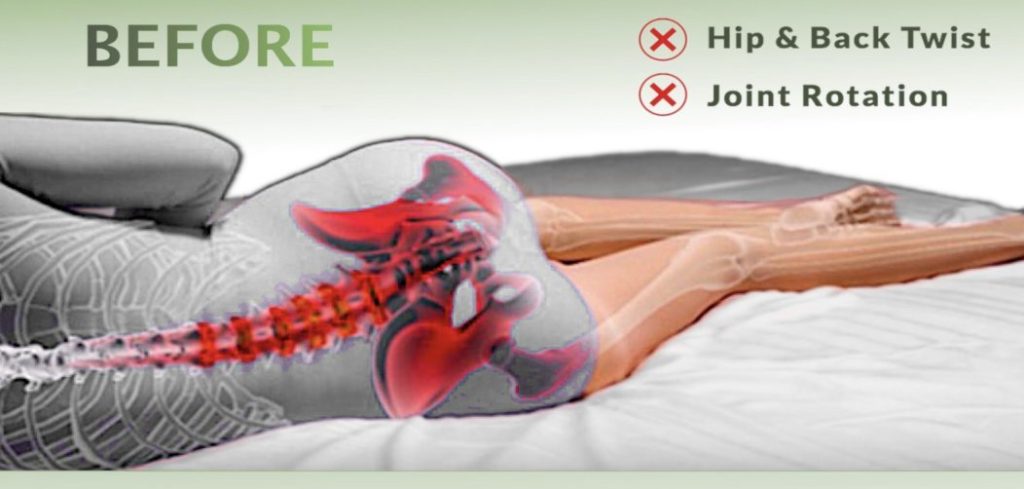
- The upper leg tends to fall forward, pulling on the outer thigh (iliotibial band) all night, like tugging on a loose rope.
This can also rotate the pelvis and spine.
Result? Muscle pain, hip stiffness, and knee pain.
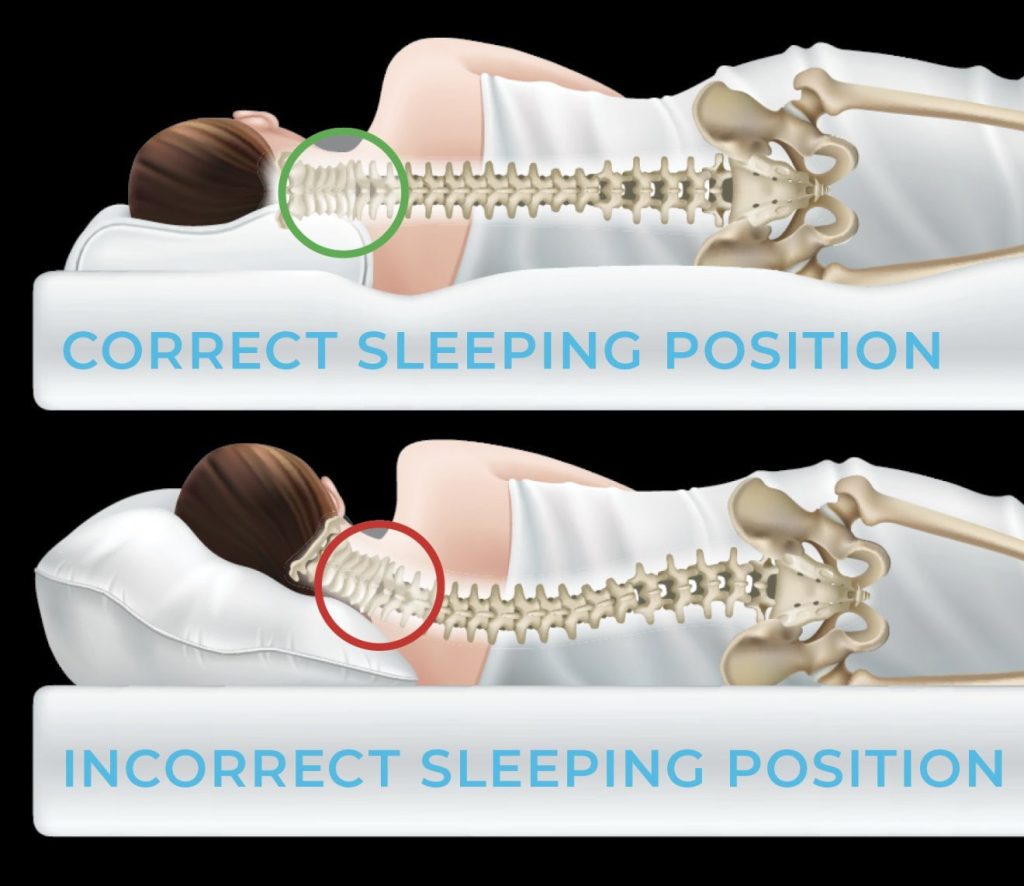
- Without the right pillow, the head tilts to one side all night.
It’s like holding the phone between the ear and shoulder for 8 hours.
The spine twists to compensate, causing neck stiffness and back tension that linger throughout the day.
- Without the right pillow, the head tilts to one side all night.
It’s like holding the phone between the ear and shoulder for 8 hours.
The spine twists to compensate, causing neck stiffness and back tension that linger throughout the day.
- Sleeping on your side without a pillow between your knees presses them together, shortening the groin muscles and forcing your legs into a knees-together posture.
This subtle change affects how you stand, walk, and move, even when you’re fully awake.

The problem?
“Sleeping on your back” is not realistic advice for most people.
Sleeping postures are deeply ingrained habits that the body naturally returns to.
Moreover, ALL sleeping postures have their drawbacks if not properly supported.
How to sleep on your side like a pro:
- Use a pillow with the right height to keep your neck aligned with your spine.
- Place a pillow between your knees to keep your hips aligned.
- Consider using a body pillow to support both your arm and leg.
- Turn your head occasionally to balance the pressure.
But a good sleeping posture is only half the solution.
The other half? How you start the day.
Here’s a simple morning stretching routine to counteract nighttime damage and revitalize your body:
- Upward Salute
- Stand with feet hip-width apart.
- Raise your arms overhead.
- Keep hands shoulder-width apart and stretch your arms toward the ceiling.
- Inverted shoulders
- Interlace your hands behind your back with your thumbs pointing toward the floor.
- Straighten your arms and gently pull your hands away from your back.
- Bring your shoulders back and down, lift your chest, and slightly tuck your chin.
- Neck laterals
- Begin seated with your back straight.
- Place one hand on the side of the chair for support.
- Tilt your head to one side (lower your ear toward your shoulder).
- Use the other hand to apply gentle pressure to the side of your head.
- Switch sides.
- Upward Facing Dog
- Lie face down, press your hands into the floor near your ribs.
- Lift your chest, gently arch your back, and look slightly upward.
- Downward Dog
- Lift your hips from your hands and knees.
- Press your palms against the floor and relax your neck.
- Wide-leg forward bend
- Stand with your legs wide apart and lean forward from the hips.
- Place the palms of your hands or your fingertips on the floor or your ankles.
- Relax your head.
Although stretching in the morning helps, also consider:
- Adjusting the mattress firmness (a medium firmness is usually best).
- Replacing pillows every 18-24 months,
- Using a special pillow with neck support.
But let’s not completely rule out sleeping on your side.
It can:
- Reduce snoring.
- Reduce acid reflux (on the left side).
- Provide psychological well-being for some people, which could lead to deeper sleep.
Sleeping on your side is not bad in itself.
What causes problems is the lack of balance during sleep and the lack of varied movement when awake.
Remember: a bit of intentional movement goes a long way.
By Health | Wellness | Nutrition @NutritionTipzzz
