


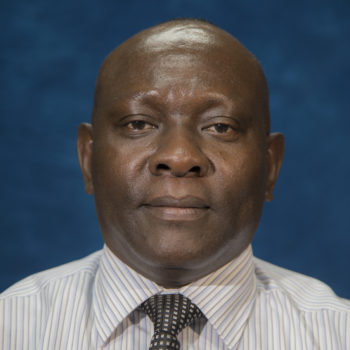
By Peter Wamboga-Mugirya in Kampala, Uganda
The world is today treated unceasingly to horrendous pictures of African youth killed, maimed, robbed and enslaved in several North Africa and Middle Eastern countries, and also dead on the high seas, while struggling to reach Europe, in a desperate search for jobs and better lives. Yet Africa where they run away from, is ironically the world’s richest in natural resources like arable land, water and minerals. I will not dwell in statistics here as mine is not an academic paper nor is it a policy statement. Plenty of data on Africa—wrong and right—is widely available everywhere on these issues. What is missing is what should be radically done and why it hasn’t been done to curb this human suffering? That’s what I’m attempting to dissect here as an African who closely watches these matters as a science journalist and a policy advocate. If Africa is today the continent with the “highest, largest, widest, deepest, hugest, most this, most that,” in terms of wealth and potential, why should it be the poorest, to necessitate its young and most precious resource (the human being) dare the worst of conditions along the Sahara Desert, across the seas, taken advantage of and fleeced off by rackets of human smugglers, to be humiliated, degraded and enslaved by would-be employers?
Why, why? Why should this continent with a huge demographic dividend—the highest number of young people on the globe who should be productive at home—be the one to deny them employment and other political, social, economic and welfare rights and opportunities? Why should it be the world’s continent with the highest rates in: infant mortality, illiteracy, unemployment, underfed/malnourished children, mothers and youth, with inadequate accessibility to medical services, clean and safe drinking water? Why should it be Africa with inadequate housing, poor access to credit, energy, education and justice etc? Again I ask: why should Africa—hugely endowed with unparalleled deposits of gold, diamonds, uranium, oil, manganese, lithium, cobalt, timber, etc, etc—today lack those basic human needs and lead in poverty, disease and ignorance?
Flight Capt. Mike Mukula, a former State Minister in Uganda and a Pan-Africanist, says Africa with a population of over 2.5bn [demographically bigger than India and China-combined], is a giant on the rise and no one shall stop it. Mukula said this on September 9, 2023, when the G20 Group of Nations [the most-powerful economies] admitted the African Union (AU) in its fold, at their 18th 2-day summit in New Delhi, India. AU’s admission as Permanent Member, is both a challenge and opportunity—as it can be used to empower Africa and shouldn’t just be a formality. Mukula—a member of Uganda’s highest political organ of the ruling NRM Party—challenged the continent’s governments to rapidly transform their countries from primary producers/exporters of agricultural and mineral commodities, to industrial-based value-addition commodities/products exporters.
However, one economist disagrees: “No let Africa continue producing primary products and commodities, but in a much better and more cost-efficiently way, instead of going in to compete in value-addition already dominated by the global economic giants,” says the economist. I fully agree with him.
In my view, the way out for Africa to create jobs for its young citizens, and stop their perilous adventures across the Sahara and over the high seas, is to do things differently from what countries have been doing the last over 66 years ago when the first African country (Gold Coast now Ghana) got independence in 1957. Europe, through Greece and Spain (the European Mediterranean States that receive the highest numbers of immigrants from Africa), has gotten tired of African youth trooping in their hundreds every week, in derelict boats, looking for jobs away from their continent that is able to employ billions of its own citizens, and many others from elsewhere. Europe treats them as illegal immigrants and criminals; it holds them in detention/refugee centers, pending deportation.
What Is Europe’s Role In This Saga
In 1885, Europe met in Berlin, Germany and on their own volition: driven by need, greed and power, decided to invade Africa to parcel it out among themselves and from that time on, take away everything including human beings at will, that pleased them. To this day, Europe and its allies around the world, under many mechanisms and arrangements, protocols and agreements, still take whatever they want from Africa at will and at the lowest cost possible. Question: If it pleased you to take away humans by force [under Slave Trade] when we were unwilling, why not now when we come at will? Why do you get irritated by our numbers? Take us in, train and then employ us in your factories, warehouses and silos since we bring ourselves at no cost, but at our own very, very high cost in hundreds of lives lost! Nobody should attempt to disconnect the 1885 invasion, parceling, colonization and capture of Africans for slavery and hard labour, from the 21st Century trekking by daring African youth to Europe and the Arab world.
Europeans Remember This: You found a quiet, fast and well-developing Africa at its own pace, in their own ways and along their own interests. Historical and archeological records show that Africa by the 14th, 15th and 16th centuries for instance, was made of well-settled communities, well-organized politically, socially, culturally, scientifically, technologically and economically, before you came to disrupt and destroy. There was trade between communities across the continent. Between the East and West, North and Central Africa, trade boomed in minerals [gold, diamonds, copper, iron etc; salt, crops, elephant tusks, beads and other decorations etc, etc]. Indeed inter and Intra-African trade, was abound.
Political, diplomatic, economic and cultural cooperation too boomed between these communities. There was also rivalry and war, as it is expected, between neighbouring communities that possess and practice different cultures/traditions [languages and religions, for instance]. But more overriding is the progressive developments that existed, documented by Arabs and Europeans themselves.
Recently for instance, in 2001, during my Mass Communication training course in Egypt under the Union of African Journalists (UAJ) and the Ministry of Information, I visited one of the pyramids where there was a tomb of a mummy [preserved Pharaoh] in the barkcloth the Egyptians had imported from Buganda—2,832 km away. Barkcloth (Olubugo in Luganda), is creatively/innovatively derived from mutuba tree and has been listed as a UNESCO ’Intangible Cultural Heritage.’
The Pharoanic period in Egypt is between 32nd Century and 322nd BC (Before Christ)—like 3200 years [or 320 decades]. The empires of Mali, Songhai, Ghana, Kush, Zimbabwe, Monomotapa, Congo, Sudan; the Kingdoms of Zulu (Kwa Zulu), Buganda, Bunyoro, Ankole, Tooro etc, that spread across today’s Sub-Saharan Africa, were very powerful: organized and self-governed political and economic entities. It is Europeans and Arabs through their early explorers, missionaries, colonial zealots and traders who disorganized these African communities that were more wealthier than Europe and the Arab world: that’s why Europeans and Arabs set out to come and partake of Africa’s huge endowments that they [Europeans and Arabs] lacked. The Europeans and Arabs in particular have over the past centuries enjoyed the wealth they’ve acquired from Africa. Now Africans are coming to partake of what you’ve legally and illegally acquired from the continent.
What We Should Do At Home: African countries especially in the sub-Saharan region should drop the Bazungu (foreign/European) mentality of establishing formal education and formal employment, especially for the younger people and the youth, to promoting informal education (specially vocational for massive skills training) and informal employment on plantations of (State-owned plantations of coffee, Hass avocado, cashew nuts, cotton, oil palm, macadamia, vanilla, moringa, tea, cassava, spices etc), on mines and in industries that process the raw materials. There are also livestock and poultry products and by-products—that for which collectively domestic markets be promoted first before foreign export markets are sought. Major consumers should be locals, mainly the youth—as the local market—like Ethiopia does with her coffee. Uncolonized Ethiopia serves is a good example. Governments should reform the Structural Adjustments Program’s-imposed private sector-led economic growth and development approach of 1990s, to a hybrid State-led Public-Private Co-created Economic Growth and Development (SPPCEGD) as a new core planning, funding and implementation approach. It should be a radical Africa-bred approach that emphasizes youth employment, via producing what we consume. Not only eyeing what we don’t consume for the export market, but first and foremost, the domestic market. Value-addition should be for domestic market productivity, protection and home-satisfaction.
Although Africa is said to be a US$2,263bn-strong market/economy—which is an already existing opportunity—this time round, this market should be the target under the African Continental Free Trade Area (AfCTA), to increase Africa’s income by US$ 450bn by 2035 and increase intra-African exports by more than 81 percent, according to the UN Economic Commission for Africa (ECA). This single continental market trade agreement will enable the African economy to reach the US$29 trillion mark by 2050 [https://www.un.org February 2023].
Michael Wakabi, a senior journalist and media commentator on a wide-range of issues, says the problem with Africa is that we are not hungry enough. The West is hungry enough to kill someone. That kind of hunger, which is essential for the success and innovation, is mostly absent in Africa. Wakabi, one time Bureau Chief for the regional The EastAfrican newspaper in Kampala and Kigali-Rwanda, was responding to an issue on a Uganda Journalists’ Safety WhatsApp group. I picked this statement from the group for I found it relevant and quite challengingly punchy to us Africans!
Wamboga-Mugirya, a Ugandan Science Journalist, and Director of Communication at the Science Foundation for Livelihoods and Development (SCIFODE) sent this piece from Kampala, Uganda. He can be reached through: pwamboa@yahoo.co.uk and X: @wambotwit
